
The milestone will be even more emotionally charged if it's the first time you are going to be separated from your child. On the other hand, for experienced parents, who have been through the crèche system once already or perhaps multiple times thanks to an older sibling(s), there is an established relationship with the facility and caregivers.
In essence, what every parent hopes for in a crèche is the feeling that it is a "home from home" for their child and finding a trustworthy one is paramount.
A precursor to the world of pre- and primary school, crèches are often the first step in a child's early childhood education where they discover autonomy and develop self-confidence in games, social exercises and activities.
Generally speaking, crèches are for children aged between three months and four years, before they begin compulsory schooling. They operate according to different educational concepts. There are crèches that emphasise organic values, company crèches, multilingual crèches and woodland crèches (Bëschcrèche) to name a few.
Crèches can be public, run by the municipality, or privately owned and both are subsidised by the State through the CSA (Chèque-service Accueil) system. Either way, they are equally regulated by the government via eligibility rules, education standards and requirements.
As parents, you are free to choose the crèche you prefer for your child but that is not always straightforward.
So, focusing on the public/ municipal and private crèche systems, what is the difference between the two?
As a general rule, municipalities offer public day-care services with priority given to children with two working parents. In order to obtain a place in a municipal crèche you must live in the commune where it is located.
They are less expensive than private crèches and you only pay for the time that you use the facility. Luxembourgish is the language of public crèches.
High demand is also a hallmark of these structures with long waiting lists part and parcel of the process. Parents who are waiting on a place are frequently told to call back every two to three months to see if one has become available. Securing a place for the start date you require can often be a luxury that is not afforded by public crèches.
According to www.vdl.lu: "Childcare in a childcare facility helps parents reconcile work and family life, whilst providing children with an appropriate formative setting and infrastructures that are tailored to their needs. You can register your child for full-time or part-time care (morning or afternoon), and drop them off and pick them up according to your needs and at your own convenience. Municipal crèches are reserved for families who live in Luxembourg City and have an employment contract. Priority is given to children from single-parent or socially disadvantaged families. Full-time places are for 50 hours per week and include five meals per week. Part-time involve 25-hour contracts."
A list of municipal crèches in Luxembourg city can be found here.
There tends to be more flexibility with private crèches as there are no restrictions on the catchment area or number of parents working. Depending on where you are living in Luxembourg, the ease of attaining a place can vary. Places may be available for the start date you require or, similar to public creches, there may be a waiting list.
Private crèches tend to be more expensive with many offering the option of part-time and full-time places.
For full time spots, parents generally pay for 60 hours per week, irrespective of the number of hours needed. Also, you will pay year-round regardless of holidays.
There are private crèches that have slightly more flexibility and offer a selection of formulas where you can choose the number of hours you wish your child to attend.
Private crèches can be a popular option with international families looking for a French-, German-, Spanish-, or English-speaking crèche programme. Privately-owned crèches are just as legitimate as public crèches; they must register with the state and follow the same rules. Another plus for private crèches is the flexible hour requirements for a child’s attendance.
There are also lenient requirements to enrol in a private crèche, like accepting a child regardless of the parent’s residence status or place of employment. The drawbacks are higher fees.
The crèche journey for new parents Francesca and Enrique began last year early on in the pregnancy.
The couple began inquiring, researching and asking for word-of-mouth recommendations and feedback from other parents to help with their decision.
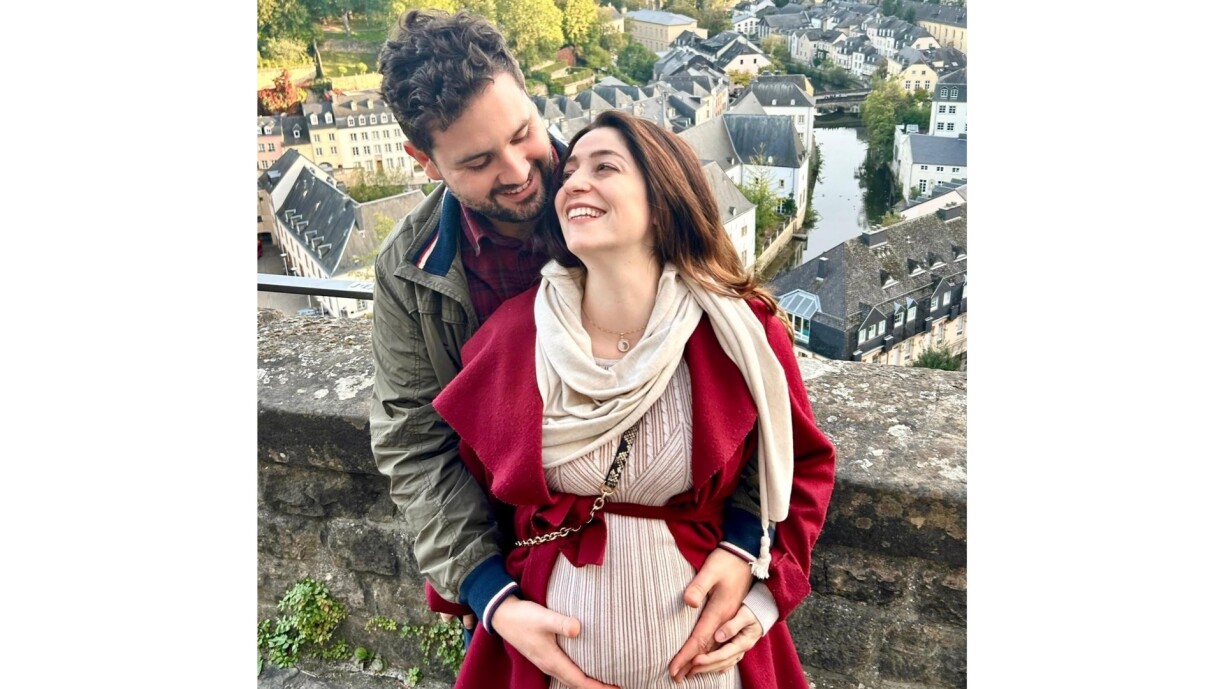
After viewing a couple of facilities in their area, they were fortunate enough to be offered a place in their local municipal crèche.
So, after weighing up the options available, the couple decided to accept the place at the municipal crèche. Their daughter Nora will attend on a part-time basis from January 2025, when she turns 11 months.
She will then go full time at 14 months, when Francesca returns to work.
The first-time parents were among the lucky ones as, after being on a waiting list for around a month, a place became available for the timeframe they wanted.
Francesca recalled with delight getting the phone call to say there would be a spot available for their baby. She added that they were told on the phone that the contract had to be signed the same day - a sure indication of high demand at the facility.
For the couple, who are from Spain and Italy, budget was one of the primary reasons they had for choosing a municipal crèche.
In addition to Luxembourgish, the prospect of their daughter being exposed to other languages such as French, Portuguese and Spanish, was also attractive for them, Francesca pointed out.
"The crèche has a lot of kids - so there’s a good social life and it’s quite an international mix. Because we are an international couple, it’s good that there will be an opportunity for our child to learn other languages."
On viewing the crèche, they said they came away feeling happy with the facilities: "There was a lot of space, a big garden, a large building and protected area. We thought the outside space was big compared to other crèches we had viewed. "
In addition, the location in Luxembourg city is convenient for both parents in relation to where they work.
Francesca accepted that it is a time-consuming process for parents in their hunt for the right facility.
"Was it difficult? Yes. I still have friends that are waiting for a place with the same due date as mine. It's a matter of luck I guess."
Trisha, from Ireland, arrived in Luxembourg in 2018 with her husband and baby son. Six months' later she enrolled her son in a private, French crèche in Merl.
There was no issue getting a place and her son initially attended on a part-time basis, before converting to full-time.
The experience, she said was a positive one so much so that her two subsequent children were enrolled in the same crèche.
Trisha said the relationship she developed with the educators over the course of the last six years gave her immense peace of mind. Her initial reason for going with a private nursery, she explained, was down to lack of information about the options available.
"I chose a private crèche because I didn't really know any different. I didn't really know how to get into the public system and the private crèche was more similar to what I knew from Ireland. There was a lack of information as to how to go about getting into the public crèche," she recalled.
Trisha initially spent time viewing crèches and was often unimpressed by what she saw. The crèches she visited "all seemed to be old houses with a sign put up outside indicating it was a crèche. The room layout was the same as if it were still a house. I just felt that maybe the rooms were small and with so many kids I was never really comfortable with it."
The location that Trisha eventually decided on was mentioned to her in passing by a friend who had viewed it for her own son.
Located in a spacious and modern unit on the ground floor of an office building in Merl, Trisha said she had that positive feeling immediately that this was the right choice for her child.
She said her decision was at the beginning very much based on the facility on offer.
"I was very interested when I heard about it and when I went to view it, I loved it because it had big, bright, airy rooms. The different age groups were in separate rooms but there were glass doors between everybody, so I felt like there was oversight there. I just really liked the building."
With high praise for the staff who she describes as being "lovely" and "amazing", Trisha explained that she felt at ease knowing her children were in great hands.
"I really felt my kids were safe and looked after and loved there. They got lots of hugs and kisses. It definitely was their 'home from home."
The more practical details such as the provision of nappies and sunscreen were also taken care of by the crèche, lessening the ask on parents.
Her kids learned French and Luxembourgish, receiving a solid foundation in the languages and still remember songs from their time there.
In addition, activities and outings were a regular feature, contributing to the feeling that her children were getting an all-round wonderful early childhood experience.
On the flip side, Trisha highlighted the cost per hour is more expensive and you can't pick the hours you want to attend.
"For a full time place you must pay 60 hours a week or 12 hours per day. No one is going to leave their children in that long every day," she stressed.





