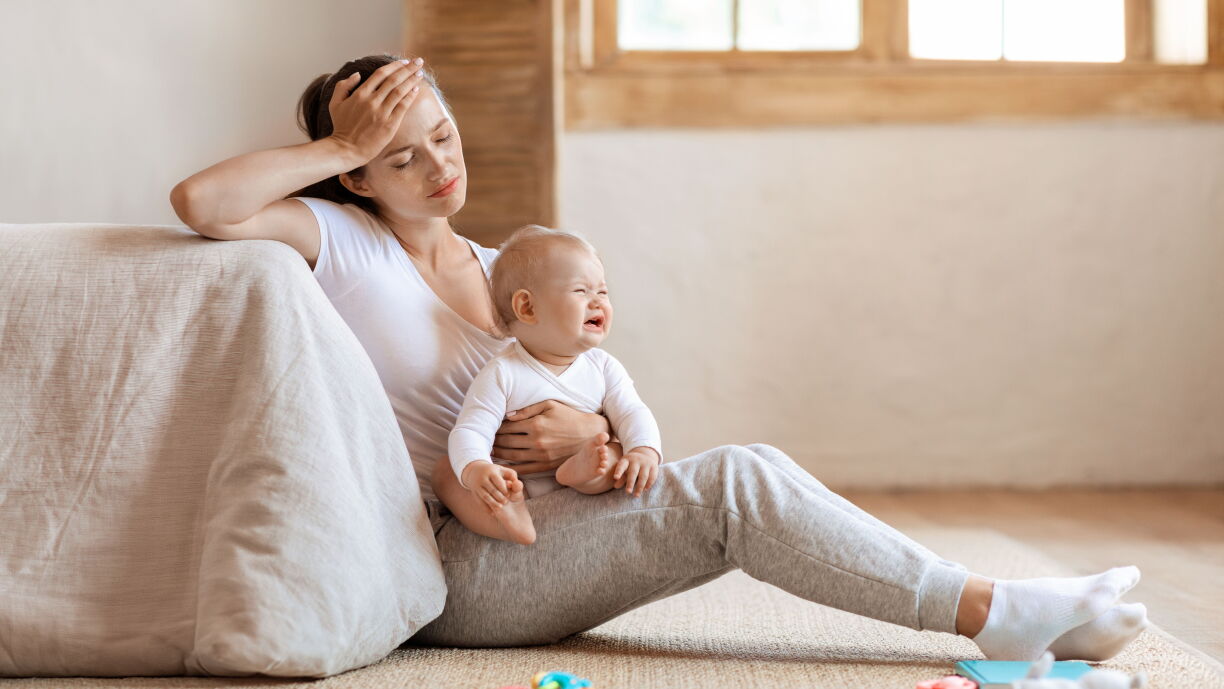
Regret about motherhood is still rarely discussed openly. It is a sensitive and complex subject, yet more and more mothers are finding the courage to say honestly that parenthood is different from what they expected.
If you feel you are not enjoying motherhood the way you imagined you would, you are not alone, and it says nothing about what kind of mother you are.
As a psychologist and couples therapist, I look in this article at what may lie behind these feelings, how regret, parental burnout, and depression differ from one another, and what can help you cope with difficult emotions.
Regretting motherhood does not mean that you do not love your child. A small-scale qualitative study showed that most often this regret is directed at the maternal role and the life that comes with it, not at the child.
These mothers love their children but feel that had they known what this life would involve, they might have chosen differently. The idealised image of motherhood makes it harder for many women to admit that it is more difficult than they had expected.
How much you are able to enjoy parenthood is the result of many factors working together. The question is not whether you are a 'good' or a 'bad' mother, but under what circumstances you are living this role.
How much you enjoy motherhood does not define the kind of mother you are.
The desire for children is not a black-and-white issue, but rather a spectrum. At one end are those who were always certain they wanted to be mothers; at the other, those who were certain they did not want children.
Most people sit somewhere in between, and this can change at different stages of life.
If having children was not critically important to you, you may be more likely to face difficult feelings when the burdens of your new situation appear, especially if your circumstances are not supportive.
This is not inevitable, however. Some people began parenthood with uncertainty and later found joy in it, while others longed for a child and still find it hard.
The decision to have a child is also shaped by countless factors: whether you had found the right partner, how far you had come in building your financial footing, whether there were unresolved conflicts in your relationship, whether you had changed country or job, how old you were, and what your partner's attitude was.
These factors rarely align perfectly, so there is no reason to blame yourself for not having been “sure enough”.
The quality of your relationship has a great influence on how much you can enjoy motherhood. It helps if you feel emotionally safe in your relationship, if you share tasks fairly, and if your partner takes an active part in raising the child.
According to the literature, the risk of parental burnout is higher for parents who did not want the child, or who disagreed with their partner about having children.
Even where involvement is equal, mothers' burnout can still be higher, partly because of the invisible organisational work, the mental load (planning, remembering, coordinating), which still falls mainly on women.
Having a support network, or not having one, matters too.
People around you on whom you can count, who help with everyday life, and with whom you can share your feelings are a protective factor.
Help from grandparents belongs here as well.
If you live abroad and your family is not nearby, this can be an extra burden, and it is worth recognising it consciously and addressing it.
Parental burnout is a syndrome of prolonged physical and mental exhaustion linked to the parenting role. European estimates suggest it affects around 5% of parents, although depending on the measurement tool, figures between 1 and 30% have been reported, and fathers can be affected too.
It differs from parental stress in that stress is natural and temporary, whereas burnout is a lasting state that develops gradually and can worsen without treatment.
This is why it is worth recognising it in time.
The three stages of burnout (Roskam and Mikolajczak’s model):
Seek professional help if you experience persistent exhaustion and emotional distancing. Physical symptoms (abnormal fatigue, sleep and concentration problems, bodily pain) can also signal burnout.
If you have thoughts of 'escaping' or of suicide, or if you fear that you might harm yourself or your child, contact a doctor or a helpline immediately. These conditions respond well to treatment with a professional, and there is no shame in asking for help.
These three are not the same, although they can overlap and intensify one another.
Regret is a feeling about the parental role, and it can occur without burnout, just as burnout can occur without regret.
Parental burnout is specifically tied to the parenting role, whereas in depression the mood disturbance is general and does not concern only child-rearing.
Postnatal depression can appear in the weeks and months after birth and, without treatment, can last longer, while burnout may emerge later.
A specialist clinical psychologist and a psychiatrist can assess the symptoms and give an accurate diagnosis, so it is especially important that parents receive support from the right professional and do not try to diagnose themselves online.
It is important to look at what affects the way you experience motherhood, and what can be changed.
Many couples get stuck how to find the new balance in the life stage of becoming a family with young children. If it is hard to find a balance that satisfies both of you in your parental roles and responsibilities, or hard to find your way back to each other as romantic partners, it is important that the couple receives appropriate support, for instance through couples therapy.
How we function as parents and as a couple shapes how each of us feels in the new family set-up.
And if your support network lives in another country and the two of you are left alone with the daily challenges, that is a heavy burden too: the sheer number of daily tasks can drain the energy and emotional capacity you would need in order to connect with your child in the way you would like.
It is therefore worth considering which tasks you could outsource to make everyday life more enjoyable.
Notice, too, what is different about the moments when being with your child feels especially good.
What am I doing differently? How am I present in that moment, with what level of energy, and what kind of interest? What are the external circumstances, and how do I relate to them?
These observations can help us understand when it is easier to be in our parental role and which factors make a positive experience harder.
It can also be important to build in activities that nourish our other roles, such as meeting friends or taking up hobbies of our own. No single role, whether parent or spouse, can meet all of our important emotional needs.
As parents, we can fully hold the feelings of loving our child and, from time to time, missing our former life or certain aspects of it. The challenges of parenthood are genuinely hard, especially when the support network is in another country.
Not every regret fades when circumstances improve. Some mothers carry this feeling with them in the long term.
In that case, the most important thing may be, on the one hand, to be accepting of our feelings, and on the other, to ask for support how to navigate with these feelings so we can give our best version to our children.
After all, the task now is to make the best of the life we have with our children. Psychological counselling can be of great help to parents in this.
If you recognise yourself in these words, I would like you to know, as a psychologist, that reaching out is not a sign of weakness, and you do not have to wait until things feel unbearable. Talking to someone, whether a friend, your GP, a mental health professional, or a helpline is often the first step towards feeling lighter.
Please take that step today: pick up the phone, send a message, or book an appointment. You too deserve support:
Anita Balázs-Miklovicz is a specialist psychologist in clinical health psychology and couple therapist, sharing insights on mental well-being.