In Luxembourg, where school often starts at what feels like the crack of dawn for some, mornings can feel like a mad dash.
It can be a real challenge for expat parents if they come from countries where school begins later. Getting everyone up, dressed, fed, teeth brushed, lunches packed, and out the door on time often demands the precision of a military drill, especially for younger, slower-moving children.
But this part of the day is so important for setting the tone and ensuring children begin school in a good frame of mind. With some foresight and structure, parents can reduce the household chaos, and that quiet magic of a well-paced morning can shift from a rare luxury to a daily habit.
According to Hajnalka Szenner, a Luxembourg City-based therapeutic and mental health counsellor as well as a life, parental, and couples coach, the way families ease into those first few hours of the day can have a real impact on children's emotional balance and ability to learn.
"I think definitely it sets the tone. Maybe not for the whole day, but definitely morning is a big part of the day because if you start your day regulated, calm, and afterwards, if you encounter difficulties, you are more balanced to deal with that. In psychology we call this the primacy effect", she explains.
"So, you have a tendency to remember more the first items in a sequence. If our morning is emotionally charged, positively or negatively, it really influences the next bit of the day. And we have a tendency to interpret the next event through that lens as well."
"Small children cannot regulate themselves alone. When there's a morning rush or lots of tension in the family, it becomes more difficult for them to concentrate, focus, and behave appropriately later at school", she emphasises.
Morning stress doesn't just disappear once children reach the classroom. Physiologically, it lingers, she points out. "When we are really stressed, our survival mode of fight, flight or freeze is activated. A small amount of stress helps us stay focused, but if that survival mode takes over, our memory becomes less effective. It can hinder concentration at school."
For young children, predictability is the antidote, she adds. "The key word is routine. When they know what will happen and in which order, it creates stability and safety. If there’s no structure, everyone becomes more anxious and children sense that immediately."
In her consultations as a family therapist in Luxembourg, she often sees parents who are "simply overstretched".
"If the parent is not stable or regulated, it affects the children too", she states. "Our mood influences theirs and the calmer we are, the safer they feel."
She notes that the challenge is particularly acute in Luxembourg, where school often starts at 8am compared to some EU countries where it's closer to 9am.
"It's a lot to manage, especially for families with several children", she says. "You don’t have much time in the morning to connect or set the tone for the day."
She advises that the morning actually starts the night before and recommends preparing as much as possible in the evening, such as clothes, school bags – even setting the breakfast table. She also advocates a brief family moment before heading out.
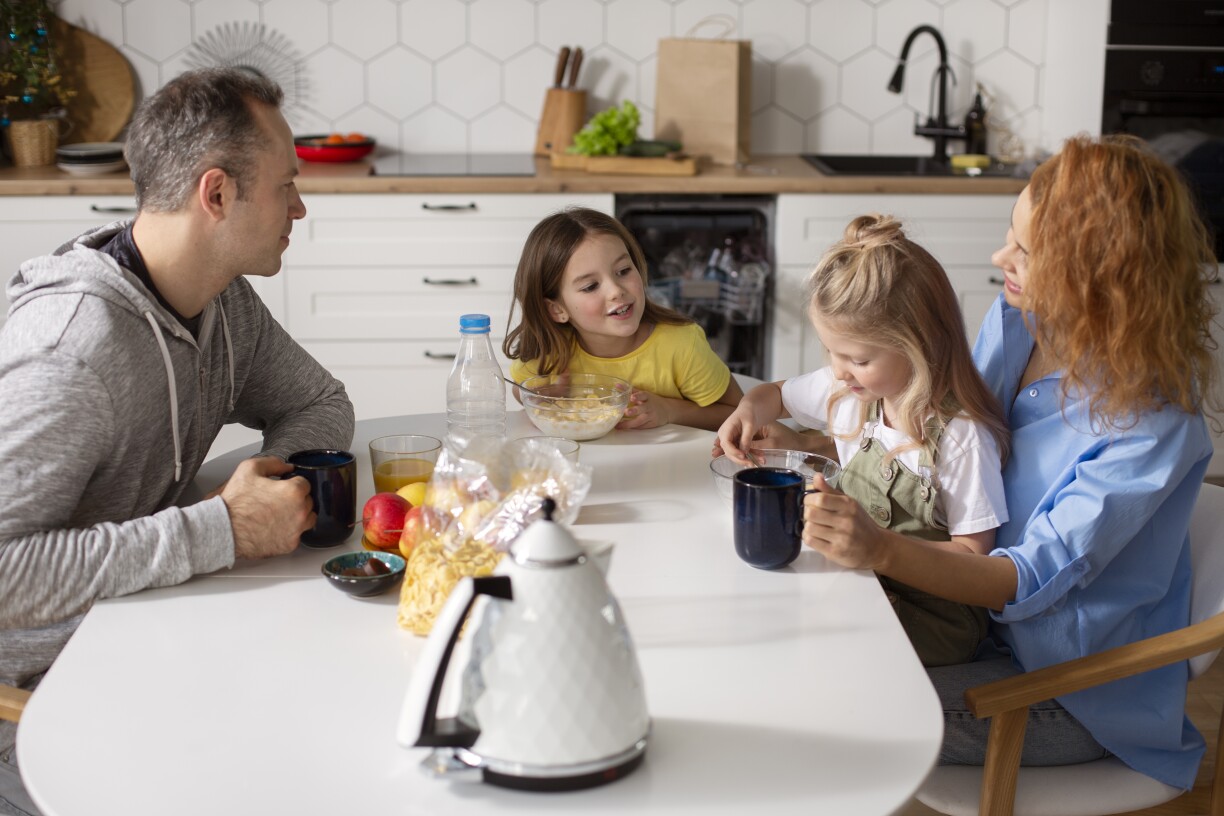
"Just five or ten minutes together, like having breakfast or even a glass of juice is a time of connection", she states. "We spend most of the day apart, so it’s valuable to begin it together."
Also, getting a head start on the day by waking up just a little earlier and having some time with your partner can help things run smoothly and calmly, she suggests.
"Get up ten minutes before the rest of the family. Take a few deep breaths, have a quiet coffee together. It helps you stay calm and present for your children."
One firm rule in her view: mornings should be device-free. And her stance is reflected in a 2018 study from Cambridge University published in BMC Public Health, which found that children who used digital devices within an hour of waking up reported lower concentration and school performance.
"Absolutely no tablets or phones", she insists. "Screens trigger dopamine, and it's very hard for children to stop. When they have to turn them off, they get upset and if we're already in a rush, that’s hard to handle."
Instead, she encourages simple rituals that make mornings joyful. "Music works wonders. So, maybe each family member can choose a song for a different day because it sets a cheerful tone. Or have a Friday ritual like making scrambled eggs or choosing a special song or deciding what you’ll do together that evening. These small traditions become the family glue."
Ultimately, calm mornings should depend less on the clock and more on connection. "The more parents are in balance and in control, the more their children will be too", she suggests. "When we are well, they feel safe."





