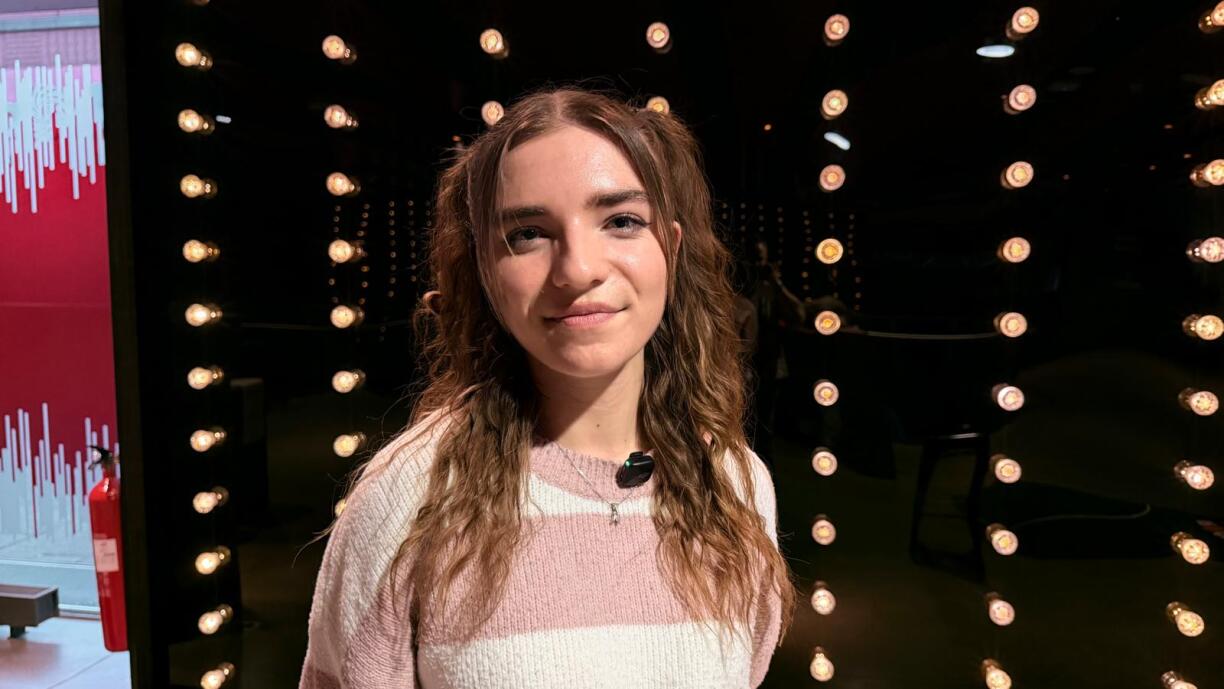
In a short timespan, Laura Thorn won the Luxembourg Song Contest and went on to represent Luxembourg on the global Eurovision stage.
“It didn’t happen straight after Eurovision,” she says. In fact, she went straight back to work, without time to switch off. “I didn’t have a moment to decompress.”
It was only months later that her body made itself known. The musician describes how she felt in the weeks after the performance, and how the ground suddenly fell away beneath her feet.
“I put one foot in my house and I just collapsed,” she recounts. The symptoms were severe. “I had a massive fever, I couldn’t get out of bed anymore, I couldn’t eat.” But she wasn’t ill. "I was completely drained. The battery was empty."
In hindsight, she knows what happened: "All that adrenaline means you don’t notice the stress for months."
School holidays also worked in her favour, giving her time to rest. Having turned her passion into a profession early on, the musician now teaches at the Esch Conservatoire. “I was at home the whole time, and after a week I was already feeling much better,” she says.
In a week's time the Luxembourg Song Contest takes place, with the singer returning to the stage in a different role. For Laura it's going to be "incredibly nostalgic", but she says she feels relaxed. "It’s like getting to relive everything a second time, but without all the stress."
The difference to back then is clear: "This time, I’m just doing it for fun. I’m the interval act." That, she says, will allow her to truly enjoy the performance.
For her, the most emotional moment of Eurovision was not the final itself, but the day of the semi-final.
"I think I cried the whole day," Laura says. The uncertainty had been the hardest part. "You don’t know whether it’s the last time you’ll see all those people in that arena."
Every small moment felt like a possible farewell.
Emotionally, she says she was all over the place. "I didn't know what to feel, because maybe it would continue, or maybe it would be the last time."
When Luxembourg’s qualification for the final was announced, those emotions spilled over. "I was crying and laughing at the same time when Luxembourg was called," she recalls.
Despite the emotional strain, her Eurovision experience opened many doors.
"I’ve met some really great contacts," she says, allowing her to pursue projects that would previously have seemed almost unimaginable. "I was able to do things that would have been unthinkable before the ESC, like the Trounwiessel."
On Friday, she also released a new single titled Not on Me. The song reflects on reactions to success. "There are people who support you massively, and others who are less happy about your success."
The message of the song, the singer says, is clear. "Not On Me means: that's not my fault. Those are issues you'll have to sort out yourself."
She wrote the lyrics entirely on her own. Personal experiences also played a part: "I sometimes had to put up with little jibes and comments."
Music remains the common thread in her life. Offstage, Laura Thorn works in music education at the Esch Conservatoire, which she really enjoys; that's why she studied music in the first place. But at the same time, she is always drawn back to the stage: "For the moment, I have the best of both worlds."
As for the long term? She doesn't want to commit to one. She's very "open-minded" on the matter.
Preparations for the Luxembourg Song Contest on 24 January are in full swing. The singers are rehearsing, the stage is being set up and everything is being prepared for the big TV show.


Laura Thorn associates the event with "lots and lots of emotions". After she had "cried goodbye" to her team after Eurovision, she had seen many of them again in recent days: "The word for this week and for Saturday is: 'emotional'."





