Music has changed over the last few decades. But it is not just lyrics that have evolved, the length of songs has also changed. Decades ago, the constraints of radio airplay first necessitated shorter tracks. Today, the new 'enemies' are streaming services such as Spotify and social media platforms like TikTok, which are said to influence the length and structure of contemporary songs.
Decreasing attention spans among listeners?
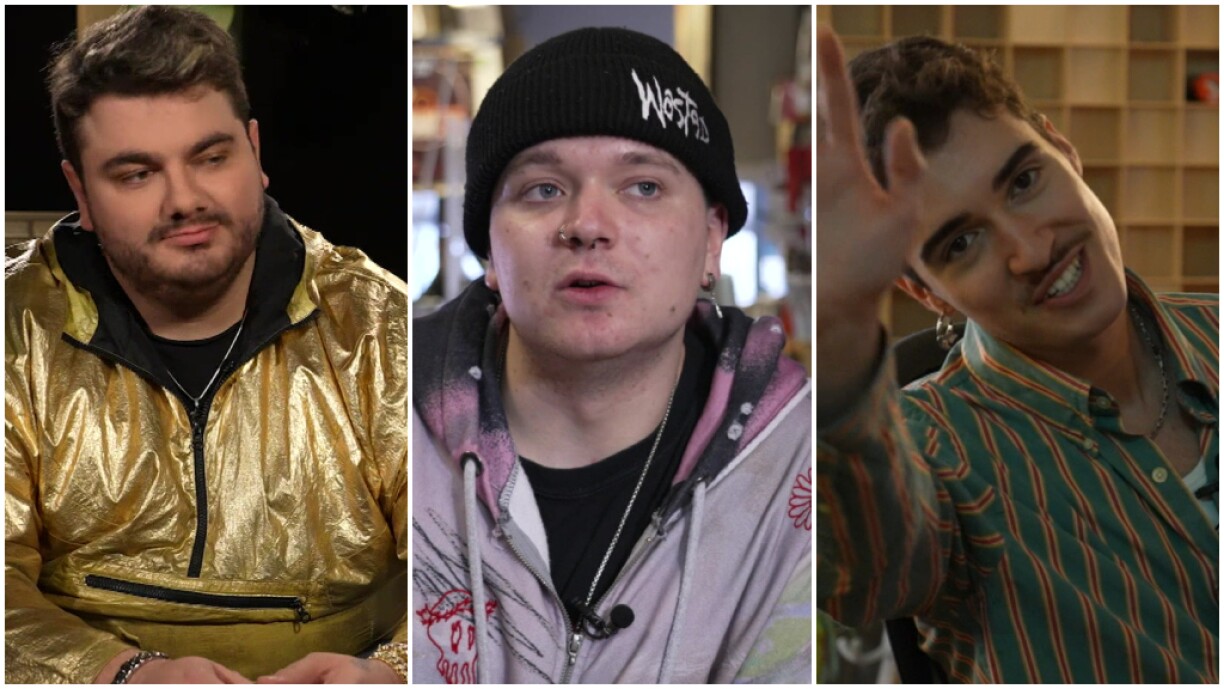
Luxembourgish musician CHAiLD, who also participated in the Luxembourg Song Contest, echoes this sentiment. However, in his eyes, it is not Spotify that is to blame, but rather social media and the attention span of listeners. "I deliberately keep my songs short because of TikTok," says CHAiLD, highlighting the challenge of condensing songs to fit within the three-minute mark. "It's annoying sometimes when you have a good song that feels really good and then you have to shorten it," he notes, adding that "people just don't listen to longer tracks anymore."
Maz, a Luxembourgish rapper, also feels that songs have to be shorter these days: "A few years ago it was 3 minutes 20 or 30. Now I feel like you have to be under three minutes, which isn't always easy."
Luxembourgish producer and musician Turnup Tun, on the other hand, offers a nuanced perspective. For him, Spotify has no influence on the length of his songs:
"For me personally, the length is related to the lyrics: If I have the feeling that I have nothing more to say, like with 'Mamacita' or 'Nach e Kuss', which are two minutes or 2:30, then that's it, I've said everything, and the songs are structured like that. On the other hand, I also have songs like 'Big Mac', which are 6 minutes 30, and I could have made them much longer. It's a feeling thing. Have you finished telling your story in the song or not?"
Maz acknowledges the evolving criteria of today's music landscape, striving to tailor his songs while prioritising creativity: "It's important to find a balance between creativity, i.e., what you want to produce, and commercial music structures." However, he has noticed that there are also musicians who produce longer songs: "I recently discovered a band on a streaming platform that writes songs that are around eight minutes long and they're not necessarily the exception."
He acknowledges that streaming services like Spotify offer flexibility in song duration, with no imposed limit apart from a minimum length of 30 seconds.
The platform therefore presents both advantages and disadvantages. While it gives every artist the opportunity to distribute and promote their music, the primary income source for musicians increasingly shifts towards live performances.
According to CHAiLD, artists are not exactly getting rich from Spotify: "It's impossible to make a living from it." For each stream, i.e., each time a song is listened to, the artist receives around 0.03 cents, at least that is the figure quoted from various sources. However, this income is contingent upon reaching a minimum threshold of streams before any payment is received.
Contrasting views emerge from Turnup Tun, who suggests reframing Spotify's role as a promotional tool rather than a direct income source. "Artists need to stop comparing Spotify to selling CDs; those days are over," he asserts, advocating for a perspective that views Spotify as a form of "musical social media."
Popular social media platform TikTok also has a lot to offer when it comes to music promotion. An increasing number of artists are leveraging its reach to showcase new songs even before their official release. However, adapting songs to fit the platform's unique format is essential for success, as emphasised by CHAiLD based on personal experience:
"Maz and I wrote our song 'Nightcall' with TikTok in mind. You need to have a strategy and it worked. The song went viral and every post using it as well."
Crucially, however, CHAiLD points out that they rewrote the song five times to pull that off. There is even said to be sort of a secret recipe for a song to go viral on TikTok, and on this point they all agree: the first three seconds are the most important. Additionally, the song needs to feature a few lines that many people can relate to. "For a while, lyrics about bad ex-boyfriends and toxic relationships were very trendy. A lot of people can sympathise with that," according to CHAiLD.
The part that ends up being posted on TikTok is only 10 to 15 seconds long and this is the one that has to resonate with audiences. "Then it doesn't matter how long your song is, as long as that part is somewhere in your song. People listen to the song and look forward to the part they know from TikTok," Turnup Tun explains.
In general, these new platforms are a bit of a double-edged sword, Maz cautions. While they offer widespread access to music, standing out amidst an abundance of content poses a challenge. Success on these platforms often hinges on luck, making it uncertain whether an artist's music will gain traction. CHAiLD, meanwhile, wishes that people would appreciate music more and understand the effort and dedication that goes into creating it.





