I've attended many concerts at the stunning Philharmonie over the years, enjoying the wonderful acoustics of the Grand Auditorium, be it filled with the sound of a full-sized orchestra or the delicate reverb of a single piano key from a solo performer.
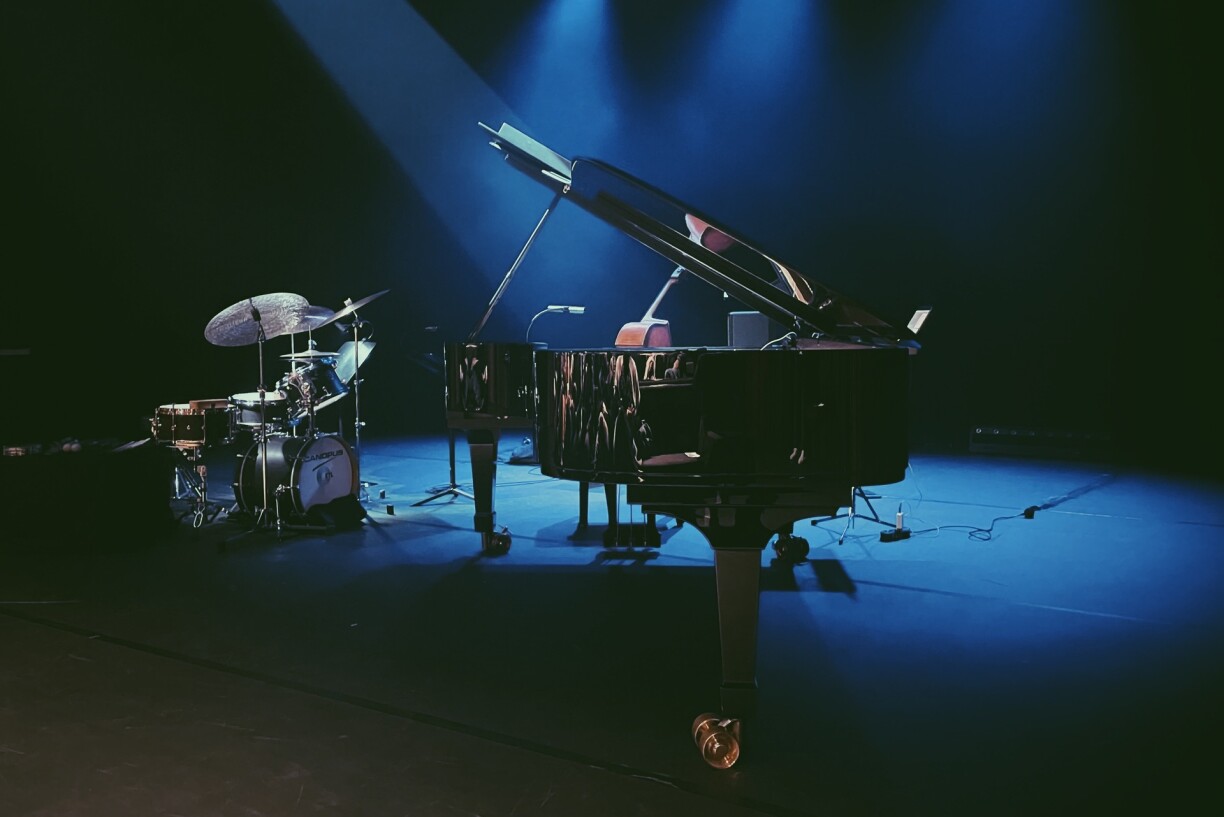
I hadn't, however, experienced any music performed in the Espace Découverte. After asking the always helpful Philharmonie staff for directions to the location of this mysterious performance room, I descended two flights of stairs to arrive at a delightful space (located directly under the Grand Auditorium) which featured a floor-level performance area and enough seating for around 100 listeners. With a minimal lighting setup and no amplification I could immediately tell that this would be a very intimate musical experience.
With no designated seating, I took full advantage and placed myself in the front row, allowing me the opportunity to check out how the 'stage' was equipped before the performers arrived. With a reasonably minimal drum kit, a grand piano and an upright bass there was little to nothing to imply how the music of the evening would unfold.
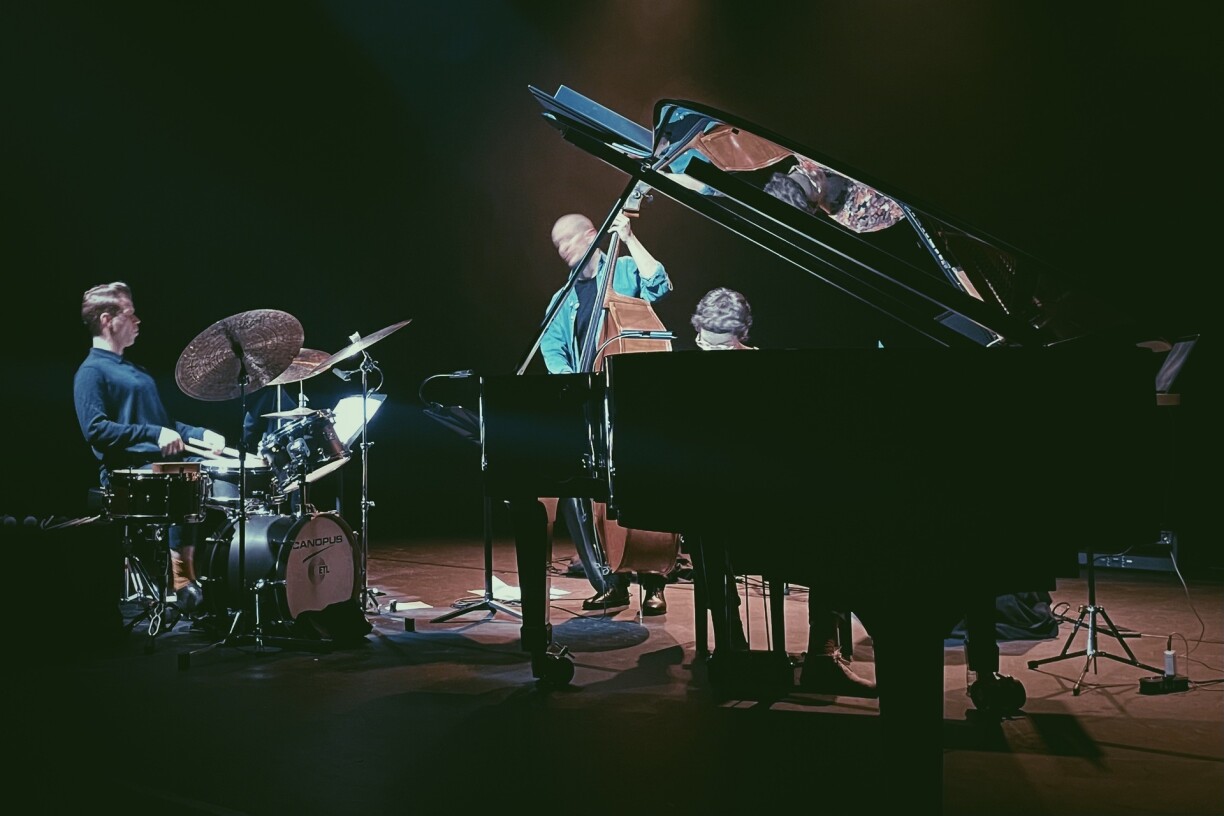
As pianist Kaja Draksler, bassist Petter Eldh and drummer Christian Lillinger arrived to take command of their instruments they were greeted with a welcoming but slightly muted round of applause. It seemed I wasn't the only audience member not entirely sure what to expect. But from the moment Christian Lillinger began to interact with his drum kit it was obvious that this was going to be - at the very least - a very original performance.
Utlising his drum kit to its full percussive potential, Lillinger proceed to play ever part of every piece of the kit with a deftness and dexterity that even the most seasoned of drummers would struggle with. Every edge and rim before him was tapped, beaten, flicked and prodded with a variety of traditional sticks, brushes, coiled wire and a host of other mallet-type devices as he built the foundational rhythms for his colleagues to unfold themselves upon.
Petter Eldh held his double bass like a cherished dance partner as he worked his way majestically across the fretboard with a powerful yet nuanced authority, extruding deep notes in a perfectly syncopated dance with his rhythmic partner. When called upon to solo he confidently adjusted his style to project the music out and beyond the stage, showing that - with him at the helm - the double bass truly can be a lead instrument.
And Kaja Draksler, hidden behind her grand piano, shifted between punctuating the intertwining rhythms of her partners with minimalist notes and providing driving melodies with a calmness and style which interlocked beautifully with the drums and double bass. And when her standout moments arrived she delivered her solo parts with a playfulness which fully demonstrated her command of her instrument.
Truth be told, I was unfamiliar with the work of all three musicians until I heard the piece entitled “Body Decline” on episode 36 of our very own In Tune show. It instantly transported me back to listening to the percussive recordings of “Marilyn Mazur's Future Song“ on ECM Recordings and I knew I had to see this performed in the flesh.
Full respect to all involved on stage as well as the staff at Philharmonie because it most certainly didn't disappoint.





