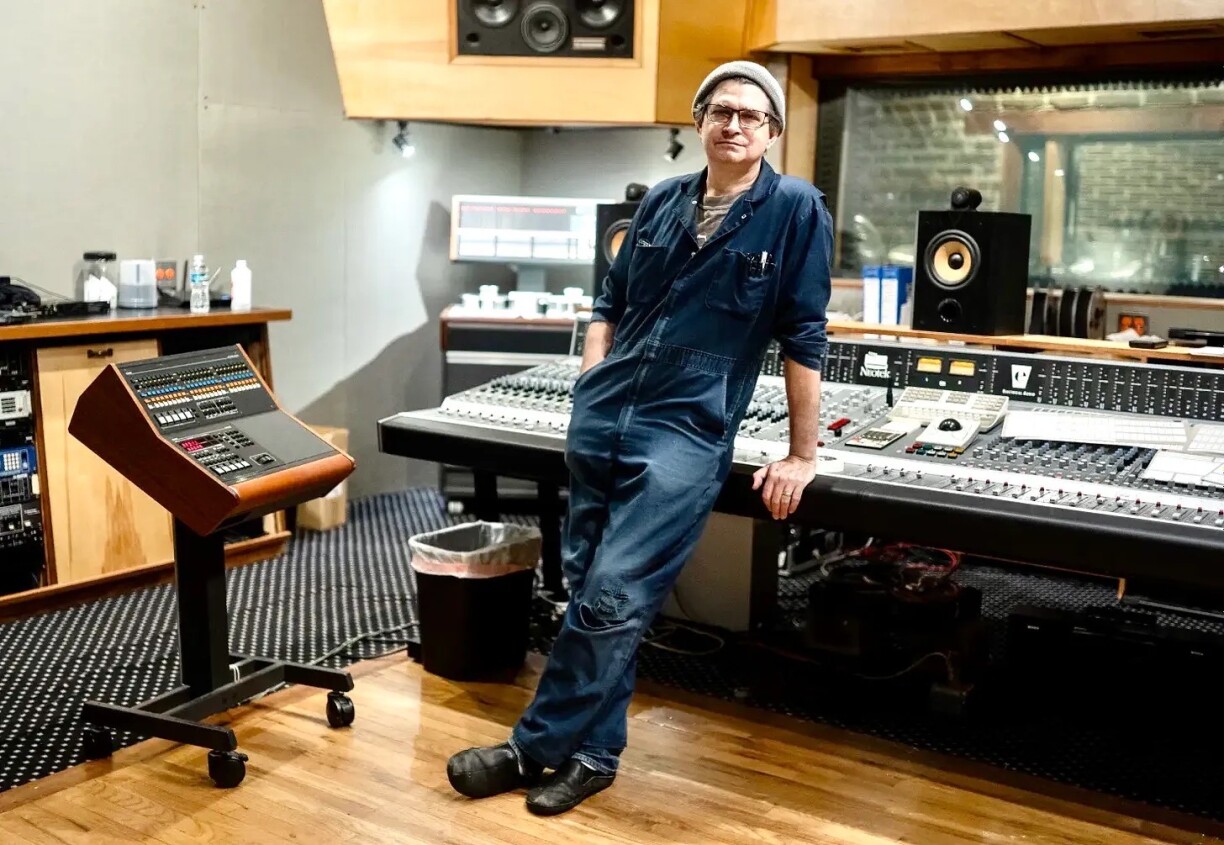
Working with everyone from Nirvana [In Utero] and the Pixies [Surfer Rosa] to PJ Harvey [Rid Of Me] and Led Zeppelin legends Robert Plant and Jimmy Page [Walking Into Clarksdale], Albini was known primarily for his straightforward and fuss-free approach to recording musicians at work. Sonic trickery was left to the musicians - his task was to capture performance.
With a firm dedication to the art of analogue recording and production, he championed this approach throughout his career, insisting that his job was to be a ‘vector of history’; recording and cataloguing music in a way that would serve as an archive for future generations.
Born in Pasedena, California, Albini picked up his first instrument as a young teenager whilst suffering a broken leg, and after discovering the power punk music of The Ramones and the Sex Pistols he began performing with local bands. His education would lead him to a degree in journalism which would fuel his work with music publications and embolden his support for local music scenes and the phenomenon of ‘zines’.
Fronting three bands of his own - Big Black, Shellac, and Rapeman (the name for which he later expressed regret, describing it as an unconscionable and indefensible choice) - he became a fixture of the ever growing alternative rock scene of America throughout the 80s and early 90s.
His move into production began during the mid-80s, mostly working with underground bands such as The Membranes and Slint, to whom his approach to bottling the energy of their often frenetic, irregular and dark music became a much loved aspect of the resulting recordings.
By 1988, his burgeoning reputation as a recording engineer lead him to undertaking recording duties for what is now regarded as the one of the greatest alternative rock albums of all time: ‘Surfer Rosa’, by the Pixies. Despite a distinct lack of commercial success the impact of the album, and in particular how it sounded, would go on to become the bedrock of his legacy.
Often eschewing royalty rights for his work - preferring below average payment for ‘recording duties’ - he also preferred not to have any production credits detailed on bands’ album artwork. After all, his mantra was to do his utmost to record the music accurately - not interfere with the artistic process. This humble approach to his craft only gained him greater respect from the musicians who chose to employ his services.
Using the money he had earned he set up Electrical Audio in Chicago in 1997, a facility dedicated to capturing musical performance in an entirely analogue fashion, with rooms designed and built to accentuate natural reverberations instead of relying on post-production to enhance the recordings. Yet, even with ever increasing costs over the years, he still refused to take any royalty credits - only ever billing for the recording duties undertaken.
And despite dedicating most of his time to recording thousands of artists Albini continued to record and perform live with his band Shellac, releasing six albums between 1997 and 2014. His presence at renowned festivals such as All Tomorrows Parties and Primavera would draw as many musicians to the crowd as it did ticket paying fans.
Known for being a devilishly brilliant poker player, it is somewhat poignant that his own, last hand was to be played at his studio where he passed away after suffering a heart attack aged just 61, only a week before Shellac are due to release their first album in 10 years.
The subsequent outpouring of grief and appreciation from both those he worked with and musicians from all genres of music surely cements his chosen legacy as that Vector of history. He will be much missed.





