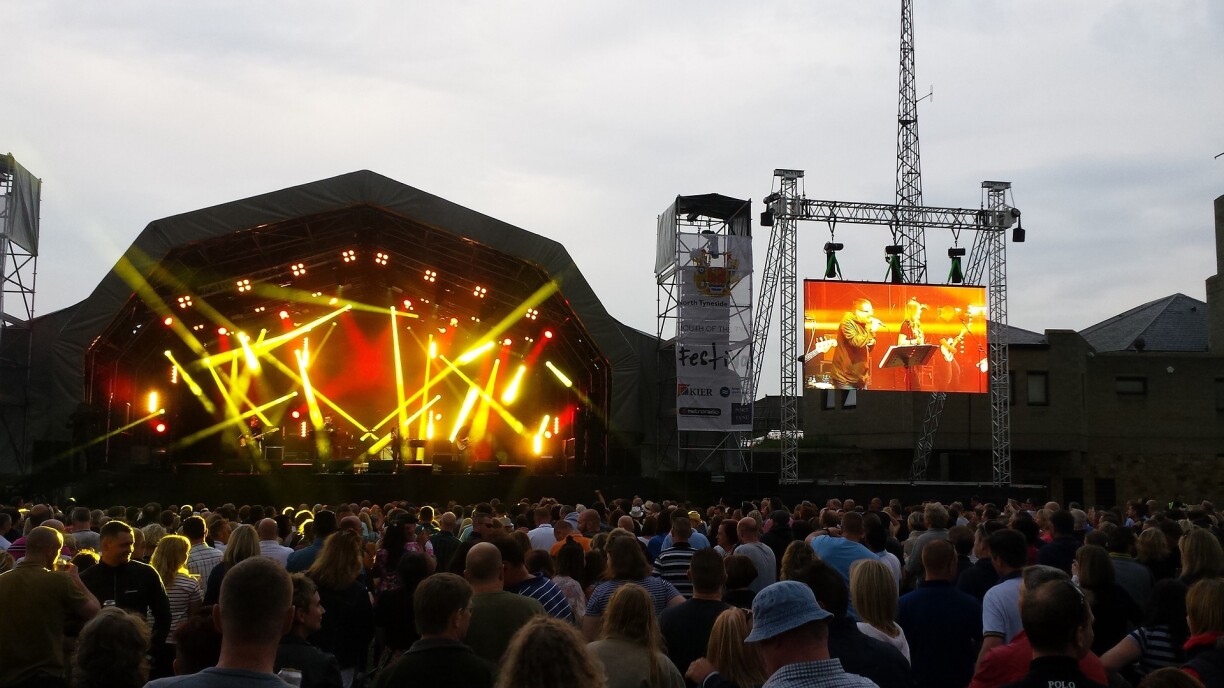
The organisers of Fête de la musique, the largest musical event in the country, have already indicated the festival will not go ahead. The event, which consists of nearly 400 concerts across 25 municipalities, welcoming over 50,000 guests, is not expected to take place in June as planned. Most of the spring events have been cancelled. The ninth edition of "Like a Jazz Machine" by Dudelange and the Flamenco Festival will not take place this year and the Culture Night has been moved to September.
Nothing has yet been decided for the capital's July festive events such as the Blues'n Jazz Rally or the Rock um Knuedler. At den Atelier, all concerts planned for the spring have been postponed - at best - to autumn, and the organisers are not hopeful for this summer's outdoor events such the Siren's Call organized with Neimënster.
The future is equally uncertain for events in France such as Eurockéennes, Francofolies or Vieilles Charrues, according to AEG Presents France head, Arnaud Meersseman.

It is impossible to predict whether authorities will allow large open-air gatherings to go ahead from July onwards. Certainly those planned for early June are unlikely to take place, said Meersseman. He also raised concerns over the economic situation, asking whether punters would be willing or able to pay 80 to 100 euros for festival tickets.
Meersseman also does not think it likely that well-known American acts will attend, given the issues with organising European tours and dates. Without headliners, he does not foresee many festivals going ahead..
Meersseman hoped that public authorities would soon be able to provide "clarification"in order to develop better "visibility".
Jérôme Tréhorel, director of Vieilles Charrues, shared this opinion, saying it would be better if authorities could advise now if events require cancellation. Meersseman explained with a public decree in place, contracts can cite force majeure and become null and void, reducing the amount of costs incurred.
This framework would help organisers avoid long and difficult conversations with insurers, particularly around the interpretation of the pandemic factor. Tréhorel referred to it as "arm wrestling" with insurance companies.
For now, the Minister of Culture has created a support unit for 2020 festivals to adapt the government response to those who wished to cancel already, and those who were waiting for the situation to develop before taking a stance. The Nuits de Fourvière organisers are hopeful they could open with a modified programme at a later date, for example.
Regarding the Vieilles Charrues, Tréhorel said he could not envision receiving authorisation for an event comprising over 70,000 guests per day, particularly given health measures. As he pointed out, large gatherings such as festivals and concerts were the first to fall victim to confinement measures, and could therefore be the last to reopen.
Furthermore, there is the question of first aid staff. A festival such as the Vieilles Charrues requires around 230 first aiders to run the field hospital, but whether these staff members will be available is another matter altogether.
Tickets for the Vieilles Charrues are already sold out, but Tréhorel said he doubted whether customers would still wish to attend in light of the pandemic, particularly if there is no vaccine. The festival's partners and sponsors have also been affected by the health crisis, which constitutes another stumbling block.
Although companies such as AEG have other income flows, the Vieilles Charrues is a designated mono-activity, like many other festivals. To perpetuate this type of event, Tréhorel said they were dependent on the government's mechanisms in the event of cancellation, relying on partial unemployment, loans and financial aid.
The future remains uncertain, but Tréhorel emphasised the need to consider how they would book musical acts and compete with other festivals, while appealing to the general public.





