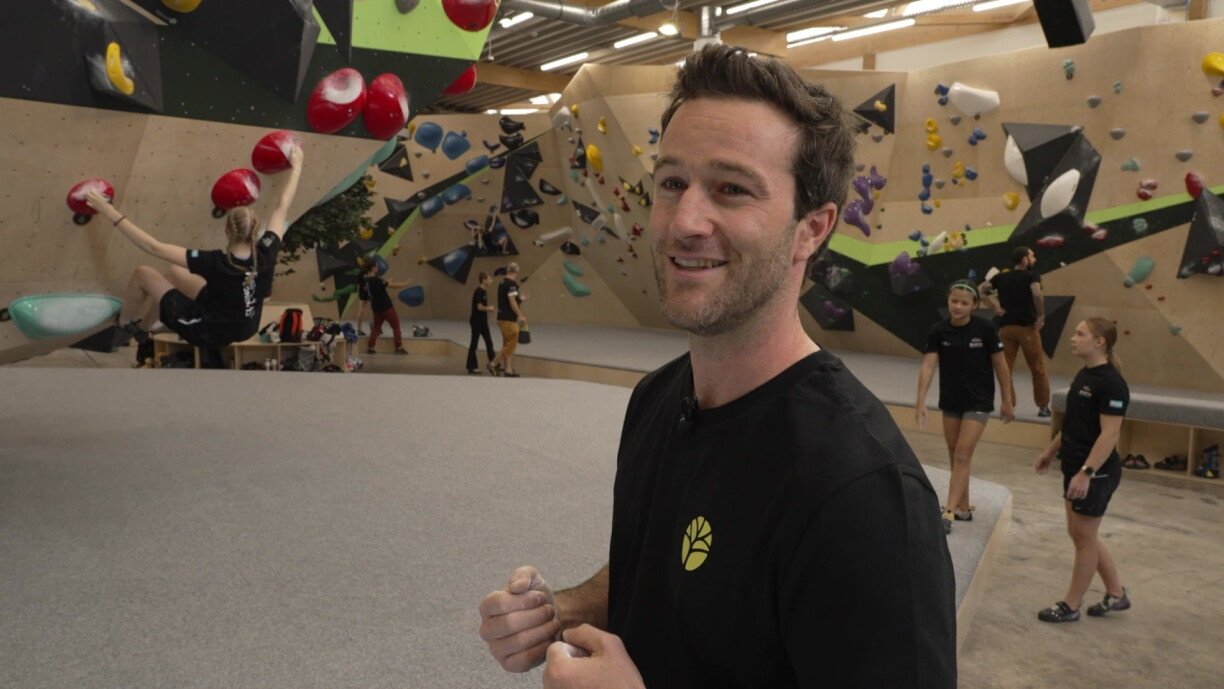
For Noé Berger, bouldering has been a passion for around 30 years. The sport requires minimal equipment: the right shoes and a bit of magnesium to improve grip, and you are ready to start climbing.
Each bouldering route is like a puzzle waiting to be solved. Before touching the wall, climbers carefully consider which moves might work, where to place their feet, and which holds to use.
It is a process that demands not just physical prowess but also strategic thinking.
While arm and finger strength naturally play a big role, Berger points out that footwork is often underestimated. Using your feet correctly is just as important as upper body strength, as misplacing your feet can make a route much tougher than it needs to be.
With experience comes routine, as movements become more instinctive, making it easier to "read" the wall and find the optimal path to the top.
Over time, climbers become more adept at recognising patterns and solving problems more intuitively.
Bouldering has its roots in traditional climbing. It was originally conceived as a training method for longer climbs in the mountains, but over time, it has developed into a sport in its own right, complete with its own rules and a growing community.
The goal in bouldering is clear: complete a route from start to finish, gripping the final hold with both hands in a controlled manner to mark your success.
The sport is also gaining popularity in Luxembourg. Gilles Cosyn recognised the growing demand for a new climbing facility near Luxembourg City and founded "Boulder Forest", a gym designed to welcome both recreational climbers and competitive athletes.





