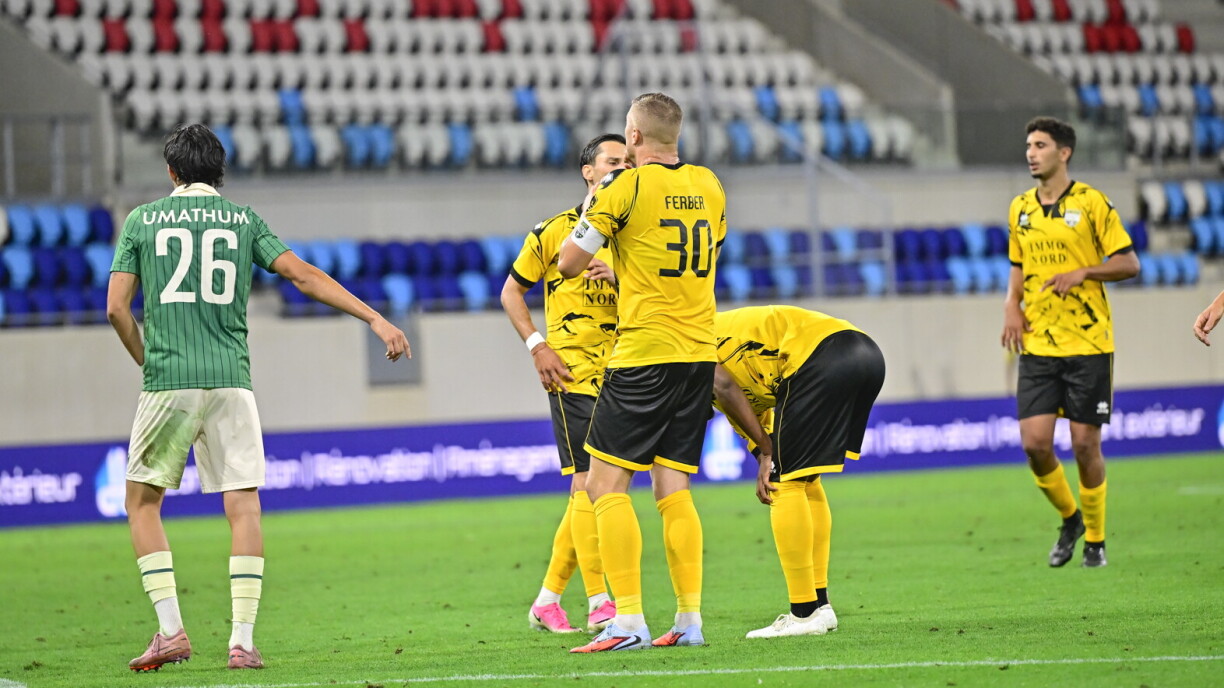
The end of the road seems inevitable. UNA Strassen and reigning champions Atert Bissen, the Grand Duchy’s final two torchbearers in Europe, are facing rough exits from the UEFA Conference League. They have both lost their first legs against Partizan Belgrade and ETO FC Győr respectively, and need a miracle to progress to the next qualifying round.
And when that happens, we can almost definitely conclude that Luxembourg failed to turn the tide. Having dropped to the last five associations in UEFA’s coefficient rankings, the country has already lost one of its precious European spots for next season after the poor showings last time out.
Two wins in ten games so far will almost certainly prove insufficient. There are some caveats of course – Differdange and Mondorf bowed out to superior, professional opponents, the latter pushing Dinamo Tbilisi to extra time and almost making it through, while the former was on the cusp of a breakthrough when a collective head loss and two red cards stifled their progress.
Still, all of that counts for little in hindsight. It was yet another disappointing summer for Luxembourgish fans, and they can brace themselves for one more year of three-club international participation.
Thursday evening’s showpiece between Strassen and Partizan might not necessarily be a dramatic affair. It will probably be the last Conference League game involving a Luxembourgish team this year, though – and these occasions are getting rarer and rarer each year.
Unlike other years, it is hard to feel too enthusiastic about any club’s transfer market dealings so far. With most clubs’ realistic future prospects looking considerably bleaker than 12 months ago, this is hardly unexpected. The drop in coefficient points has had a tangible knock-on effect across the league.
Two clubs that have successfully defied that trend are Differdange and Atert Bissen – and neither is a surprise. FCD have long been able to entice opportunities that eluded others thanks to their track record of consistently winning trophies and standing a chance against seasoned professionals from abroad, too.
From this season’s arrivals, Sébastien Thill has clearly been the biggest name. The Luxembourg international arrived from Polish outfit Stal Rzeszów, having spent the best part of the last decade abroad. Honduran international Elison Rivas also signed for FCD, alongside Brazilian journeyman striker Gustavo Vintecinco.
Bissen, on the other hand, had no record to sustain. They were coming off the back of their maiden championship title in their first-ever top-flight campaign, and felt the need to adjust to the demands of the Champions League clash awaiting them.
European football is always a convenient draw when attracting ambitious talents from abroad, but it works equally successfully to poach the brightest gems of other BGL Ligue teams, in the hope of providing them with the springboard required to earn a lucrative contract abroad.
It was on this premise that Diogo Pimentel (UNA Strassen), Geordan Dupire (Swift Hesper) and Tiago Rodrigues (Wiltz) decided to join forces with the champions last month. They also managed to keep all of their assets, including top scorer Roman Ferber, skipper Adriel and defender Louis Marasi, showing that they have an impressive platform to potentially add to their solitary piece of silverware at the club’s Klengbousbierg base.
Another European participant, US Mondorf, also spiced up their transfers heading into their historic first journey abroad. Clément Couturier was the biggest arrival on the back of earning his full Madagascar debut, after being a part of both F91 Dudelange and Swift Hesper’s glory days. Experience from the French lower leagues was generally prioritised this summer window, and the club now look well-positioned for another podium challenge.
The rest of the teams in Luxembourg’s top flight have arguably lost more quality than they gained, though. Granted, newly-promoted sides did well to beef up their roster ahead of a gruelling ten months, but all the others seem to be tightening their belts at the same time.
UNA Strassen mostly tried to replace their departures: Denis Agović (retired), Denis Schütte (Rosport) and Pimentel were amongst those leaving, but no clear upgrades have been secured in any position to date. With their European elimination pending, it will probably not be addressed later this summer, either.
Several mid-table sides have lost their crown jewels since last season. Käerjéng’s in-house marksman Younes Bellali will not follow the team’s ascent despite their BGL Ligue return being a roaring success. Hostert have now lost Kenan Avdusinović on a permanent basis, having loaned him out to Niederkorn last summer. To replace him, they have managed to get Jeunesse Esch’s Luxembourg striker Michael Omosanya on loan.
Racing Luxembourg have largely kept a capable squad together, but not without sacrifices. Milan Hofland and Arnold Qevani made it pro. Simba Matubanzila left for France. Néstor Monge went back to his native Costa Rica and Romain Ruffier (doubling as sporting director) retired. Several talents left the academy. It is now up to talented French coach Stéphane Masala to get his new squad firing as soon as possible.
Thanks to many presidents pulling the plug on upgrades and mainly focusing on recovering the quality they had lost, no significant shift in the upper echelons of the league is to be expected. The main question for the campaign is, therefore, how many of the newcomers will stay up – and at whose expense?
After years of fighting the inevitable, several clubs now find themselves at a crossroads. The most obvious conundrum can be spotted by just peeking at the table before the league even kicks off on Saturday.
Swift Hesperange have been docked 12 points by the Luxembourgish Football Federation thanks to outstanding payments to former players and staff. It has been an ongoing battle – last year, they headed into the domestic season with a depleted squad, only to make a string of desperate last-minute signings. They have failed to acquire an international licence for the third year running (the longest streak of all Luxembourgish top-tier clubs).
They retain the sentiment that they have around a dozen prospective new signings training with the team and waiting for Swift to be taken off UEFA’s transfer embargo register, but having to play an entire season with a team of youngsters, on top of the hefty points deduction, remains a very real possibility.
Their latest BGL Ligue title, in 2023, was one for the ages, scoring a record-high 100 goals. Powered by now-Bundesliga striker Rayan Philippe, the Holleschbierg outfit’s victory seemed to set the tone for a new era. It was a short-lived success: thanks to an eccentric approach by investor Flavio Becca, a haphazard transfer policy and mixed success on continental level, Hesper started to regress. And it was then that it became painfully obvious just how unsustainable their rapid rise had been.
Two other former powerhouses have undergone a much slower demise in recent years. F91 Dudelange and Progrès Niederkorn have routinely contested cup finals and participated in Europe over the last decade (F91 reaching unprecedented heights), but they both look a shell of themselves as they prepare to fight for the role of “best of the rest” this time.
Dudelange’s drop was signposted last year by an alarming home-and-away loss to Andorran Atlètic Escaldes. The most decorated Luxembourgish club of the century crashed out against seemingly inferior opponents in a strikingly similar fashion to Fola Esch’s failure to beat Sammarinese opponents Tre Fiori three years prior.
Having already operated on a limited budget, F91 now appear to be in a financial straitjacket. Both of their strikers, Agostinho and Dinho, left for greener pastures. Talented midfielder Tudor Neamtiu has decided to leave, while marauding stalwart Mehdi Kirch opted for a move to Mondorf. Kino Delorge, Evan Rotundo and Adrien Pianelli were all mainstays of the first team. Dudelange will not be able to count on any of them next season, nor did they manage to get a transfer fee for them.
Niederkorn’s situation is far less gloomy. Having reached their limits with continuous spending and chasing a breakthrough that never came, they realised their shortcomings and adapted a new transfer policy last summer, focusing on former players of the club and Luxembourgish talents shining for fellow BGL Ligue teams.
It resulted in some grim showings and an also-ran performance last time, but they now have the foundations to build on as they plan to return to the top half of the pack. Securing the signings of André Barrela (Pétange), Samir Hadji (Differdange) and Ricardo Delgado (Strassen) can be a great deal of help. However, they had to contend with the departures of several key players. Advanced playmakers Omar Natami, French star Jonathan Schmid and iconic goalkeeper Sébastien Flauss are among those no longer on the payroll, alongside young talent Alex Guett-Guett.
A narrowing middle pack has created greater disparity among the leading teams and the rest. Niederkorn might just have been able to join the former pack at the last opportunity. Dudelange, following the leads of Racing and Jeunesse Esch, still have a lot to do with their own generational transition.
The new season of the BGL Ligue will be similar to the campaign just behind us in many ways. The main difference is arguably the drop in European places: whereas previously there were four Luxembourgish teams representing the country on the international stage, it has now been reduced to three, due to continuous underachievement over the last five seasons. Two of these places will be distributed based on league finish, while the winner of the Luxembourgish Cup also earns a berth.
We said farewell to four teams at the end of last season: Rodange finished bottom of the table, just below neighbours and rivals Union Titus Pétange, a team marred by institutional disarray and a dysfunctional squad-building plan throughout the season.
Jeunesse Canach and Mamer 32 spent one season each in the top flight. Canach started more impressively and occupied a stable mid-table spot for most matchdays, but failed to sustain their level and slipped into the relegation play-offs, eventually losing to Résidence Walferdange on penalties.
Walfer will be joined in the top tier by automatically promoted duo US Rumelange and Etzella Ettelbruck, alongside Wiltz 71, who defeated Mamer in the play-off game.
Two newly-promoted sides will kick off the new edition, with Wiltz hosting Etzella. Elsewhere, Dudelange travel to Bissen for a challenging first test while Mondorf face Differdange in another top-of-the-table clash.





