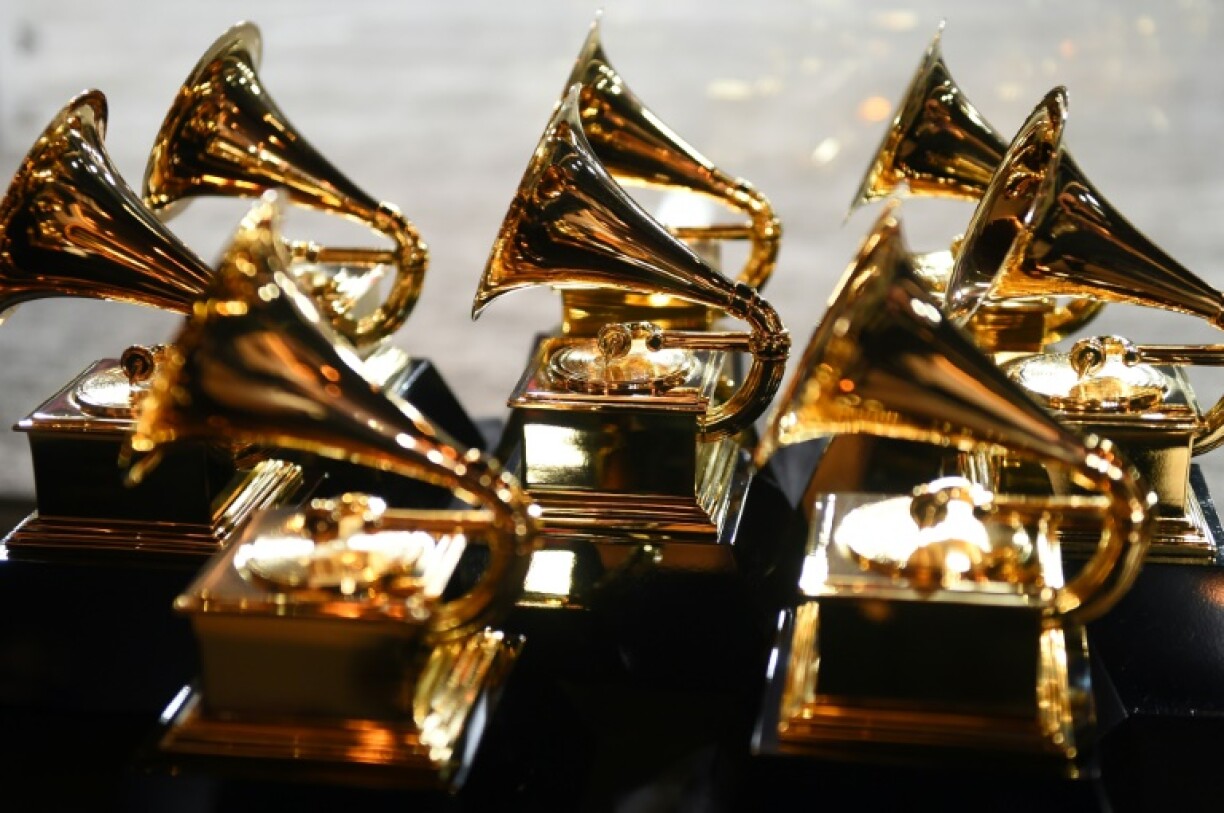
Once upon a time, when your favourite artist failed to receive a Grammy nomination, you dealt with it in a standard and, perhaps, reasonable manner. You came up with some new and unique ways to swear, muttered something uncomplimentary about the music industry, declared the whole thing a fix, perhaps questioned the musical tastes of everyone involved, and got on with your day.
Not anymore.
Now, apparently, it's a scandal.
An outrage.
A calculated insult to an entire fanbase.
The Recording Academy has committed an unforgivable act of cultural vandalism and someone, somewhere, must be held accountable.
Preferably immediately, publicly and with a carefully worded apology, or in John Summit's case unfettered rage, posted across every available social media platform.
And, now, we, as a people, feel the need to follow suit.
Welcome to awards season, where the trophies are optional but the outrage is compulsory.
And before anyone gets too excited, this isn't an argument against passionate music fans. Quite the opposite.
Music matters. It gets us through breakups, bereavements, bad relationships, worse jobs and those interminable journeys when the radio signal disappears just as your favourite song begins.
We form extraordinary emotional attachments to music. That's part of its magic. It's why different songs at different times hit people throughout different stages in their lives, careers, meltdowns.
But somewhere along the way, we've started confusing emotional investment with personal ownership.
Social media has played an enormous part in that.
We now have unprecedented access to the artists we love. We see their breakfast, their holidays, their recording sessions, their insecurities, their political opinions and occasionally their spectacularly ill-advised late-night posts.
They share snippets of unfinished songs, invite us into their creative processes and thank us personally for helping them achieve their dreams.
It's wonderful. It's intimate. And it's also created a rather peculiar illusion.
Because following an artist's every move doesn't make you their friend. Buying their album doesn't make you their manager. And spending three hours arguing with strangers on X/TikTok/IG doesn't qualify you for a seat on the Grammy voting committee.
Yet increasingly, fandom seems to come with an expectation that the rest of the world should share precisely the same enthusiasm.
If your favourite singer releases an album you consider a masterpiece, then surely everyone else must recognise it as such. And if they don't? Well, clearly something sinister is going on.
Except that's not how awards work.
Take the Grammys.
For all their glamour, extravagant performances and increasingly elaborate red-carpet outfits, the awards are essentially an exercise in peer recognition.
Press enough palms, rub the right shoulders, flatter just enough to deceive.
Maybe employ the 'right' promo agency.
Recordings are submitted for consideration, checked for eligibility and category placement, and then voted on by eligible members of the Recording Academy. These are people who actually work in music: performers, songwriters, producers, engineers and other recording professionals.
They vote to determine the nominations, then vote again to choose the winners.
It's not a public referendum. It's not a streaming chart. And it's certainly not a competition to establish which artist has the most enthusiastic collection of people armed with smartphones and unlimited free time.
Does that mean the Grammys always get it right?
Good grief, no. Nor do the VMAs...or the Mercury Music Prize.
The music industry has a long and occasionally embarrassing history of overlooking extraordinary artists, rewarding questionable choices and recognising brilliance several years after everyone else noticed it.
There are legitimate questions about representation, genre classifications, commercial influence, campaigning and whether the people casting votes are sufficiently familiar with the work they're judging.
And there is nothing wrong with challenging any of that.
But there's an enormous difference between questioning the credibility of an awards process and accusing it of a personal vendetta because your favourite singer didn't make the shortlist.
Then there are the MTV Video Music Awards, which operate rather differently.
The VMAs have long embraced fan participation, with public voting playing a substantial role in determining winners across numerous categories. Indeed, their voting arrangements have allowed fans to cast multiple votes, with special periods offering additional voting opportunities.
It's a system designed to encourage engagement, enthusiasm and, inevitably, organised fan campaigns.
Which is perfectly fine. But it also demonstrates why we should be careful about treating every award as an objective measurement of artistic excellence.
A popularity contest and an industry award are not necessarily measuring the same thing.
One might reward the strength of a fanbase. Another might recognise technical accomplishment, songwriting, originality or the opinions of industry peers.
Neither is infallible. Neither is obliged to reflect your Spotify Wrapped.
And the same distinctions exist in film and television.
The Oscars are decided by members of the Academy of Motion Picture Arts and Sciences. Different professional branches play important roles in determining nominations, while the wider voting membership participates in selecting the winners.
The Emmys follow a similar philosophy of professional recognition, with television industry members voting in their relevant areas.
The Golden Globes, meanwhile, are different again. Their voters are international entertainment journalists rather than the actors, directors and technicians who make the films and programmes.
So even within the apparently straightforward business of handing famous people shiny objects, we're dealing with fundamentally different groups of people, different criteria and different perspectives.
And thank goodness for that.
Imagine how spectacularly dull the arts would become if everyone agreed on everything.
We'd have one universally approved album, one officially sanctioned film, a single acceptable television series and a rather depressing awards ceremony lasting approximately seven minutes.
No arguments about whether the director deserved the Oscar. No furious debates about the album that should have won. No incredulous conversations about a brilliant television performance being overlooked.
Just universal agreement, polite applause and everyone home in time for the weather.
And while we're discussing supposed snubs and injustices, consider this year's Grammy nominations, where women have achieved something rather extraordinary.
For the first time, the six most-nominated artists are all women, led by RAYE with 11 nominations and Rosalía with nine.
Seven of the eight Album of the Year nominees are women, as are seven of the eight Song of the Year contenders. Bruno Mars is the solitary male representative in both categories.
It's a remarkable showing, and one worth celebrating. But does it mean male artists have suddenly become less talented, less deserving or victims of some sinister industry conspiracy?

Of course not. It means that, in the judgement of the voters, these were the strongest contenders this year. We should be capable of applauding that achievement without turning it into another grievance.
Equality of opportunity doesn't mean an obligation to distribute trophies evenly, and artistic merit doesn't come with a gender quota.
Sometimes the women dominate.
Sometimes the men do.
The important thing is that the music gets judged, rather than the demographic of the person making it.
Of course, there's another complication that tends to get lost somewhere between the angry hashtags and demands for justice.
Eligibility.
Awards have deadlines.
The Grammys, for example, don't simply consider everything released during the calendar year. Their eligibility periods run across parts of two years.
The 2027 ceremony considers music released between 31 August 2025 and 28 August 2026.
That means an artist releasing something in September 2026 might be dominating playlists, selling out venues and providing the soundtrack to half the planet's autumn, but that particular release isn't eligible for the February 2027 ceremony.
It will ordinarily fall into the following awards cycle, provided it meets the relevant submission and eligibility requirements.
It's not a snub. It's a date.
An admittedly unromantic explanation, but one that could save an awful lot of people from composing furious open letters to an organisation that has done nothing more controversial than operate a calendar.
And even when an artist is eligible, there are only so many places on a shortlist.
Someone has to miss out.
That's the nature of competition, whether we're talking about music, cinema, television or the village flower show.
Scanning the rather exhaustive Grammy's list we have some big names missing, this is true, Abrams, Styles, Kahan, Doja Kat, Combs...even Bieber, Fender, Antonoff (though he has a couple of writing credit nods), Todd and Hobert.
Not every outstanding record can win Album of the Year. Not every extraordinary performance can receive an Oscar. And not every television series that has kept you awake until three in the morning is automatically entitled to an Emmy.
Sometimes other people simply prefer something else.
I appreciate this is a radical concept in an age when every opinion seems to require immediate public validation, but disagreement is not necessarily disrespect.
Nor is it persecution.
What concerns me most is the increasingly personal nature of these reactions.
We've become so accustomed to broadcasting our preferences, receiving affirmation and finding communities that reinforce our opinions that encountering a different judgement can feel almost confrontational.
Social media rewards that response. A thoughtful discussion about the relative merits of two albums is unlikely to generate quite the same attention as declaring that your favourite artist has been ROBBED and the entire awards establishment should be dismantled before lunchtime.
Outrage travels faster than nuance.
And once a fanbase starts treating an award nomination as a moral obligation, any other outcome becomes evidence of wrongdoing.
The irony, of course, is that the artists themselves often have considerably more perspective than the people defending them.
They know how much work goes into making a record. They know how many talented people are competing for recognition. They know that commercial success, critical acclaim and industry awards don't always arrive together.
Naturally, they're allowed to be disappointed too.
But disappointment doesn't have to become a crusade.
And perhaps that's the distinction we've forgotten.
You have every right to believe your favourite artist has made the finest album of the year. You have every right to argue passionately that the nominations are wrong, the winners are undeserving or the entire awards system needs reform.
You can be irritated, frustrated, bewildered and even furious (I'll be gutted if STORM II misses out, for example).
But being offended on behalf of someone who hasn't received a trophy? That's where things start getting a little batshit.
An award isn't a declaration of who deserves to exist in the cultural conversation. It's a particular group's judgement, made at a particular moment, according to a particular set of rules.
Nothing more mystical than that.
Your favourite album doesn't become worse because it wasn't nominated. The song that made you cry doesn't suddenly lose its meaning because a committee preferred something else.
And the artist whose music helped you through the hardest year of your life doesn't need a gold-plated gramophone to validate what that music meant to you.
By all means, disagree with the Grammys. Question the Oscars. Laugh at the Golden Globes. Argue about the Emmys until the early hours.
That's part of the fun.
But perhaps we could stop treating every disappointing nomination announcement as though somebody has personally broken into our homes, insulted our families, kicked the hamster cage and stolen the batteries from the television remote.
Sometimes your favourite artist simply doesn't win.
And somehow, remarkably, the world keeps turning.
Although I'm sure there's a petition circulating somewhere to have that overturned too.





