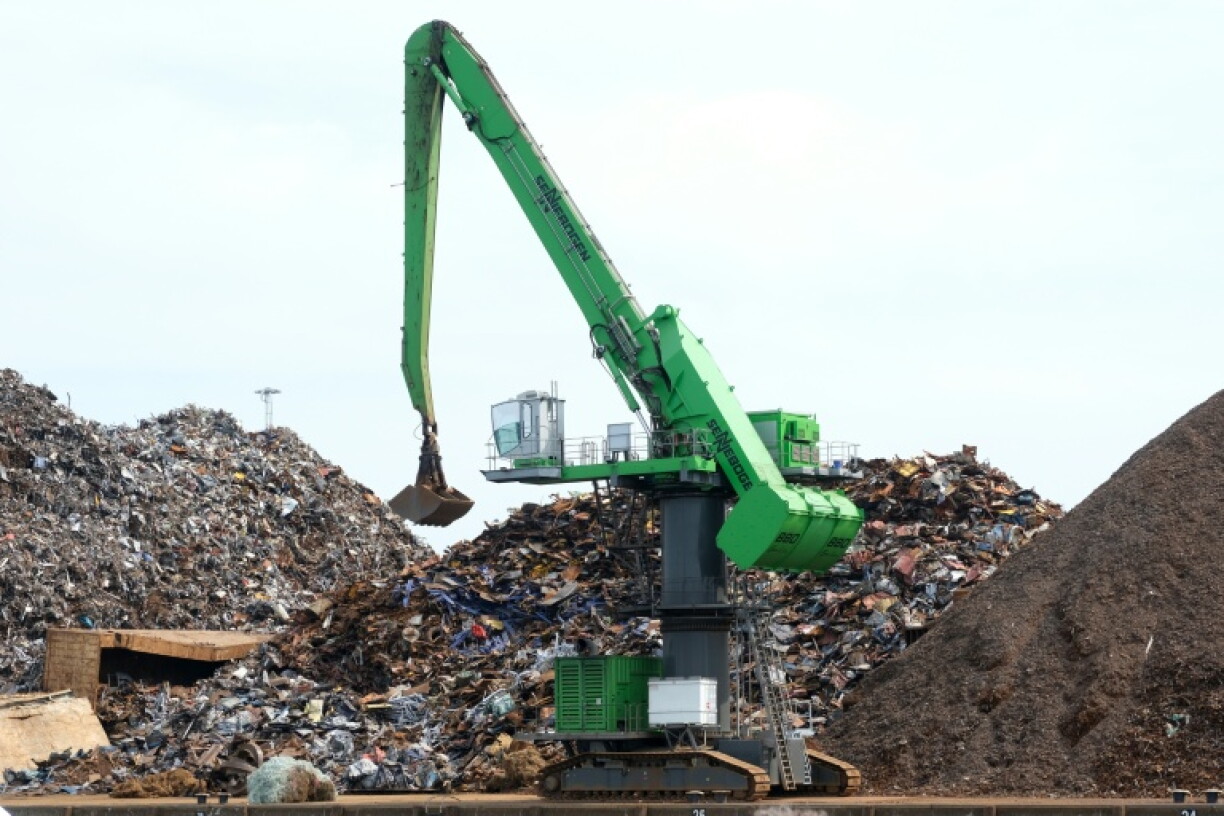
A fight over scrap metal is pitting recyclers against manufacturers, with India and Egypt lobbying to keep buying tonnes of it from Europe to be melted down and reused.
Once treated as rubbish, recycled steel and aluminium are becoming increasingly valuable as industries look for cleaner ways to make everything from cars to buildings.
But a 2024 European Union law was designed to curb waste exports and keep more recycled metal inside the bloc, reducing dependence on imported raw materials.
From May 2027, EU exports of waste to countries outside the OECD, a club of mostly wealthy economies, are due to be banned.
Countries that show they meet certain environmental standards may qualify for exemptions, and India and Egypt -- two major buyers of European scrap metal -- are trying to do just that.
Brussels had been expected to publish a first list of approved countries this month, but has now delayed the decision until the end of 2026. Those who miss out will be able to apply again later.
The dispute has split European industry, pitting recyclers dependent on export markets against steelmakers who need scrap to fuel the green transition.
Recyclers argue exports are an important outlet for material that Europe cannot always absorb. Closing the door to foreign buyers will not automatically create demand at home, they say.
"You don't create demand by closing borders," said Emmanuel Katrakis of industry groups Federrec and Recycling Europe.
Around 80 percent of recycled steel and aluminium already remains in Europe, he said, with only about one-fifth exported.
The real problem, Katrakis argued, was that major European customers such as the construction and automotive sectors "are not in good shape", while India is developing rapidly and hungry for raw materials.
But European steelmakers are not convinced, arguing the bloc should think twice before shipping a valuable green-industry resource overseas.
Industry group Eurofer told AFP both India and Egypt still fall short of environmental standards expected by the EU.
Egypt has not demonstrated "adequate controls" over "scrap storage, sorting, quality or air emissions", it said. In India, Eurofer pointed to EU assessments finding "gaps in controls on emissions of heavy metals" and in wastewater treatment.
Steelmakers also say scrap metal is no longer just waste.
France's ArcelorMittal told AFP recycled metals have become a "strategic resource" that Europe cannot afford to squander.
"European steelmakers are already seeing supplies tighten," the company said, warning demand is set to surge as the industry shifts towards lower-carbon production.
The push for so-called "green steel" is central to the EU's goals to cut emissions while rebuilding its industrial base.
Yet it comes at a time when European manufacturers are already grappling with energy costs far higher than many of their foreign competitors.
For now, Brussels is stuck between two rival camps: recyclers who want to keep export markets open and manufacturers who want more scrap metal to stay in Europe.
"We're trying to bridge these opposing views, and it isn't easy," a European Commission source said.
"It would be easy to see recyclers as the bad guys making money from waste exports, but it's more complicated than that. They also have valid arguments."
The EU exported 32 million tonnes of waste in 2025, with Turkey the main destination. Around 40 percent went to countries outside the OECD.
Representatives of India and Egypt to the EU did not immediately respond to AFP requests for comment.
adc-ngu/cjc/nth/rh/jhb


