Three years after the attacks of October 7, one explanation continues to dominate parts of the discourse: Islam is inherently hostile to Jews, and that is why Israel's neighbours have historically sought its destruction. Hamas invoked religion, its fighters invoked jihad and its supporters used religious language.
Look further, to Al-Qaeda, ISIS, and the Taliban, and it becomes tempting to draw a straight line between Islam and violence carried out in its name.
But history presents an uncomfortable problem with that explanation. The major interstate wars Israel fought in the twentieth century were not against Islamist regimes. Its principal adversaries were Arab states driven largely by nationalism, territorial claims, and geopolitics rather than political Islam.
The principal Palestinian movement, the PLO, was predominantly secular and nationalist. Go further back and the explanation becomes even harder to sustain.
Jews and Muslims lived alongside one another for centuries. Their relationship was not necessarily equal, but followed a markedly different trajectory from Christian Europe. Significant Jewish communities existed in Yemen, Iran, Egypt, and Morocco.
When Jews were expelled from Spain in 1492 after centuries of persecution, many Sephardic Jews found refuge across the Ottoman world, with Istanbul and Salonica becoming important centres of Jewish life.
Anti-Jewish prejudice existed in Muslim societies, but it did not follow the same trajectory as the religious and later racial antisemitism that developed over centuries in Europe and culminated in the Holocaust.
So why do people today associate Islam with the desire to undo Israel? The answer has more to do with twentieth-century politics, particularly Cold War dynamics, than the oversimplified explanation that Islam is inherently against Jews.
To understand why, we have to go back to a time before Hamas, Israel, or even most of today's Muslim states existed.
There has never really been one Muslim nation. Arabs, Turks, Persians, Kurds, Afghans, Tajiks, Indians, Bengalis, and Berbers stretched from the Atlantic to Asia, living alongside Jews, Christians, Zoroastrians, Hindus, and other communities in a vast mosaic of religion, culture, and race.
For centuries, much of this world existed within three great dynastic empires. The Ottomans ruled from Istanbul, the Safavids, and later Qajars ruled Persia, while the Mughals ruled much of the Indian subcontinent.
Then the balance of power shifted. Britain swallowed the Mughal Empire. Russia repeatedly defeated the Ottomans. European powers penetrated the Middle East, while Persia was squeezed between Britain and Russia. The Muslim world's great imperial powers were increasingly being dictated to by outsiders.
Across the Muslim world, one question consumed intellectuals and politicians:
There was no single answer. There were four.
The first answer came from an unexpected direction. Perhaps Europeans had become stronger because they had built modern armies, institutions, and systems. The answer was not simply to fight them but to learn from them.
The Tanzimat reforms beginning in 1839 represented an Ottoman attempt at modernisation. New schools, laws, and institutions followed.
The Young Ottomans emerged in the 1860s, followed by the Young Turk movement, which sought to reshape administration along European models.
Over the following century, this tendency would morph into a Pro-West camp that saw cooperation with Western powers as essential to development.
But another answer was reaching almost the opposite conclusion.
During the 19th century, language, history, and identity became increasingly political. Among Arabs, the Nahda, the Arab Renaissance, produced a cultural awakening.
The question was no longer how an empire should be governed, but who should govern it.
Then came the First World War.
In 1916, the Arab Revolt challenged Ottoman authority. It did not destroy the Ottoman Empire alone; Britain, France, and the wider war played major roles.
But parts of the Arab world increasingly concluded that foreign domination, whether Ottoman or European, was itself the problem.
The answer was no longer learn from them. It was rule ourselves. Nationalism increasingly tilted against Western imperial interests.
Yet within a year, another event would give impetus to a third answer.
The Bolsheviks seized power in Russia in 1917, moving the debate from identity towards the economic system.
For societies confronting colonial domination, poverty and inequality, socialism raised a question nationalism could not fully answer. What was the point of replacing a foreign ruler if wealth and power remained concentrated among a small domestic elite?
Nationalism asked who should rule. Socialism asked who should own.
With increasing Soviet support, Socialist forces often found themselves opposing Western geopolitical interests.
Muslim thinkers such as Jamal al-Din al-Afghani, Muhammad Abduh, and Rashid Rida had also wrestled with Muslim decline, but their diagnosis pointed elsewhere.
Perhaps the problem was not Westernisation, foreign rule, or the economic system. Perhaps Muslims had become weak because Islam no longer occupied a central place in the political order.
In Egypt in 1928, Hassan al-Banna founded the Muslim Brotherhood, transforming an intellectual current into an organisation capable of mass mobilisation.
Political Islam had entered the contest.
By the early 20th century, four answers to the same crisis stood against each other:
Four forces. Four diagnoses. Four different prescriptions for the same decline.
Nationalists and socialists increasingly tilted against Western interests, while the pro-West camp tilted towards the West. The Islamists had no clear geopolitical alignment.
These forces were not neatly exclusive. They overlapped and formed alliances.
In Egypt, Nasserism combined nationalism and socialism, while Saudi Arabia combined pro-West and political Islam. The two camps increasingly competed for influence, most visibly in Yemen after 1962, where Egypt backed the republicans while Saudi Arabia supported the royalists.
Now rewind to the middle of the twentieth century and something stands out. Neither political Islam nor the pro-West camp was dominant.
Nationalism and socialism were winning.
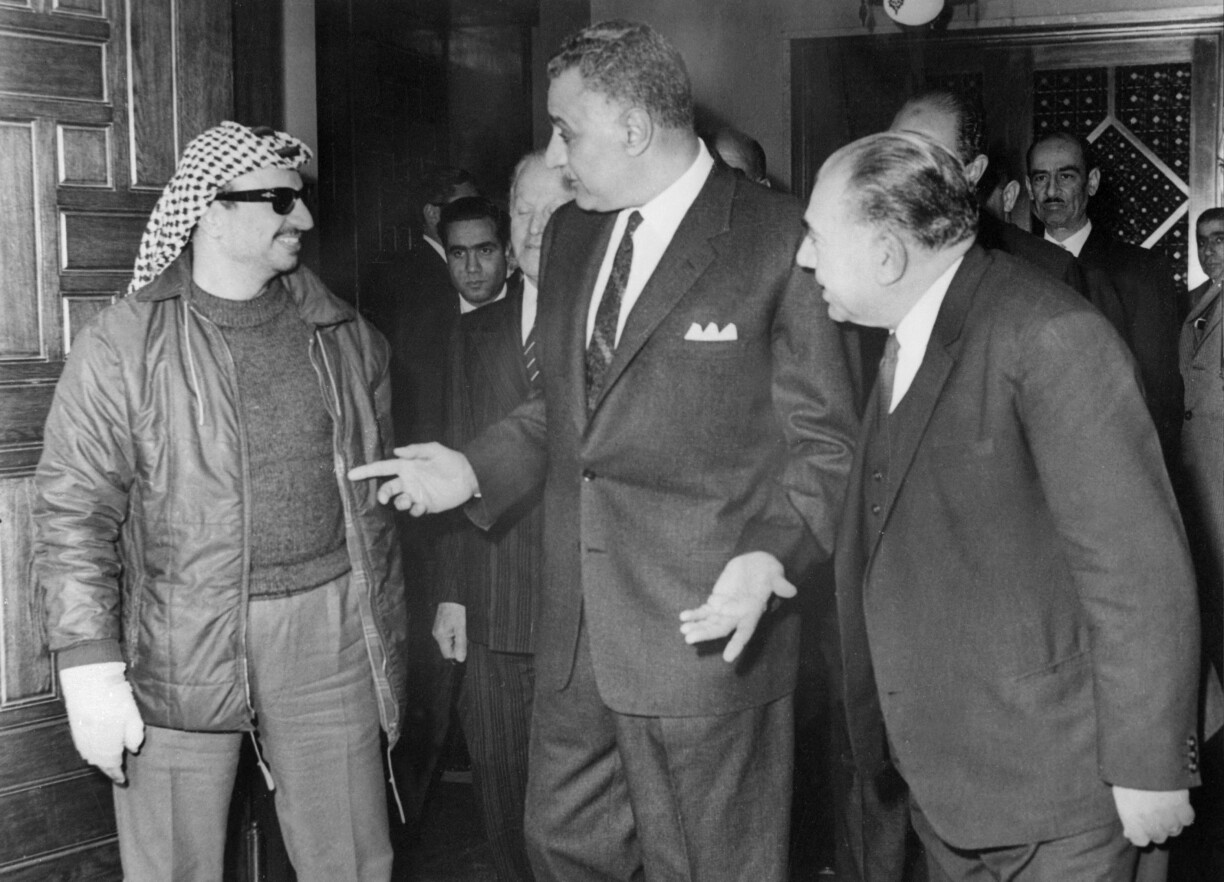
Egypt under Nasser became the hero of the Arab street, while socialist Ba'athists seized power in Iraq and Syria through successful coups. Meanwhile, the PLO, a predominantly secular and nationalist movement, led the Palestinian struggle.
Nationalism and socialism had the language of liberation. They increasingly had the states. Yet within a few decades, the picture would be almost reversed.
Nationalists and socialists would weaken. Pro-West governments would become entrenched. And Islamists, once largely an outside force, would become one of the most powerful political movements in the Muslim world.
That reversal helps answer the question we started with: how did Islam come to carry the blame?
The reversal cannot be understood through domestic politics. It must be understood through the competition between two superpowers, the US and USSR, of the 20th century.
How that competition contributed to the strengthening of political Islam is the subject of part II.
About the Author: Waqas M Awan is a Luxembourg-based corporate professional and the author of Power of Sage: An Anti-thesis to Machiavellian Prince. He writes on economics, geopolitics, and power systems at his Substack publication Perspectives (waqasperspective). He has held senior finance roles at Amazon, Kraft Heinz, and KPMG.





