US electric carmaker Tesla said Monday it will invest three billion euros ($3.4 billion) to expand its German factory, which will in future have capacity to produce one million driverless Cybercabs annually.
The investment at the only European factory run by Elon Musk's company stands in stark contrast to other players in Germany's struggling auto sector, which have been downsizing aggressively.
The expansion also comes despite resistance from residents and activists worried about the environmental impact, and with billionaire Musk increasingly controversial in Germany due to his backing of the far right in last year's elections.
"This will lay the foundation for the world's most technologically advanced Tesla factory here in Gruenheide," a town outside Berlin, the company said in a statement announcing the investment.
Tesla's Gruenheide "Gigafactory" was opened in 2022 after a tumultuous two-year approval and construction process, and was given permission to expand by local authorities two years ago.
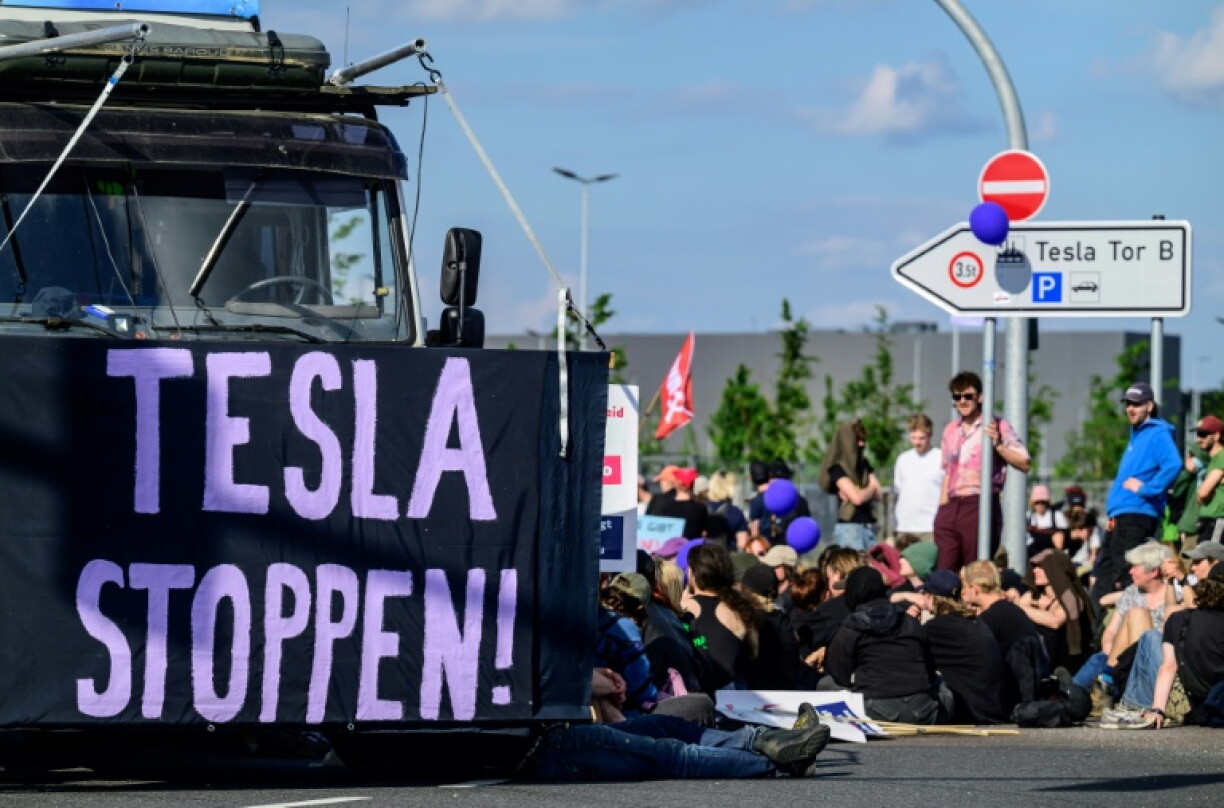
But the manufacturer scaled back some of its original plans after local residents opposed them in a non-binding poll, with concerns including plans to raze large areas of woodland and increased traffic in the area.
Activists staged frequent protests, camping out in treehouses in woods near the factory in an effort to block the expansion.
The plant was also forced to halt production briefly in March following an arson attack on power lines claimed by a far-left group.
Under the investment plans announced Monday, a new facility will be constructed where up to one million Cybercabs a year will eventually be produced, according to Tesla.
The two-seat vehicle with no steering wheel or pedals was unveiled in October 2024, and has been deployed in some US cities as part of Tesla's "Robotaxi" service.
Construction of the facility is set to begin in the first half of 2027, with production slated to start in 2029, it said.
The factory expansion will also create new jobs in a wide range of areas, said Tesla, adding it was already seeking hundreds of new workers to help with the plant's ramp-up.
It currently employs around 11,000 staff.
Musk has however become a highly controversial figure in Germany due to his links to US President Donald Trump, and his support of the far-right Alternative for Germany (AfD), which leads national opinion polls.
Ahead of national elections last year, Musk described the AfD as the "last ray of hope for the country" and repeatedly insulted the country's political leaders on his X social media platform.
Tesla sales plunged in Germany last year as Musk's popularity plummeted.
Nevertheless Dietmar Woidke, leader of Brandenburg state where Tesla's plant is based, welcomed Monday's announcement, describing it as "a decision of enormous economic significance".
Germany's auto giants are mired in a long decline due to fierce Chinese competition, high costs of production at home and a choppy shift to making electric cars.
Volkswagen, Europe's top carmaker, is in the process of cutting tens of thousands of jobs and Mercedes announced last week it would halt all investments in Germany and was weighing factory closures.
"Gruenheide will become an even more important site in the international automotive industry," said Woidke.
"Especially in economically difficult times, this is a strong signal: Germany is still an attractive location for major industrial investments".
sr/jsk/pdw


