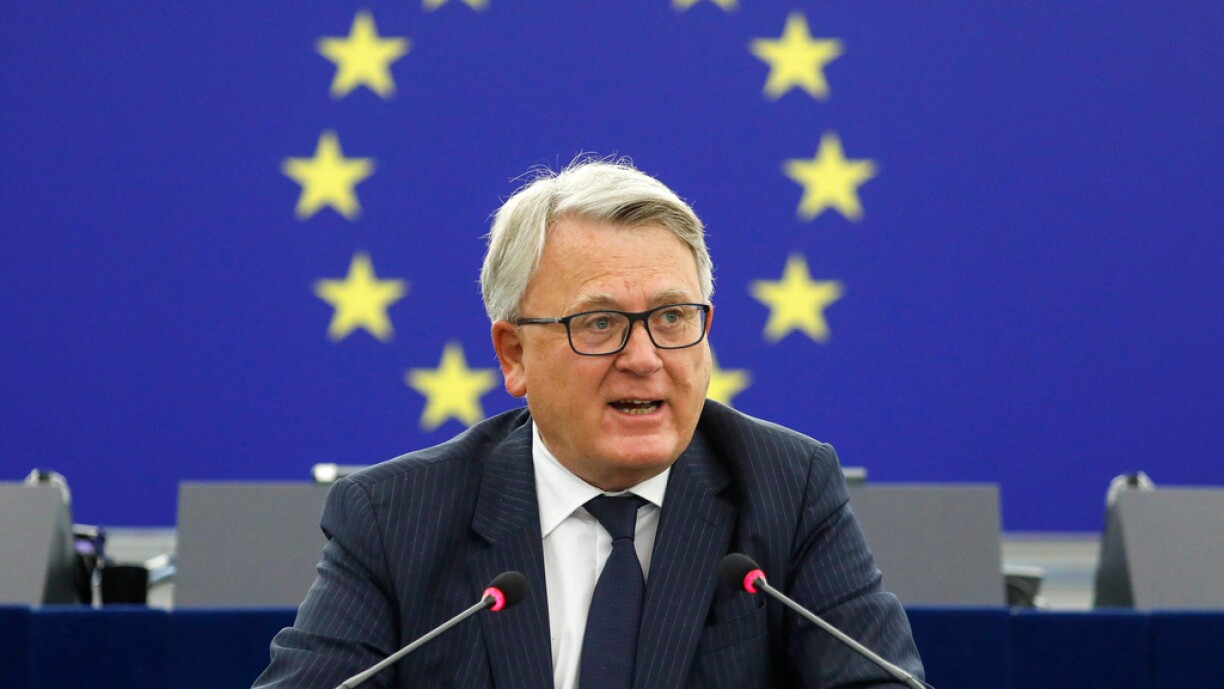
Nicolas Schmit, who was once Luxembourg's minister of labour, warned of further detrimental effects on jobs and social stability in Europe. Millions already fight energy penury, and the risk is that it will affect an even greater number of people in the foreseeable future, underlined Schmit.
The politician further explained that the EU Commission does have the capacity to help limit the impact of increasing energy prices, but emphasised that each government still has to act out their own policies first.
At the beginning of September, the European Trade Union Confederation (ETUC) already put out a warning that 2.7 million EU citizens cannot afford energy costs in spite of being employed.
According to the EU Commission, both households and businesses are to protected of rising energy costs as quickly as possible. European Commissioner for Energy Kadri Simson presented a "toolbox" of measures last week, which are designed to help individual governments without breaking any EU regulations.
Among the proposed measures are direct aids, tax relief, and subsidies for small businesses. Furthermore, the Commission wants to create long-term solutions to increase the resilience of the European energy market.
Some states have already initiated measures. France, for instance, limits costs for gas and electricity until April 2022, and will further award aids worth €100 million to six million households in need. Spain has decreased the tax rate for electricity until further notice, and Prime Minister Pedro Sanchez has meanwhile requested a united solution for Europe.
However, not all EU countries share this opinion. Finland's Minister of Finance Annika Saariko stated that energy is a national responsibility, not a European one. Furthermore, her country has few issues when it comes to energy, she noted.
On Thursday and Friday, energy prices will be discussed at an EU summit in Brussels.





