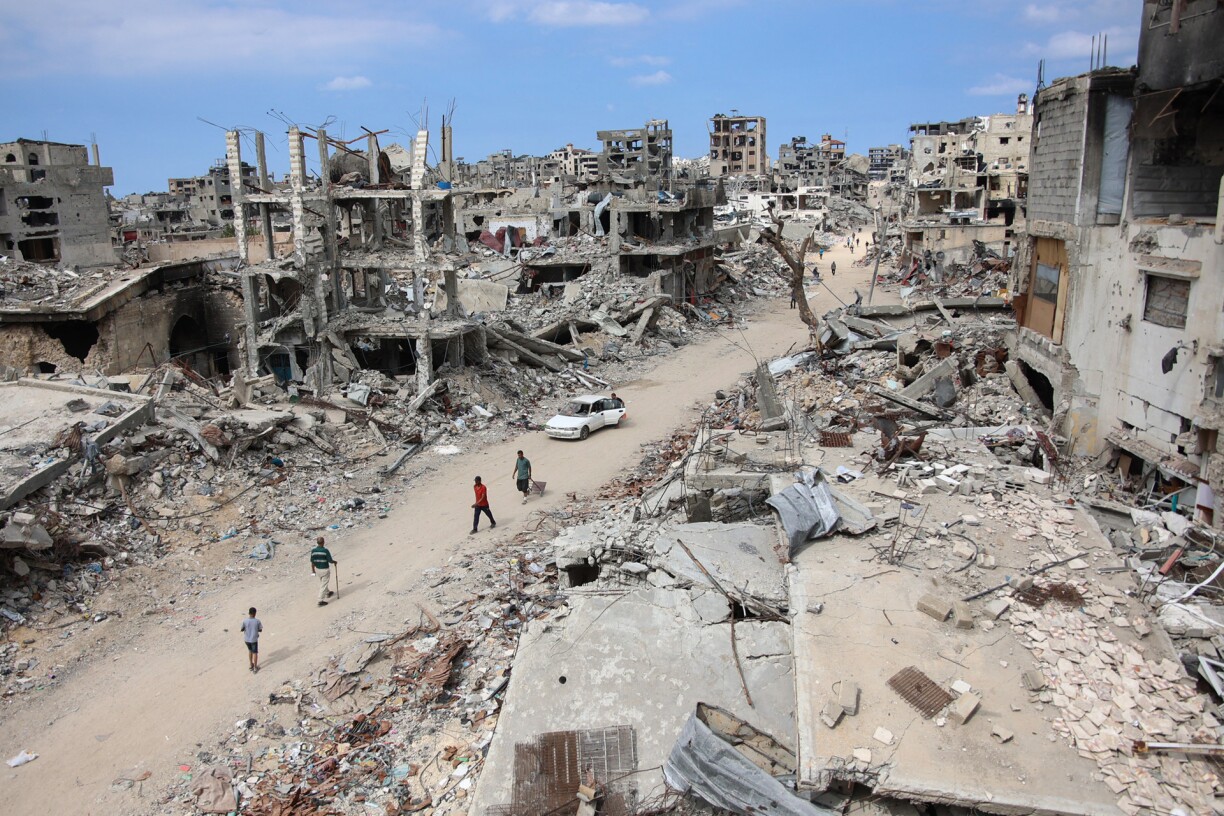
The evidence of a military partition seems clear: Israeli forces are creating a corridor amidst the rubble of hundreds of demolished buildings for logistical and military purposes, while positioning troops and military vehicles to establish control. The Israeli Defence Forces (IDF) claim the operation is part of a wider goal to neutralise Hamas presence in the area.
The infrastructure works along the cleared corridor suggests the partition might facilitate a permanent military presence, however, various Israeli officials denied long-term annexation plans when speaking to the BBC. That said, such claims could be called into question if we consider historical patterns of partition in Palestine, as well as local news reports that Israeli settlement advocate Daniella Weiss entered Gaza to survey settlement options last week. Weiss was central to the creation of Israeli settlements in the West Bank in 1967, and has faced sanctions from Canada for settler violence against Palestinian civilians.
Historical examples with similar patterns include the Netzarim and Philadelphi corridors, which were both initially justified by the security narrative, arguing that they would protect settlers from illegal smuggling. The current north Gaza corridor, in turn, is being framed as a means to isolate Hamas. Equally, the Netzarim and Philadelphi corridors destroyed residential and agricultural land, leaving Palestinian territory isolated from access to economic and medical opportunities.
From an international law perspective, the news is concerning considering the military advances are taking place against the backdrop of forced displacement of over 100,000 Palestinians. While Israeli officials have assured that civilians will be able to return, the ongoing construction of infrastructure and access restrictions make prospects of a return dubious, raising concerns about UN Charter violations. The IDF further violated international humanitarian law by unnecessarily demolishing civilian infrastructure such as homes, schools, and hospitals in the area, and blocking humanitarian access to northern Gaza.
The UN also reported about the dire conditions of the roughly 75,000 people who remain in the area, who face critical shortage of food and services, as well as inhumane hygiene conditions due to the Israeli humanitarian blockade. The northern Gaza siege has therefore raised concerns by experts that Israel is implementing a ‘surrender or starve’ policy, which is a recognised war crime under the Geneva Convention.





