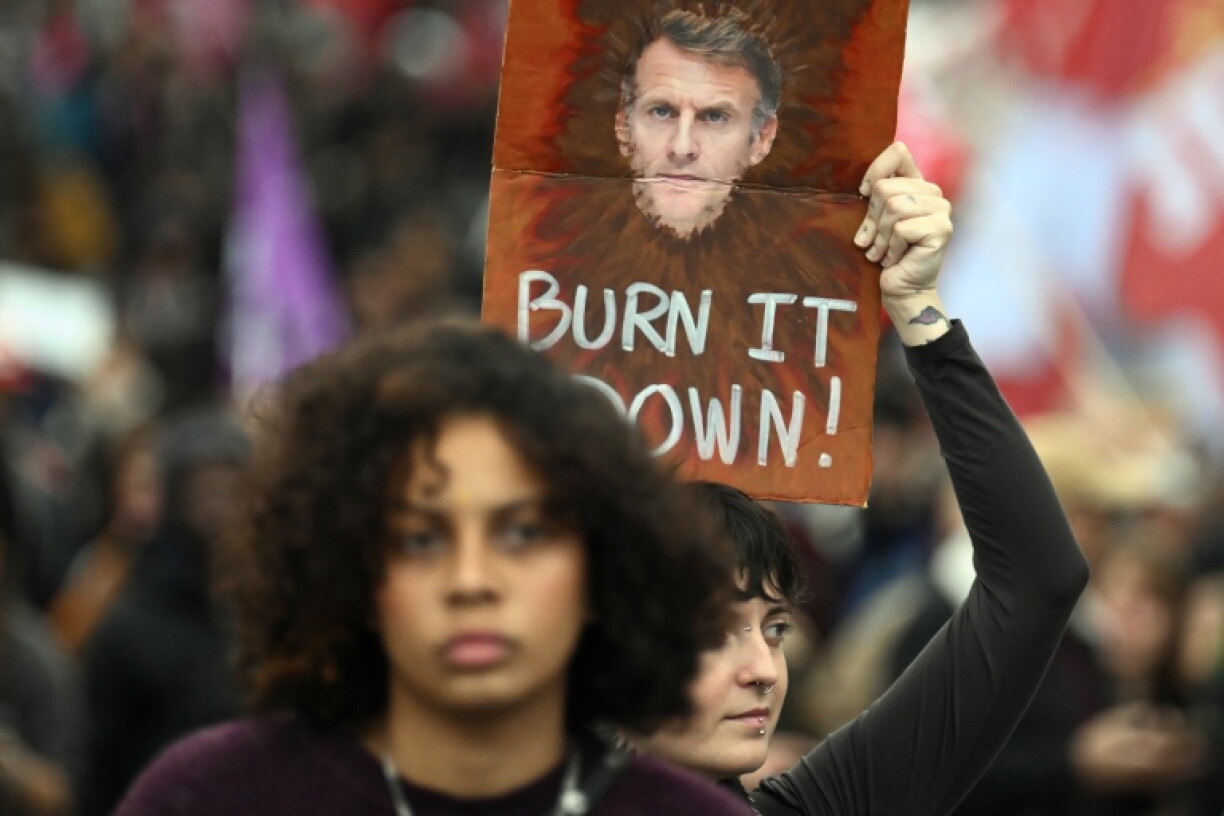
Tens of thousands of people took part in protests across France on Tuesday after unions called a new nationwide public sector strike to demand pay rises.
High school and university students and some private sector workers joined the latest cost-of-living demonstrations to confront the government.
The European Union's second-largest economy has been rocked by more than a month of high school blockades and protests, as the government races to adopt a 2027 deficit-cutting budget ahead of presidential elections next year with the far right eyeing power.
"The state of schools, the state of hospitals, staffing levels in schools and hospitals, the way things are getting worse and worse across all public services, these are issues that really resonate with us," Aurelane Thos, a 38-year-old nurse at a Paris hospital told AFP.
Wearing blue scrubs, she marched with fellow nurse Astrid Petit, who carryied a small cardboard sign reading "Raise salaries".
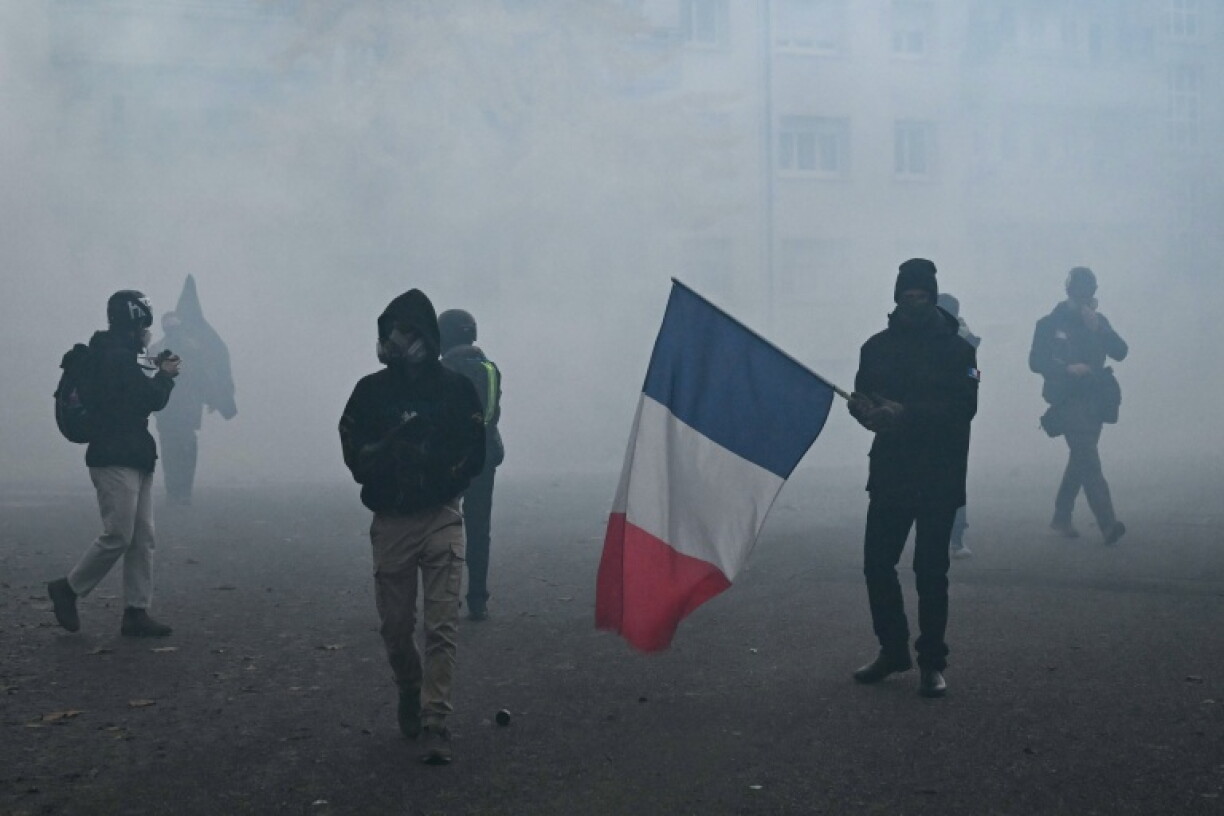
Tuesday marks the third call for public sector strikes since September, including one this month that saw hundreds of thousands of workers march, while police fired tear gas amid clashes in some cities.
France's 5.8 million public sector employees were called out after talks with Prime Minister Sebastien Lecornu on Friday failed to satisfy unions, pushing for pay rises since he announced a boost to the minimum wage for private-sector workers.
One march in eastern Paris set off in a festive cacophony, with drummers decked out in sparkly pink and purple accompanying music blared from union vans.
University professor Nicolas Prevot said: "It's about defending human rights first and foremost, but also protecting public services, which are being torn apart."
"Above all, we mustn't let the far right take power," he added.
Between 40,000 and 80,000 people were expected to demonstrate in the capital, and between 220,000 and 300,000 at dozens of protests nationwide, a police source told AFP.
Thousands gathered in Lyon in the southeast, behind banner reading: "Enough sacrifices for working people."
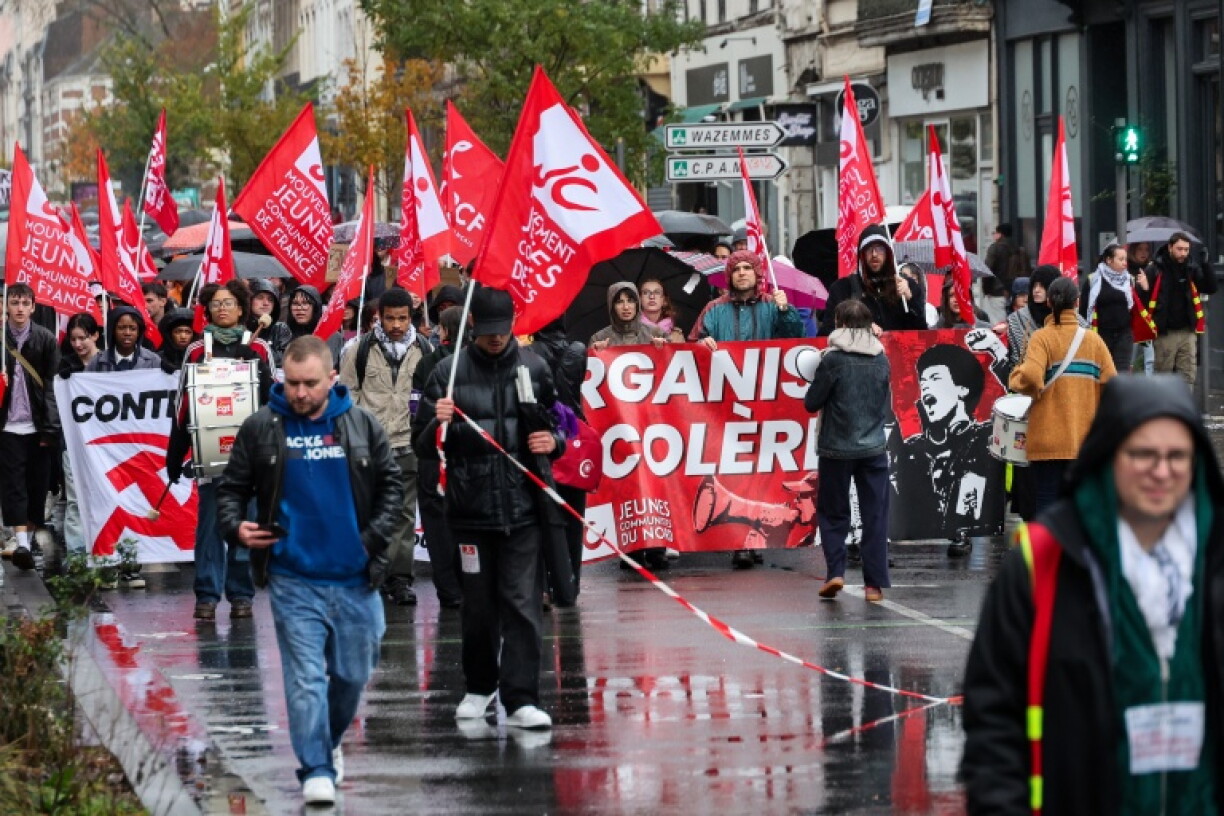
Twenty-year-old univeristy student Simon said he came out in "solidarity with high school students and workers, and for more places at university".
"I hope things will change, though I'm less and less hopeful about being heard," he said. "The government talks only about the minority of rioters and not about the real demands."
Lyon saw looting and a building set alight last month, when protests across France degenerated into riots which saw more than 2,000 people arrested, hundreds of shops looted and public buildings attacked and torched.
Overall rallies have been largely peaceful but seen fringe violence, as well as accusations of police brutality.
Security forces were deployed on Tuesday and authorities temporarily banned the sale of firecrackers, citing concerns about possible violence.
In its draft budget, the government has ruled out any general pay rise for the fourth consecutive year.
This is unacceptable for the unions, which put the loss of purchasing power for public servants at 16 percent since 2017.
Similar demonstrations have taken place in other European countries, in part inspired by the French protests.
On Tuesday in Belgium, several thousand demonstrators, mostly students, took to the streets in Brussels to protest deteriorating conditions at schools, budget cuts and an increase in university tuition fees.
"We're here to defend our future," said Bastien, a 19-year-old who gave only his first name. He complained that the government was spending on new fighter jets but "slashing funding" for culture, health and other sectors.
The rally in the capital was peaceful, with participants chanting "power to the students" and anti-fascist slogans and some holding sings reading "more rights, less right".
burs-ekf-sw/ah/tw


