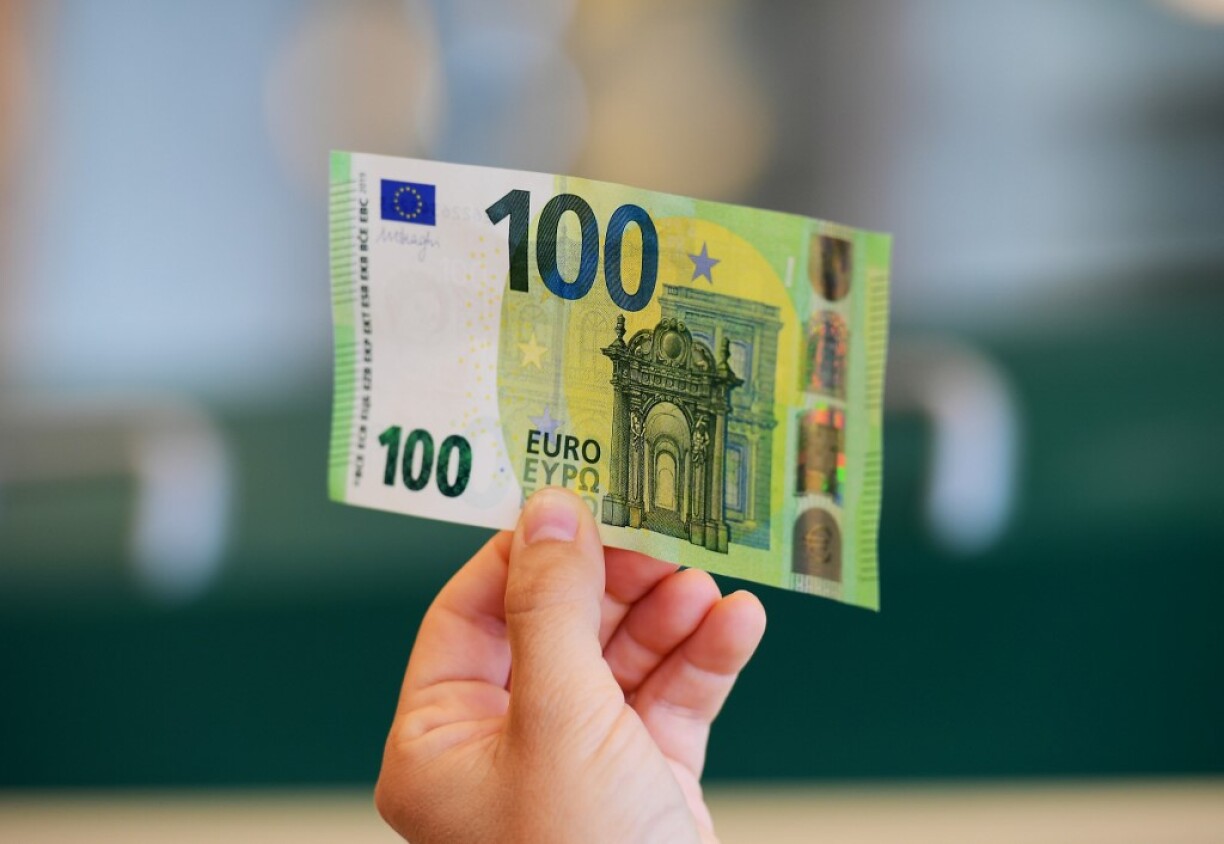
The European Central Bank (ECB) says the new 100 and 200 euro bills are much safer, and will be the final two bills in the currency series "Europe" that has given all bills a real make over.
"They are more compact and more convenient, with brigher colours and fitted with the newest safety features," says Laure Lalouette, expert at the ECB in leading the issuing of the new notes.
At a first glance, the new bank notes are not much different to the old ones, except for their size: the notes of 50, 100 and 200 euros now have the same hight, making them more efficient to poduce and handle by machines, according to an ECB statement.
Furthermore, the size is "better suited for one's wallet", and will have "a longer life because they will be less pronte to wear and tear."
In their fight against counterfeiting, the ECB has made the bills easy to check and very difficult to falsify, says Lalouette.
The euro bills currently picture monuments, but it is not excluded that one day they will display European personalities, ensures Lalouette.
The bills have been introduced gradually for several years. The first four of the series (5, 10, 20 and 50 euros) came into circulation in 2013, 2014, 2015 and 2017 respectively. The ECB has decided not to produce any more 500 euro bills.




