Namibia is forging ahead with offshore oil and gas exploration as neighbouring South Africa's efforts to tap the same resource-rich waters are slowed by environmental objections, legal appeals and regulatory delays.
The countries share the Orange Basin, a vast stretch of the Atlantic that has yielded major oil discoveries and raised hopes of turning southern Africa into a significant new energy frontier.
Namibia controls about 30 percent of the basin, with the rest lying in South African waters, according to experts.
More than 25 exploration wells have been sunk in Namibia's sector since 2022 compared with just three in South Africa since 2014, a TotalEnergies managing director, Magali Pailhe, told a Cape Town energy conference last month.
The discoveries in Namibia have been hugely promising, putting it on the radar of major global oil companies from around seven countries including France's TotalEnergies and Chevron from the United States.
"Namibia could become a major oil and gas player," said energy economist Lungile Mashele, pointing to Angola and Nigeria -- two of Africa's biggest crude producers -- as examples of its potential.
Exploration under way and still being appraised has yielded mostly oil, she said, with reported estimates of potential ranging from 10 to 20 billion barrels.
For a country of just over three million people better known for its towering desert dunes, the finds have fuelled expectations of an economic transformation, with hopes that production could begin within four years.
"It could experience an oil boom," energy expert Chris Yelland told AFP.
South Africa's offshore waters are estimated to hold 27 billion barrels of prospective oil resources, equivalent to more than 150 years of current consumption if fully recoverable, according to the country's petroleum agency.
The country also has 10 trillion cubic feet of gas discovered around the coast and onshore, national spokesperson for the Offshore Petroleum Association of South Africa Niall Kramer told AFP, adding this was the "tip of the iceberg".
"If all the potential resources that we reckon could be there are proven -- and that will take a while -- there is probably 260 trillion cubic feet and that is massive," he said.
The entire European Union used around 12 trillion cubic feet of natural gas during the course of 2025, according to EU data.
Exploitation of South Africa's reserves would be a game changer for the country of 63.5 million people where growth is only around one percent while unemployment stands above 33 percent.
But while Namibia has moved fast on exploration, bringing it directly under the Office of the Presidency, South Africa has faced legal challenges and lengthy approval procedures to meet regulations.
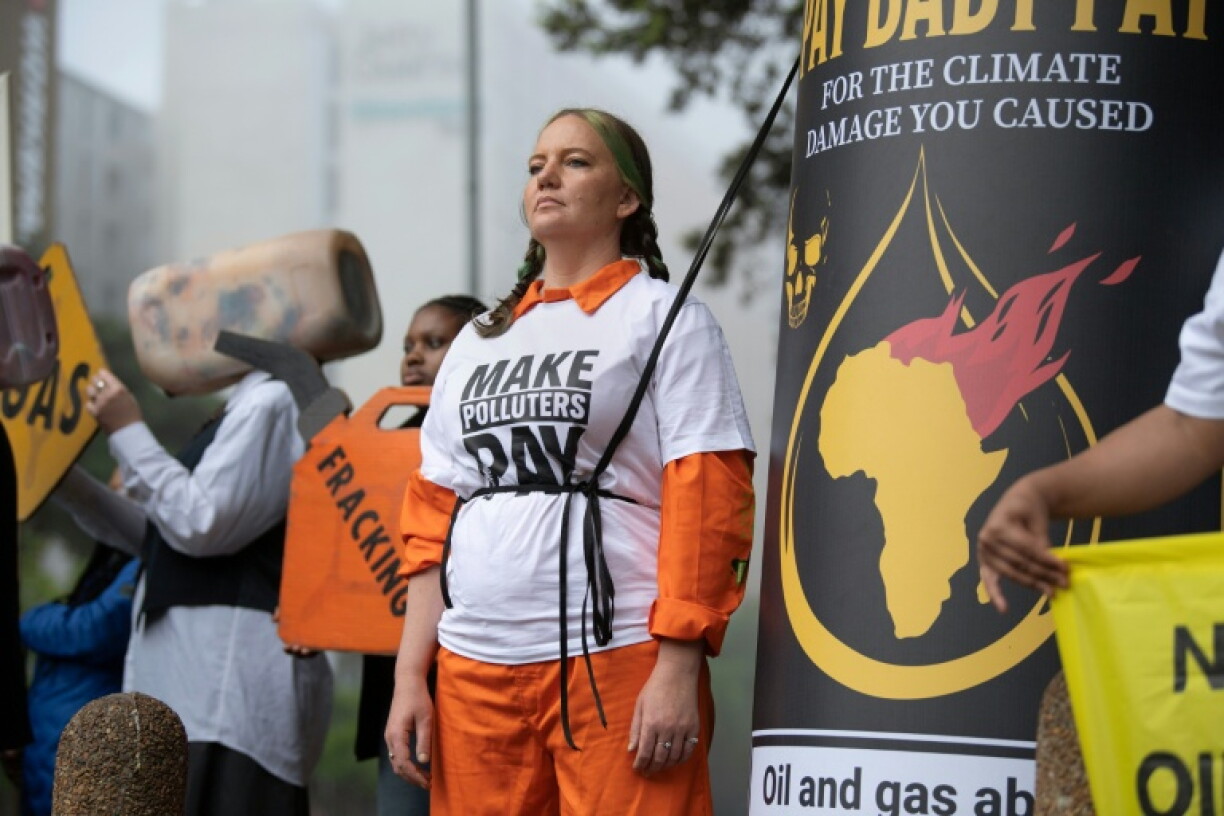
Environmental groups have gone to court to overturn authorisation granted to TotalEnergies for its proposed Deep Water Orange Basin project.
They warned that oil spills would devastate marine ecosystems and fish stocks, while expanding fossil fuel production undermines South Africa's commitments to green energy.
Environmental justice group Green Connection said small-scale fishing communities risked losing jobs, income and livelihoods while bearing the costs of environmental damage.
"We don't want oil and gas exploration in our seas," said Walter Steenkamp, chairperson of the Aukotowa Fisheries Primary Co-operative.
These are "delay tactics", said Kramer.
"This could contribute significantly to our energy security. Not to do this is almost an anti-poor, anti-development action," he said.
Petroleum Agency chief executive Bongani Sayidini said the government needed "favourable outcomes that would enable oil and gas exploration".
The regulator expects the industry to have drilled 10 new wells by 2030, he said.
South Africa's state-owned National Petroleum Company is looking to Namibia for lessons.
Its non-executive director, Nosizwe Nokwe-Macamo, said the country would use its neighbour's "success" as a "cheat sheet" after Namibia had been able to drill so many exploratory wells in five years.
"They streamlined processes, they streamlined their focuses," she said at the Cape Town meeting.
Analysts said oil and gas production would benefit the Namibian economy by increasing gross domestic product, investing in infrastructure and creating work in an economy where the unemployment rate is around 37 percent.
TotalEnergies operates Namibia's Venus and Mopane oil discoveries, with the Venus project alone expected to generate about US$2 billion in local spending over its lifetime, the company told AFP.
The Venus project could generate more than 5,000 jobs, TotalEnergies said.
The French energy giant has also partnered with Portugal's Galp in Mopane, estimated to hold at least 10 billion barrels of oil.
jc/ho/br/kjm


