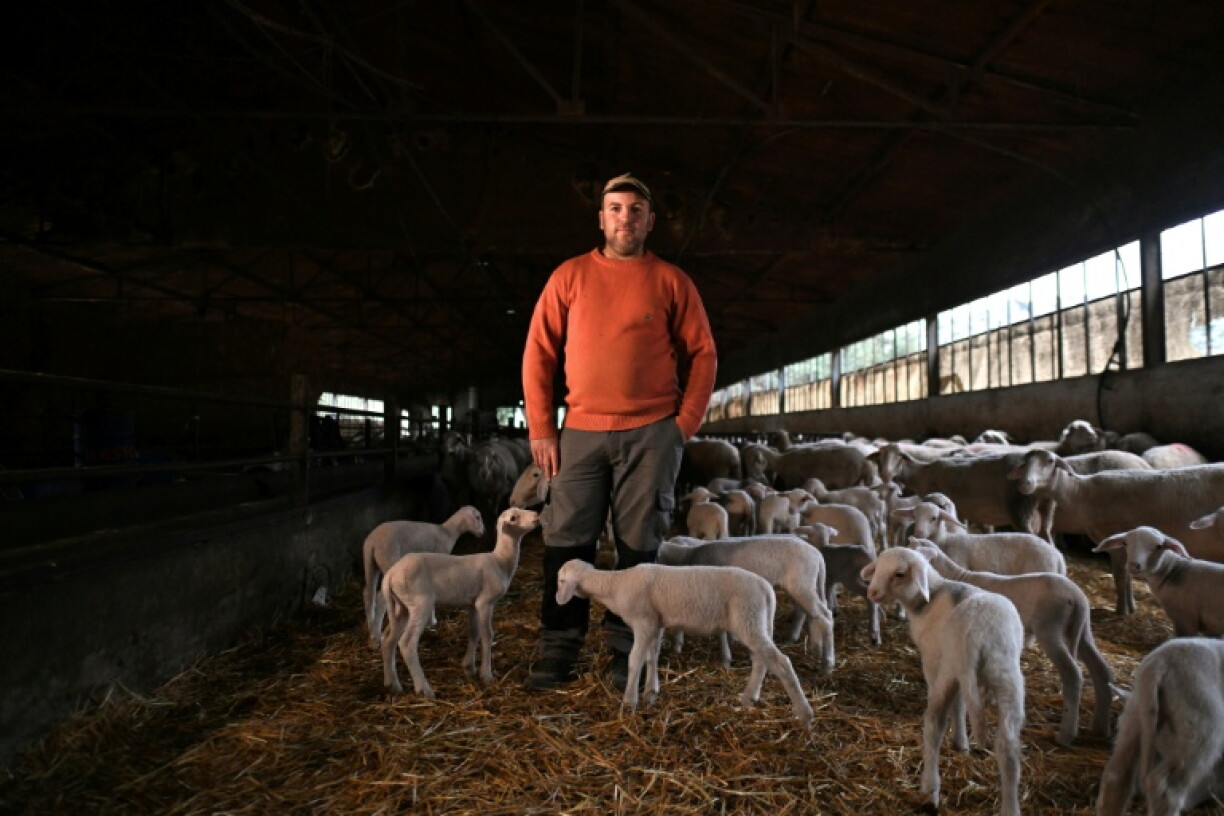
Cristobal Calle is a worried man.
The 43-year-old dairy sheep farmer in southern Spain said rising prices have eroded his purchasing power in recent years, leaving him struggling to get by despite the country's status as one of Europe's fastest-growing economies.
"We are living less well," he told AFP, estimating his monthly income at around 1,000 euros ($1,100), although it fluctuates depending on the time of year.
Standing among his grazing sheep on his farm in the region of Andalusia, Calle said the cost of fuel for his agricultural machinery has doubled in recent years.
The price of food and other essentials has also soared, driven in part by international crises, and he has had to cut back on small everyday purchases.
With a general election approaching on Sunday, he said he does not want government handouts from whoever wins, but simply hopes he will no longer have to struggle every day "to make ends meet".
More than a quarter of Andalusia's population lives below the poverty line, according to national statistics institute INE.
Calle's sense of financial insecurity is widely shared, from rural communities to coastal cities grappling with mass tourism.
In Madrid, too, the gap between the strong economic performance touted by the government and people's perception of their living standards has become a familiar complaint.
The government forecasts economic growth of 2.6 percent this year, matching the rate recorded in 2025, while unemployment has fallen to around 10 percent.
But for many workers, rising prices and housing costs have made everyday life increasingly difficult even though Spain is one of the world's strongest-performing major economies.
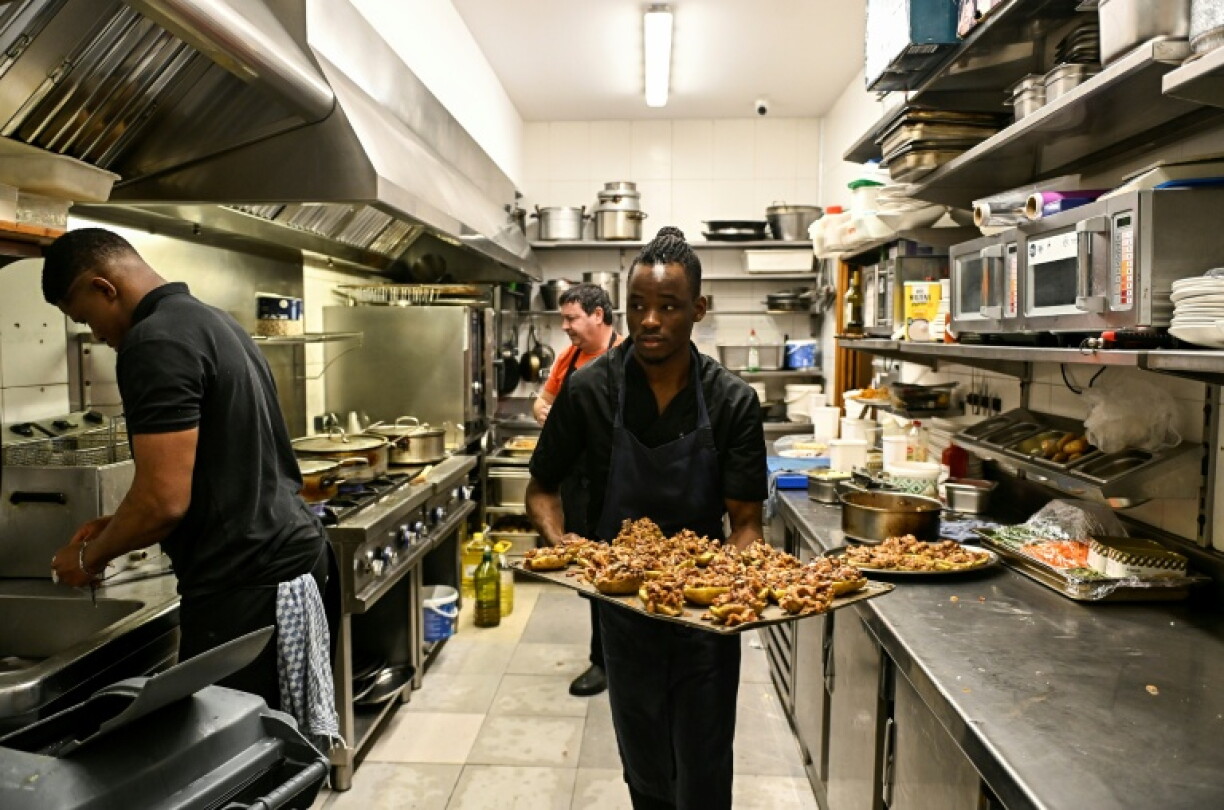
Marcos, who declined to give his surname, earns less than 1,400 euros a month working as a cleaner at a language school in the Spanish capital.
He said he is lucky to have a partner with whom he can share household expenses.
"I couldn't live alone, that's for sure," he said, describing prices as "exorbitant".
"You buy hardly anything at the supermarket, and it costs 50 or 60 euros," he added.
"Many months I don't make it. Almost every month, actually. I live day to day."
Judith Soler, a 30-year-old special education teacher in Barcelona, faces a similar struggle.
She was among workers who took part in Spain's first general strike in 14 years on November 11, called to demand improvements in purchasing power and more affordable housing.
Soler had been living alone but was forced to move back in with her father to save money after spending 75 percent of her salary on rent.
"Since I was little, I was taught that I had to study, work and get good grades, and I did all that," she said.

"I've been working since I was 15, I have paid for my studies, I have a job, I have a car, but I can't make ends meet."
Under Socialist Prime Minister Pedro Sanchez, Spain's minimum wage has risen sharply from 860 euros per month when he took office in 2018 to 1,425 euros.
The average monthly salary has also climbed, reaching 2,460 euros.
But much of the benefit has been eroded by inflation.
Consumer prices have risen by around 30 percent over the past eight years, while housing costs have nearly doubled in many cities.
"We are producing more, but that doesn't mean we are earning more per person," Pedro Aznar, an economics professor at Esade business school, told AFP.
Spain's economic growth is explained "mainly" by an increase in the number of people in employment due to a rise in immigration, he said.
In Madrid's affluent Salamanca district, another side of the country's economy is on display.

Luxury boutiques and fashionable cafes draw well-heeled customers, while a prosperous elite appears to be benefiting from the country's economic momentum.
Marco Sarti, a 24-year-old lawyer at a major British consultancy firm, welcomed the wider range of leisure and dining options now available in the Spanish capital.
"It's really positive!" he told AFP at the nearby Nuevos Ministerios business district as around him suited executives crossed paths with uniformed pupils heading to private schools.
rbj-rs/ml/ds/imm/eab