Few countries have polarised the international community in recent years as deeply as Israel.
On one side are those who describe Israel's actions in Gaza as genocide, drawing comparisons with the Holocaust. On the other are those who vehemently defend Israel's military campaign as legitimate retaliation for the Hamas attacks of 7 October 2023.
But this polarisation does not exist only internationally. It runs through Israeli society itself.
One political vision emphasises democratic institutions, judicial independence, equal rights, and individual freedoms. Another places greater emphasis on Jewish national identity, religious traditions, territorial claims, and security.
On 27 October, Israelis will head to the polls to elect a new parliament. But this election is about more than deciding who governs. It is about determining which version of Israel will shape the country's future.
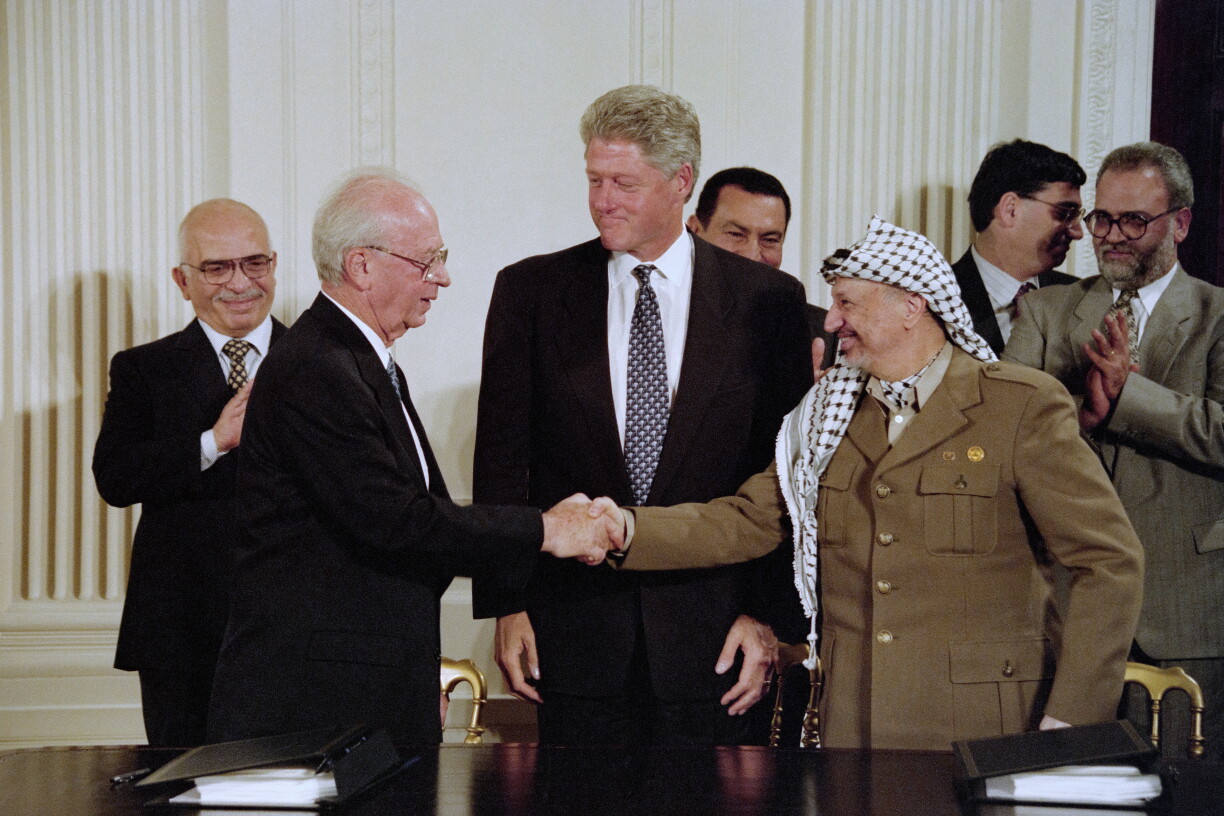
In September 1993, after decades of fighting, Israeli Prime Minister Yitzhak Rabin and Palestinian leader Yasser Arafat embarked on a historic attempt at reconciliation through the Oslo peace process.
For the first time, Israel and the Palestine Liberation Organization formally recognised one another. The agreement established a framework for Palestinian self-government and negotiations towards a permanent settlement.
The possibility of two sides living alongside each other appeared closer than ever.
But the peace process soon faced violent opposition from extremist elements on both sides.
In February 1994, Baruch Goldstein, a Jewish extremist, massacred Palestinian worshippers in Hebron. Hamas subsequently carried out suicide bombings in Israel, further undermining confidence in reconciliation.
Finally, in November 1995, Rabin was assassinated by Yigal Amir, another Jewish extremist opposed to the peace process.
These events marked a turning point in the region. The political forces championing reconciliation progressively lost influence.
The Palestinian national movement fractured. Hamas won the 2006 legislative elections and seized control of Gaza following armed conflict with Fatah in 2007. Israel's traditional peace camp, for its part, lost ground to ethno-religious nationalist forces.
Some observers trace Israel's present political direction to 7 October 2023, but the ideological shift began decades earlier.
Israeli ethno-religious nationalism was not new. Menachem Begin's Likud first came to power in 1977, and Benjamin Netanyahu became prime minister in 1996, just months after Rabin's assassination.
The years following 2000 witnessed a steady erosion of the peace camp. Netanyahu's return to power in 2009 began a prolonged period in which nationalist, conservative, and religious parties exercised considerable influence over government policy.
Under Netanyahu, Israel conducted repeated military operations in Gaza in 2012, 2014, and 2021 – all before 7 October 2023.
Settlements in the occupied West Bank began after 1967, but it accelerated under Likud-led governments and drew repeat international condemnation without being reversed.
Today, Bezalel Smotrich, Netanyahu's finance minister and a leading religious nationalist, openly advocates annexing the West Bank.
The international controversy over Israel's conduct therefore predates 2023, and it has grown alongside the rise of ethno-religious nationalism.
This ideological struggle is not limited to Israel's relationship with Palestinians or its Arab neighbours. It extends to the institutions governing Israeli society itself.
Moderate forces defend judicial independence, civil liberties, individual freedoms, and democratic checks on government power.
Ethno-religious nationalist parties, by contrast, place greater emphasis on Jewish national identity, religious traditions, and territorial claims.
These tensions became particularly visible in 2023 when Netanyahu's government introduced controversial judicial reforms.
Critics feared the reforms would weaken judicial independence and remove essential checks on government power, potentially concentrating excessive authority in the executive.
Hundreds of thousands of Israelis took to the streets in protest.
The controversy unfolded while Netanyahu faced criminal proceedings involving allegations of bribery, fraud, and breach of trust – charges he denies.
This polarisation within Israel is not a new phenomenon. Between 2019 and 2022, Israel held five parliamentary elections, reflecting the same political divisions.
They have persisted through the protests over judicial reform and, after 7 October, through the Gaza war and the treatment of hostages.
Even in Luxembourg, Israelis have regularly joined Palestinians in demonstrations against the war.
Israel is therefore not merely a source of polarisation internationally. Its own population is deeply divided over the direction of the state.
Polls point to a deadlock.
In recent surveys, neither Netanyahu's camp nor the opposition led by former army chief Gadi Eisenkot comes close to the 61 seats needed in the 120-seat Knesset. Eisenkot's Yashar party has led Likud in several polls, but the blocs remain closely matched, with Arab parties polling around 13 or 14 seats outside both camps.
Even if the opposition overtakes Netanyahu's bloc, forming a government without Arab party support could prove difficult, yet cooperation with those parties remains politically contentious.
The elections may therefore change Israel's leadership without ending the influence of ethno-religious nationalism.
Looking back at Israeli-Palestinian relations, the Oslo Accords demonstrate that political accommodation has been possible when leaders were willing to negotiate despite their differences. But they also demonstrate how vulnerable reconciliation can be to extremist violence and opposition from uncompromising ethno-religious nationalist movements.
Today, Hamas, which represents a different form of religious nationalism on the Palestinian side, has been defanged. Ethno-religious nationalist movements, however, continue to exercise power within Israel.
Proposals to annex the occupied West Bank raise concerns about territorial sovereignty. Voices on the religious right have invoked a biblical Greater Israel stretching from the Nile to the Euphrates, feeding suspicion across the region.
At home, the same struggle has coincided with heightened tensions over civil liberties, judicial independence and Israel's constitutional framework.
A return to more moderate politics could therefore strengthen democratic institutions and reopen possibilities for reconciliation and peaceful coexistence with Palestinians.
But replacing Netanyahu would not automatically resolve these contradictions. He is a mere manifestation of the broader ideological drift of Israel.
Hence, on 27 October, Israelis will not only elect a government. They will vote on ending the deadlock that has polarised Israel in recent decades. They will decide which version of Israel comes forward.
The consequences of these elections will extend far beyond its borders, influencing both Israeli democracy and the prospects for peace in the region.
About the Author: Waqas M Awan is a Luxembourg-based corporate professional and the author of Power of Sage: An Anti-thesis to Machiavellian Prince. He writes on economics, geopolitics, and power systems at his Substack publication Perspectives (waqasperspective). He has held senior finance roles at Amazon, Kraft Heinz, and KPMG.


