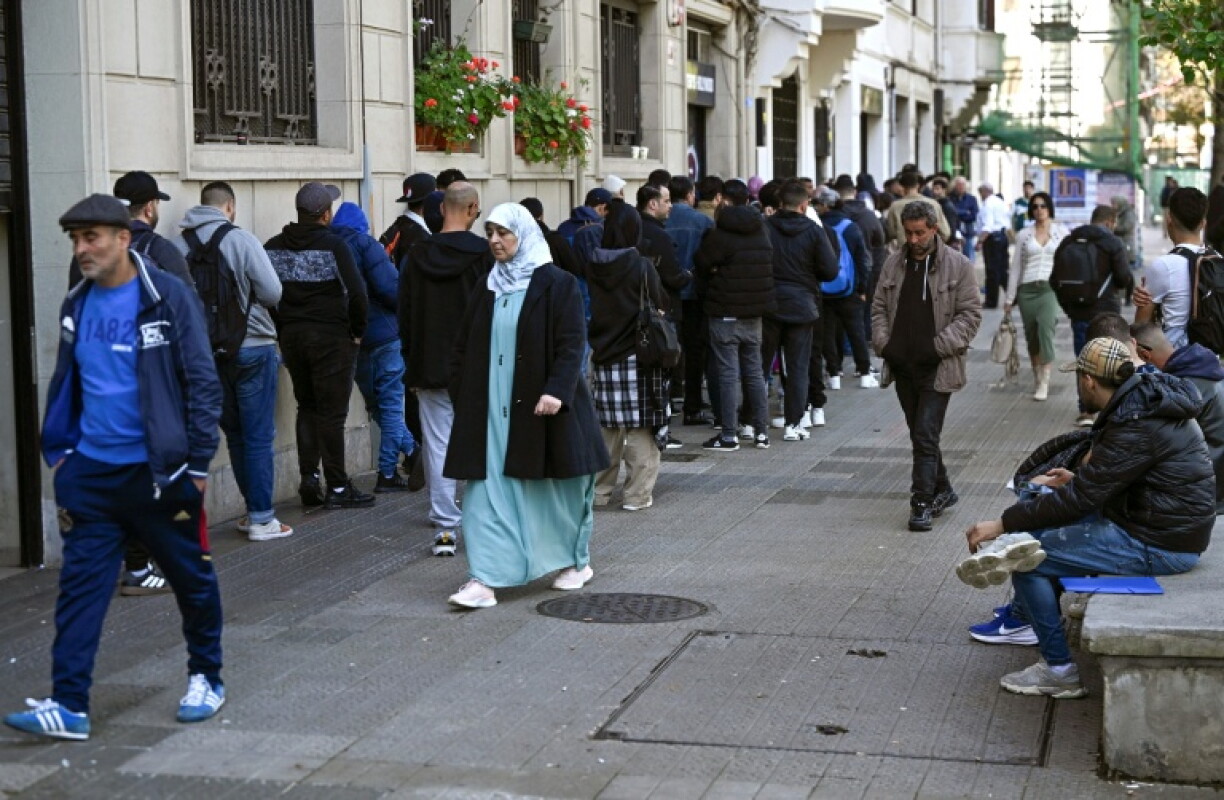
Pelayo, a 20-year-old student, fears immigration is making Spain less safe. Emperatriz Garcia, a 57-year-old Ecuadoran cleaner, sees it as essential to the country's future.
Their contrasting views reflect a deep divide over immigration in Spain, an issue that could prove decisive in an early election on November 29.
In a country whose population has grown on the back of migration to nearly 50 million, with more than 10 million residents born abroad, immigration ranks among Spaniards' leading concerns, according to opinion polls.
Pelayo, who declined to give his surname, echoes the arguments of far-right party Vox, which links immigration to insecurity and competition for jobs.
"I don't want my girlfriend to be afraid to go out," he told AFP.
"You see what's happening in France and Italy with immigration, and I don't want that for my country," he added.
"Many don't pay into the system, and those who work end up driving down wages because they are willing to accept less than Spanish workers."
Vox, Spain's third-largest political force, wants to deport irregular migrants and impose tougher integration requirements, particularly on practices it considers incompatible with Spanish society.
The formation could become a crucial coalition partner for the conservative Popular Party (PP) if it wins the election but falls short of a parliamentary majority as polls suggest.
The PP has also toughened its rhetoric on immigration. Its election programme proposes giving priority to people with ties to Spain when allocating public assistance, establishing deportation centres in third countries and tightening the requirements for obtaining Spanish citizenship.

Socialist Prime Minister Pedro Sanchez is bucking the trend in Europe by defending a more open approach to migration as several governments move towards tougher controls.
His government has launched a mass regularisation programme for undocumented migrants that has received more than one million applications, most of them from Latin Americans.
Latin American-born residents now number more than one million in the Madrid region alone, accounting for roughly one in seven inhabitants.
"We came here to work," Garcia, the Ecuadoran cleaner, told AFP.
"Spain has an ageing population. It's good that young people come here and help move the country forward."
Ndiawar Seck, a Senegalese activist and musician who has lived in Spain for 20 years, agrees.
"We haven't come here to steal, commit crimes or take anyone's job," he said.
Garcia said anti-immigration sentiment intensified after tens of thousands of migrants entered Ceuta, a Spanish territory in north Africa, in July, triggering a crisis that continues to reverberate politically.
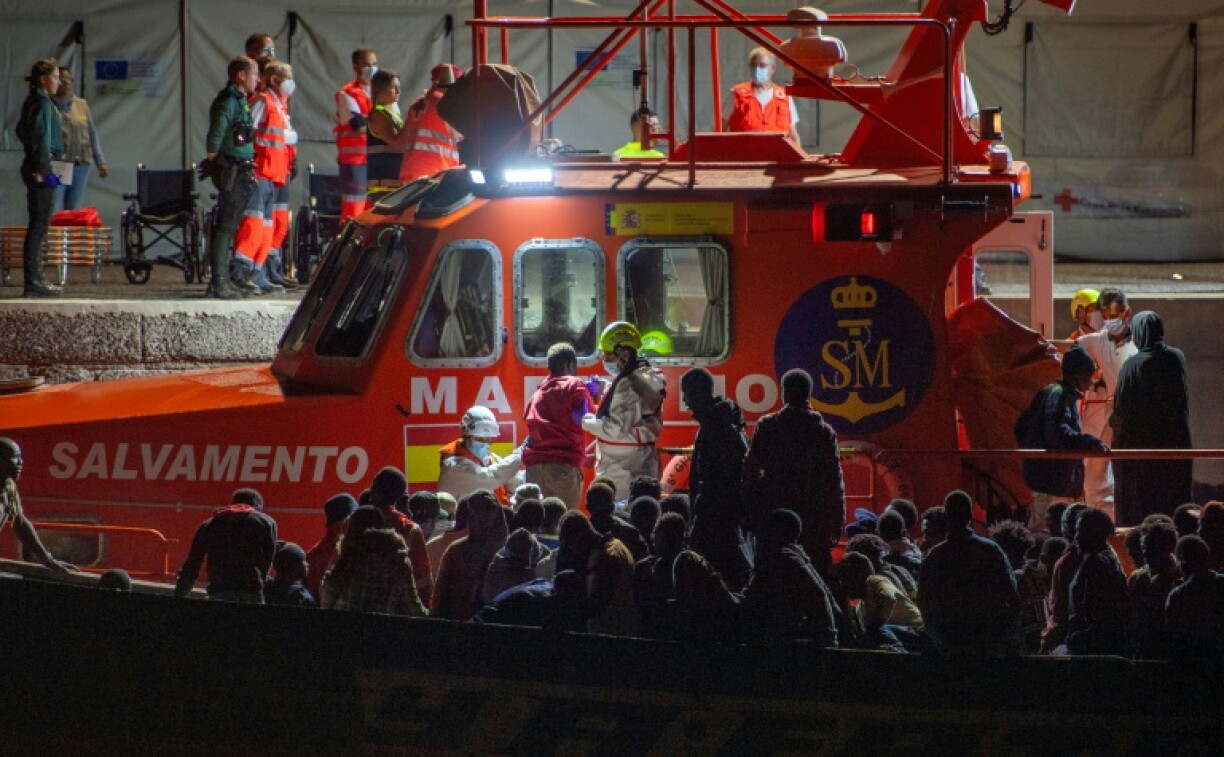
The election also comes amid a fresh surge in arrivals to the Canary Islands.
More than 17,000 people have reached the Atlantic archipelago since October, almost matching the 17,788 arrivals recorded during the whole of 2025.
In La Restinga, on the island of El Hierro, which has received most of the recent arrivals, bar owner Alexis Morales, 62, was unhappy with Sanchez's response.
"He is bound to lose votes over immigration because now all people are worried about is the migrant boats, while ordinary people have been abandoned. Everything is for migrants now," he said.
But while some voters see immigration as a threat, the government and many business leaders point to its contribution to Spain's economic growth and labour market.
Sanchez -- in power since 2018 -- argues that without immigration the country could lose 19 percent of its gross domestic product by 2050.
Spain is one of the European Union countries receiving the largest numbers of foreign residents, and its strong economic performance has been supported by immigration, said Gemma Pinyol-Jimenez, a migration expert at Pompeu Fabra University in Barcelona.

Foreign workers have played an increasingly important role in the labour market. Three out of every four new social security registrations over the past year were by foreign workers, according to government figures.
Many are employed in sectors struggling to find enough staff, including hospitality and construction.
Foreign nationals account for around half of the country's bricklayers and construction labourers, said Pedro Fernandez Alen, president of Spain's National Construction Confederation.
"Some primary sectors, productive industries and parts of manufacturing need workers that we simply don't have at the moment," he told AFP.
du/ml/ds/imm/phz


