
Until now, a loophole – known as the de minimis exemption – allowed goods valued under €150 to enter the EU duty-free, feeding the low-value import boom. In March 2026, the European Parliament and Council agreed on a set of reforms tackling EU customs as a whole. Framed around product safety, sustainability and fairness, the changes are expected to reshape how consumers shop from overseas retailers.
This comes as Chinese online mega-retailers like Temu, Shein, and Aliexpress find themselves in the center of mounting controversy – facing regulatory scrutiny and even legal action over consumer rule breaches and the sale of questionable or unsafe products, as the discourse around regulating fast-fashion and unethically produced goods continues to grow.
While the new rules are expected to substantially change how consumers shop from overseas, it's important to understand how exactly the duty is calculated.
Concretely: If a consumer orders two pairs of pants and a T-shirt, the €3 fee applies twice – once per category – for a total of €6. Add a pair of shoes and it applies three times for €9.
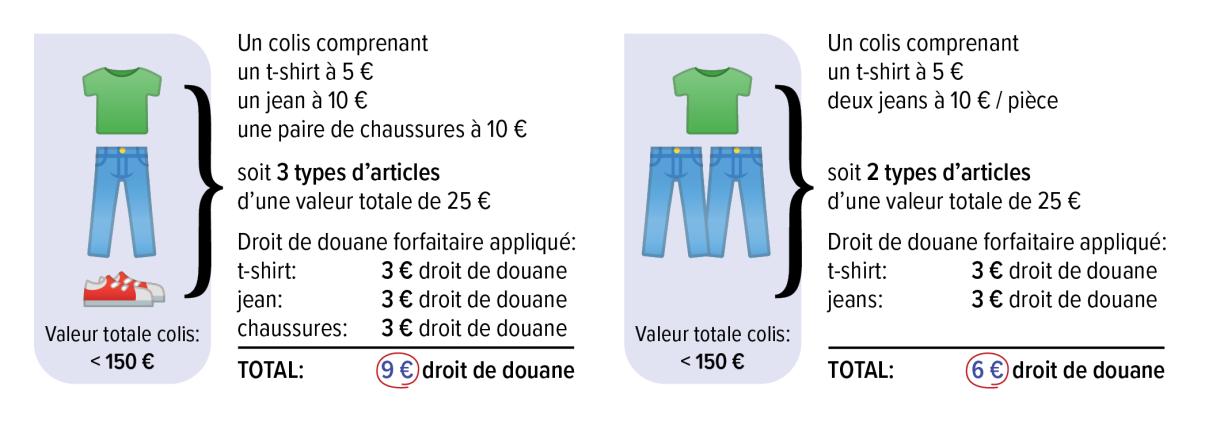
The legislation is clear that the fee cannot be charged directly to the consumer at the border. Responsibility for covering the duty sits with the seller. In practice, that most likely means the cost gets built into checkout pricing. So the consumer still ends up paying for it, just upfront rather than as a separate charge on arrival.
The duty itself is a transitional measure, meant to apply until 1 July 2028, when it will be replaced with the EU Customs Data Hub – a system meant to streamline how imports are processed. Once the Data Hub becomes operational duties will instead be calculated based on tariff classifications, origin, and value of goods.
How smoothly customs authorities can implement the new system in the meantime remains to be seen.
A separate EU handling fee is also under discussion, meant to help cover the rising costs customs authorities face with the growing volume of e-commerce shipments. This is expected sometime in autumn 2026 framed as part of a broader effort to "reform and modernise the EU Customs Union".





