Britain had been Frederika Roberts' home for more than three decades. She raised a family there, built a career, and never questioned whether she belonged. After Brexit, that certainty disappeared.
Faced with uncertainty over her future, the Luxembourg-raised Italian-German national decided to apply for British citizenship – not because she wanted to, but because she felt she had no other choice due to Brexit and the complexities with residency. "I only really know how to be an adult in Britain. It's where I built my life."
Born in Italy to Italian-German parents, Roberts moved to Luxembourg at the age of two, when her mother started working at the European Parliament. She attended the European School in Kirchberg before leaving for Yorkshire in 1990 to pursue university studies.
She married, raised two daughters, built a career in recruitment, and later went on to become a trainer, lecturer, and author. Having grown up between cultures, she speaks six languages and has always considered herself both European and British. "If you cut me in half", she laughs, "you'd find the EU."
When the Brexit referendum was announced in 2016, Roberts didn't initially believe leaving the European Union was a realistic possibility. "I genuinely thought people would never vote for this madness."
Her constituency voted overwhelmingly to leave. "We had a 69% Leave vote", she recalls. Looking back, she says: "I wish I'd taken it more seriously from the beginning. I wish I'd done more to prevent it." The result was particularly difficult for her – not only because of the outcome, but because she could not even vote.
As an Italian and German citizen, she was not eligible to vote in the referendum. "It was done to us by people who never really cared what would happen afterwards."
Roberts eventually got involved in campaigning shortly after the referendum result, hoping either to stop Brexit altogether or, failing that, to prevent what she saw as the worst possible outcome: leaving the single market and customs union. Her involvement grew over the following months, and she became chair of her local anti-Brexit campaign group.
The political shock was quickly replaced by practical uncertainty. For the first time since moving to Britain, she began worrying about whether she would be allowed to remain in the country. "My daughters were genuinely worried I would be expelled", she said.
Roberts says she became paranoid about travelling, fearing she could be stopped at the border on return and told she could not re-enter the country.
Even after securing post-Brexit residency rights, confusion remained. "A lot of systems don't understand the status. Airlines don't understand it either", she says. "It made you feel like a second-class resident."
Eventually, Roberts decided there was only one way to regain certainty. She decided to apply for British citizenship. What followed was months of paperwork, expense, and anxiety.
Despite living in Britain for more than thirty years, proving it turned out to be remarkably difficult. She had to identify the exact date she first entered the UK decades earlier and provide evidence showing five continuous years of residence.
She spent months searching through old payslips and documents. "I was terrified of making a mistake", she says.
Brexit also affected Roberts' younger daughter, Hannah. As part of a Medicine with European Studies degree, she was due to complete a four-week hospital placement in Spain through the Erasmus programme.
After the UK left Erasmus, there was uncertainty over whether the placement would go ahead, and although it eventually did, students received less financial support and had to cover more of the costs themselves.
Roberts says some students could not afford to take part, and her daughter's university has since discontinued the course because it became too difficult and expensive to run without the scheme.
At the time, uncertainty over Germany's citizenship rules added further uncertainty. She feared she might have to give up her German nationality if her British citizenship was granted after Brexit took effect. "After spending all that time and money, I thought I might have to give up my German citizenship as well, which I would never do."
Fortunately, her citizenship application was approved before the Brexit deadline.
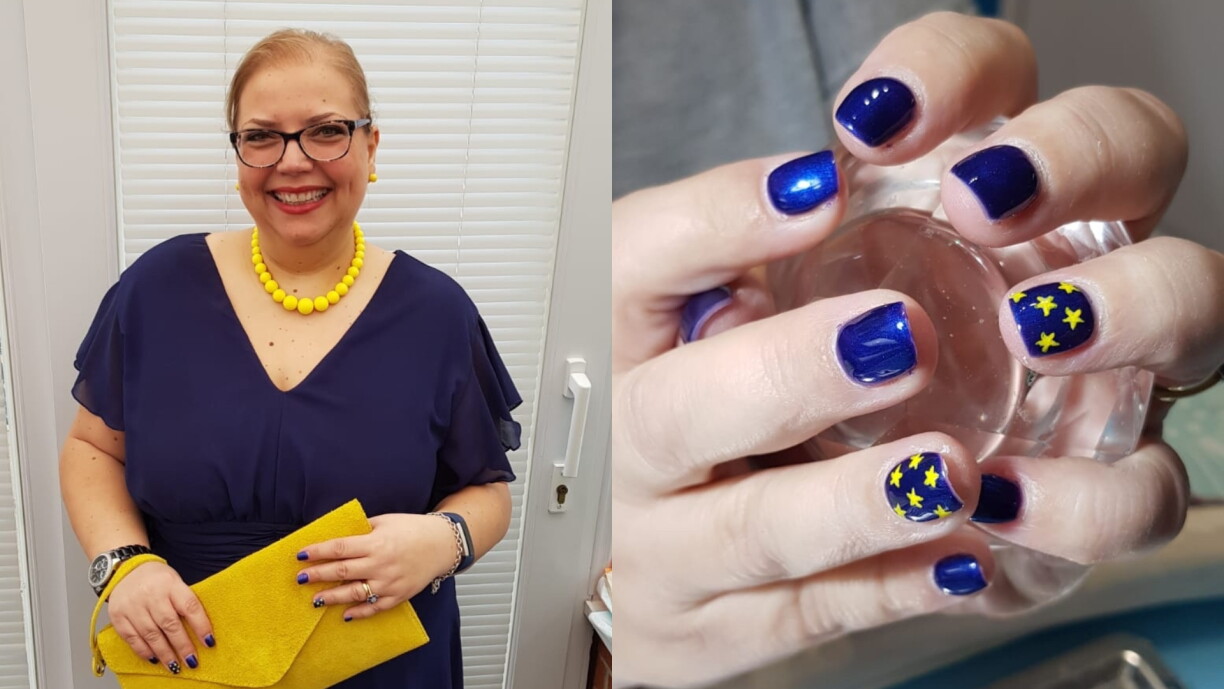
She recalls her citizenship ceremony as a defining moment. She arrived dressed in blue and yellow, with matching nails.
"For me, citizenship should come from love and a desire to belong, not out of fear."
After spending thirty six years there, Roberts says she no longer recognised the country she had moved to as a young student. Asked how Britain changed during the years she lived there, Roberts says the turning point came much later.
"People talk about the Britain of 1990, but even during the 2012 Olympics Britain felt optimistic and welcoming. It was after Brexit that everything changed."
She believes attitudes towards immigrants, people with accents, and ethnic minorities became increasingly hostile. "There was a level of hate, anger, and animosity that hadn't been there before."
The experience also strained friendships. Some people dismissed her concerns or failed to understand why Brexit affected her so deeply. "They minimised what it meant."
"It ripped us out of something that had become part of our identity", she stressed.
Eventually, the family decided it was time to leave. The move was made easier by the couple's flexible work arrangements. But emotionally, it was also a chance to reconnect with the European identity she felt had been taken away.
Even now, Brexit continues to affect her life. Importing houseplants and other personal possessions from the UK has become a bureaucratic headache. What was once a straightforward part of relocating now often involves extensive customs declarations, itemised inventories, and additional paperwork before belongings can cross the border.
"I hope that by the time we make our final move with everything we own, Britain will at least be back in the Customs Union, sparing us the hassle of having to itemise more than three decades worth of belongings."
Roberts' short-term hope is for Britain to rejoin the European Single Market. Longer term, she hopes for a future government that will take the country back into the European Union.
"I don't think it's completely unrealistic anymore. There seems to be movement in that direction."





