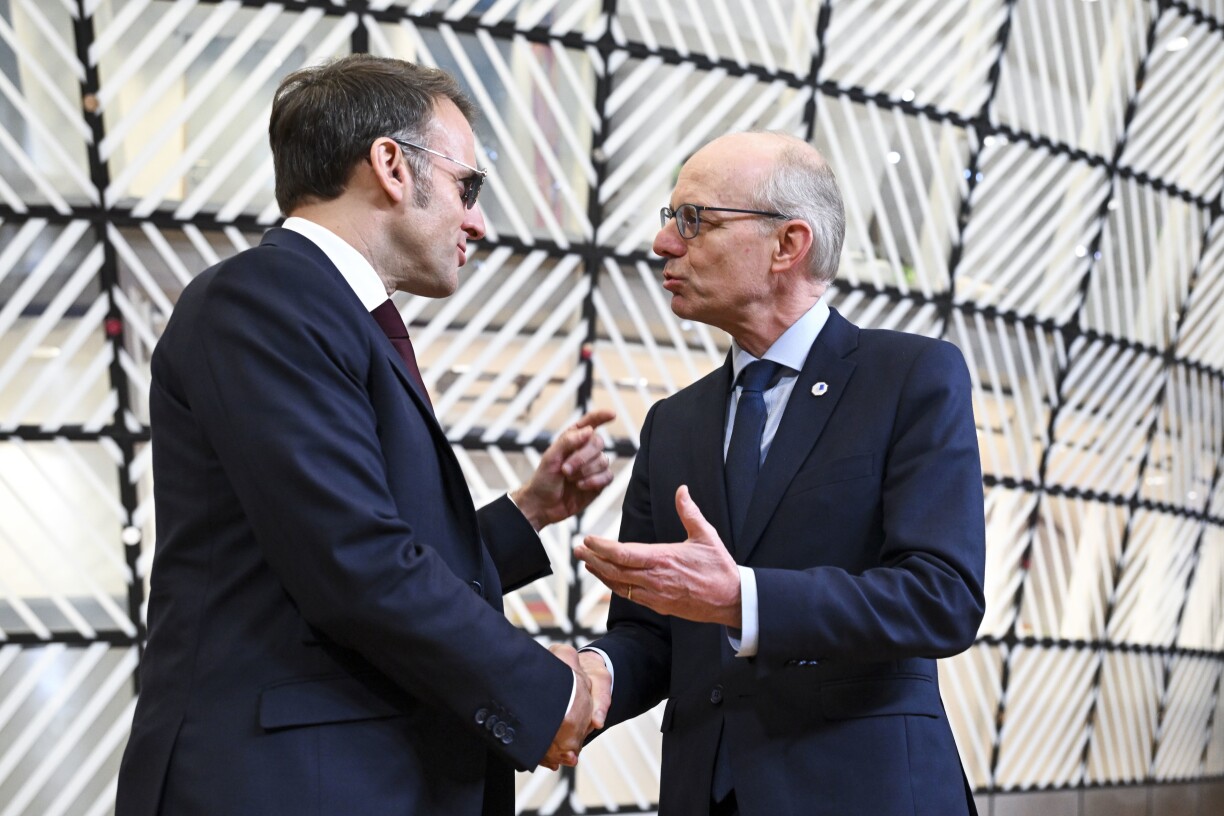
At an urgent EU special summit convened to counter the threat of US punitive tariffs, European leaders projected unity and a commitment to defend their interests.
The informal meeting of the 27 heads of state and government in Brussels on Thursday was called by Council President António Costa to coordinate a response to potential measures from Washington.
Initial reports suggest the united stance may have yielded an immediate result, with US President Donald Trump delaying his decision on the tariffs – a development many leaders attributed to their collective front. The summit also briefly addressed concerns over US interest in Greenland, a topic on which leaders now feel somewhat reassured.
"We accept leadership, but not domination", stated Donald Tusk of Poland. French President Emmanuel Macron, who attended wearing sunglasses on doctor's orders, urged continued vigilance, saying, "Together we have managed to command respect, but we must remain cautious."
Luxembourg's Prime Minister Luc Frieden echoed the sentiment of solidarity. "Europe is proud and should stand by its values", he said on the sidelines of the summit, adding that Europeans need not fear President Trump if they "stand and stick together".
Reflecting on a week of erratic US diplomacy, Prime Minister Frieden described a "structural shift" in US politics. Despite recent turbulence – marked by aggressive rhetoric from US President Trump followed by seemingly conciliatory gestures – Frieden affirmed that the United States "remains a friend".
Nevertheless, he argued that Europe must now assert its independence. "It is very clear to most of us that we must not abandon our principles", Frieden stated. He characterised the recent EU summit as "very meaningful", particularly in demonstrating solidarity with Denmark and the people of Greenland. "We are showing those in the US who simply want to take over Greenland that this is not an option", he said, underscoring that Europe's stance signals a broader readiness to defend its values.
According to Frieden, this move toward emancipation will require significant investment and time to achieve greater autonomy in the economy, energy, and security. "This doesn't mean that Europe should build a wall around itself", he clarified. Instead, the continent must adapt to a new geopolitical landscape where "Russia, China, and the US have dreams of power".
In the Prime Minister's view, "Europe must also have power. Not against others. But for our people. Prosperity for Europeans."
On the issue of Middle East peace, the Prime Minister noted that most of his EU counterparts do not view Trump's proposed 'Board of Peace' initiative as constructive, though he added that achieving peace in Gaza remains "desirable".
Despite current geopolitical tensions, Prime Minister Frieden reiterated his belief in the foundational friendship between Europe and the United States. Arriving at the Brussels summit, he emphasised the importance of nurturing relations with "our big brother", stating that "large parts of US society" remain allies of Europe.
Yet Frieden also stressed the need for strategic autonomy. He argued that the EU must be prepared to utilise all available instruments should it become necessary to respond to pressure from the US. This call for readiness comes amid a temporary reprieve, as President Trump has, for now, deferred decisions on imposing new punitive tariffs on EU goods and has disavowed any military intervention in Greenland.
European leaders remain cautious, however, aware that the situation could shift rapidly. "We must come to terms with the new situation and stand together", Frieden stated.
Alongside the immediate US concerns, broader diplomatic and trade issues were on the agenda. Discussions among leaders, which continued over dinner, were expected to touch upon announced US-led peace talks between Russia and Ukraine. Frieden also noted the strategic value of advancing new trade agreements, such as the Mercosur deal with South American nations. While the European Parliament has called for a legal review, the agreement could still enter into force provisionally.
When asked, the Prime Minister confirmed that the Mercosur agreement was not specifically debated during Thursday's formal talks. "No, that was not discussed. No", he said.






