After a decade of crisis management, austerity, and bailouts, Greece exited the Enhanced Surveillance on 20 August.
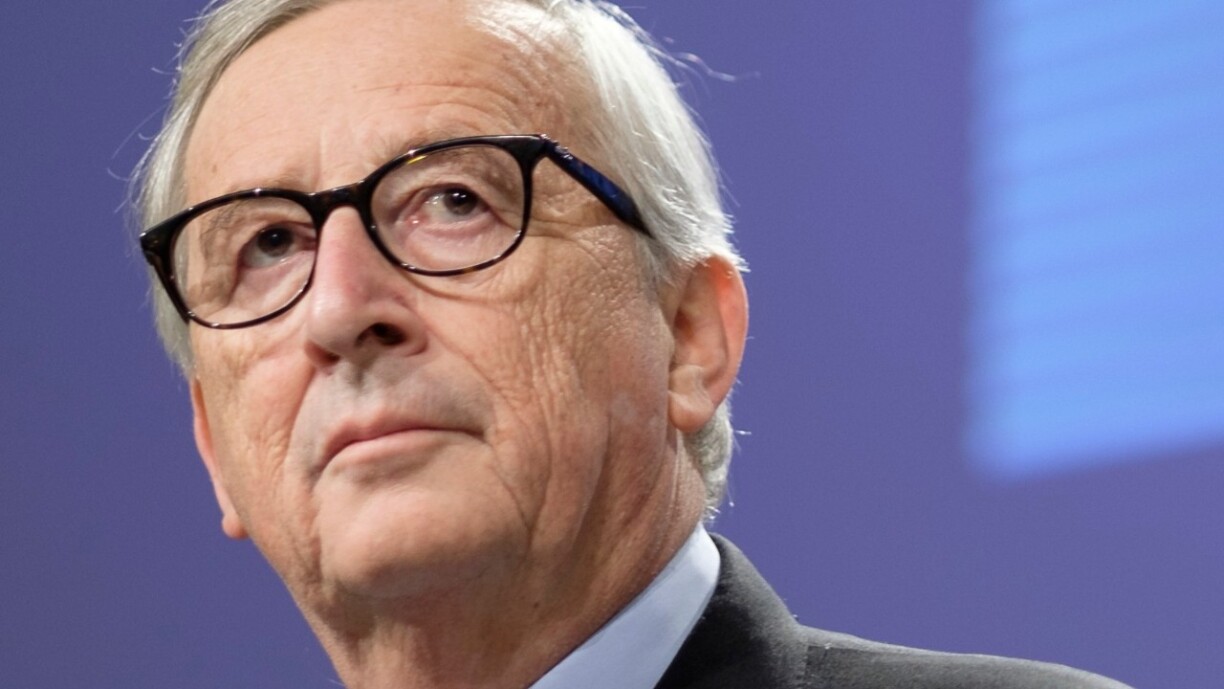
Looking back, Jean-Claude Juncker said “measures imposed on Greek society were too austere”.
In an interview with Euronews he said Greek citizens had suffered a lot during a period where “their dignity was not always respected”.
With the termination of the Enhanced Surveillance System, put in place to allow European institutions to monitor the Greek government's finances, Greece is now turning the page on its debt crisis.
When in 2009 the Greek government said it may have to default on its debt, it sent the European Union into a crisis that shook it to its core.
To avoid defaulting, and ensure the stability of the Eurozone, the EU and the IMF provided billions of euros in emergency funding.
This came with strict terms and conditions. Creditors demanded that Greece implement austerity policies.
These led to a recession, increased poverty and the rise of the far-right in Greece.
Nearly half a million Greeks left the country during the crisis, and few have returned. This ‘brain drain’ was costly to Greece.
Greece's finance minister at the time, Euclid Tsakalotos said the EU's austerity-first approach had fuelled today's populist movements.
He went on to say that to understand the rise of the ‘new right’ across the EU, "If you want to understand Salvini and Meloni”, one should look at the ‘economic policies that lead to inequality’ and cut people’s access to healthcare, transport, and education.
Populism is on the rise in Europe. In France, Rassemblement National leader Marine Le Pen had a strong showing in presidential elections earlier this year.
On 25 September, the election in Italy is expected to make Giorgia Meloni Prime Minister, she leads nationalist Brothers of Italy.
In Sweden elections this week brought the far-right anti-immigration Sweden Democrats into Parliament as its largest party on the right.
Hungary, Germany, Austria, Denmark, Belgium, Estonia, and Finland, all have seen a rise in populism.
The current Minister of Finance, Christos Staikouras, is positive about the country’s prospects.
"We are back to normality for the first time since 2010," he told Euronews.
As the country improves access to international markets, it aims for strong and robust economic growth to attract more investments.
“"This will have positive, direct and indirect effects on the Greek economy and society” he said.
Greece's economy has indeed rebounded since the crisis. The unemployment rate has fallen to 12.5%, however, well-paid jobs are hard to come by and inflation stood at over 11% in August, making the cost of living an issue for many Greeks.
Juncker, in his interview, said “I would like to forget that chapter.” however, among many analysts, the bailouts that triggered austerity will remain a contentious topic for years to come. His recent comments add to the conversation.
Juncker concluded the interview by mentioning that Greece is in a turbulent region of Europe, and that he believes Greece is “not playing the role in Europe it should play”.
He mentioned Turkey and incursions of Turkish aircraft over Greek airspace, the drilling for natural gas in areas that Greece considers its own territorial waters, and the refugee crisis.
“Without Greece, the European Union would not be complete and I would like Greece to echo in a stronger way its particular voice.” he said, ending the interview.





