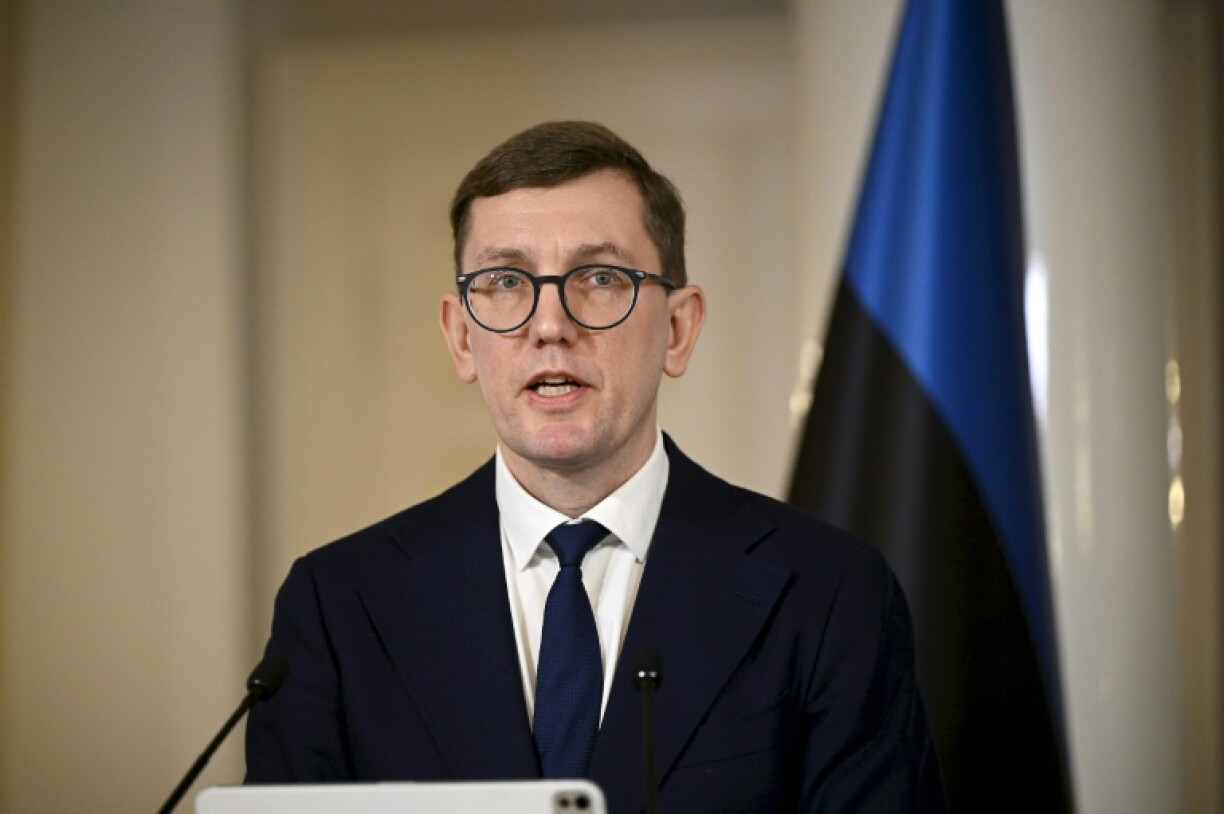
Estonian lawmakers voted Wednesday to ban non-EU residents from voting in local elections, a move aimed at the large number of Russian citizens living in the Baltic state as it warily eyes Moscow.
The amendment was proposed in response to security concerns over Russia's war in Ukraine. Estonia has been a steadfast supporter of Kyiv since the invasion in February 2022.
In the vote on Wednesday, 93 lawmakers in the 101-seat chamber backed a constitutional amendment to impose the restrictions, a result that was met with applause from MPs.
Estonian Prime Minister Kristen Michal hailed the outcome as "a victory for all", adding on X: "The decisions in our local life won't be made by the citizens of the aggressor states, but we'll decide by ourselves."
Nearly 80,000 Russian citizens hold a residence permit in the former Soviet republic of 1.3 million people, which regained its independence in 1991. Estonia does not recognise dual-citizenship.
There are also nearly 60,000 people left stateless after the fall of the Soviet Union.
The restrictions, if signed into law by Estonia's president, would ban non-EU citizens from voting and allow the stateless residents to go to polls one last time in local elections in October.
But the mayor of Narva, a predominantly Russian-speaking town on the border with Russia, lamented the lawmakers' decision.
"The country is divided: you, Estonians, and us, Russians, whom the Estonians don't trust," Katri Raik told the Delfi news website.
"Citizenship or ethnicity doesn't make anyone a security threat," she argued.
Permanent residents of Estonia currently have a constitutional right to vote in local elections, but not general elections.
- 'Imperialistic ambitions' -
The Baltic states have been ardent supporters of Ukraine, but both Estonia and Latvia have sizable Russian-speaking minorities that are sometimes at odds with the national governments.
There have been concerns that Moscow could seek to exploit these differences to destabilise the countries, which are both EU and NATO members.
"If Russia had been, from our point of view, sensible, no one would have initiated this," said Rein Toomla, a political expert from the Johan Skytte Institute.
"Russian citizens living in Estonia have fallen victim to this because Russia has acted this way, not them," he told AFP.
Citing the threat from Russia, Estonia plans to raise defence spending next year to at least five percent of GDP.
"Russia has not changed its goals and imperialistic ambitions. This is a real threat to both Europe and NATO," Michal said last week.
Residents in the border-town Narva blasted the move.
"This is a very strange decision," Alexander, an Estonian Russian-speaking student told AFP.
"My parents, for example, have Russian passports. They have been living here for many years, they also work here, they pay taxes. Why can't they decide?" he said.
- Security threat -
When Estonia gained independence from the Soviet Union, around a third of the people living on its territory were from Russian-speaking minorities whose families had immigrated from other Soviet republics.
They did not qualify for citizenship because of a lack of blood ties to Estonia. Citizenship also requires applicants to pass an Estonian language test.
Voting rights are just the latest symbolic act of cutting ties with Russia.
The Baltic states began removing and demolishing some of their Soviet-era war memorials in response to Russia's Ukraine invasion.
This prompted outrage in Moscow, which declared several European officials as "wanted" over their alleged involvement in the destruction of the memorials.





