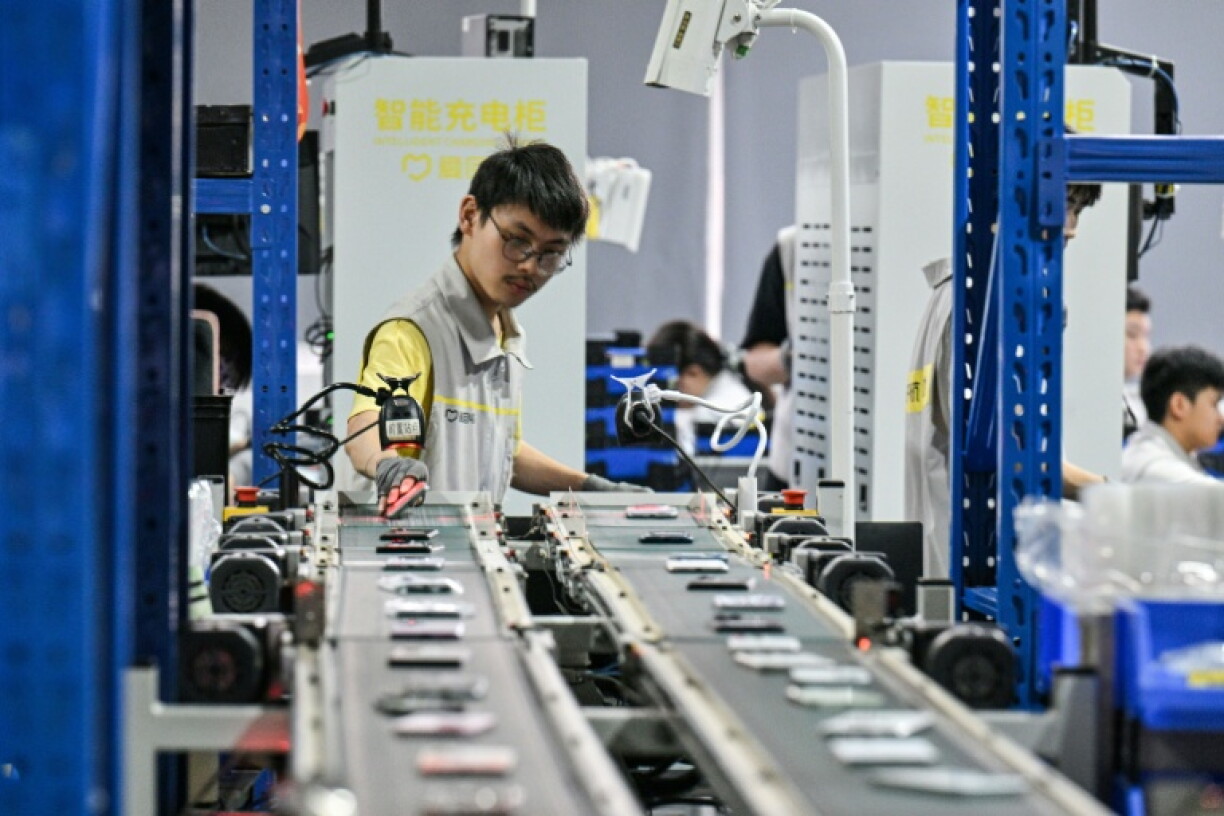
In the maze of Shenzhen's neon-lit Huaqiangbei electronics market, buyers from Africa to Bangladesh buy dozens of used phones at a time -- even with cracked screens -- to sell back home.
"From all China, the broken mobile phones come here," Akhtar Muhammad, 38, a Pakistani businessman, told AFP as he browsed the stacks of devices in the southern Chinese city.
"We will fix them in Pakistan."
The supply is mind-boggling. As the world's largest smartphone producer, China discards over 400 million devices annually, the China Association of Circular Economy estimates.
As chip shortages and rising prices around the world make new devices harder to afford, so the demand for pre-owned phones is also soaring.
Mama, a 24-year-old Nigerian buyer, said he had bought around 40 used phones in one day in Shenzhen, which this week hosts Asia-Pacific leaders including US President Donald Trump.
"They are more expensive in Africa because we don't have big suppliers or markets like this one," Mama told AFP. "If I buy and send them to my country, I get profit."
Nearby, another Nigerian buyer haggled with a stall owner. His haul included damaged iPhone 13 Pro and 14 Pro models bought for 1,000 to 2,000 yuan ($150 to $300) each.
He plans to repair their screens locally before shipping them home for a lucrative resale.
In particular, people in emerging markets such as South Asia and Africa, where there is less purchasing power, are turning to used models, Counterpoint Research analyst Ivan Lam told AFP.
The global secondary smartphone market grew 13 percent year-on-year in the first half of 2026 to 150 million units, according to Counterpoint.
In Pakistan, people often opt to repair rather than replace broken devices, said Muhammad, who has been coming to China since 2007.
"Maybe people use one mobile phone for four or five years. It's not the same like USA, Europe. They change every year or every six months," he said.
But outside Huaqiangbei's crowded stalls, a more formalised alternative is taking root: PaiJiTang Mall, a self-service second-hand marketplace run by Chinese recycling company ATRenew.
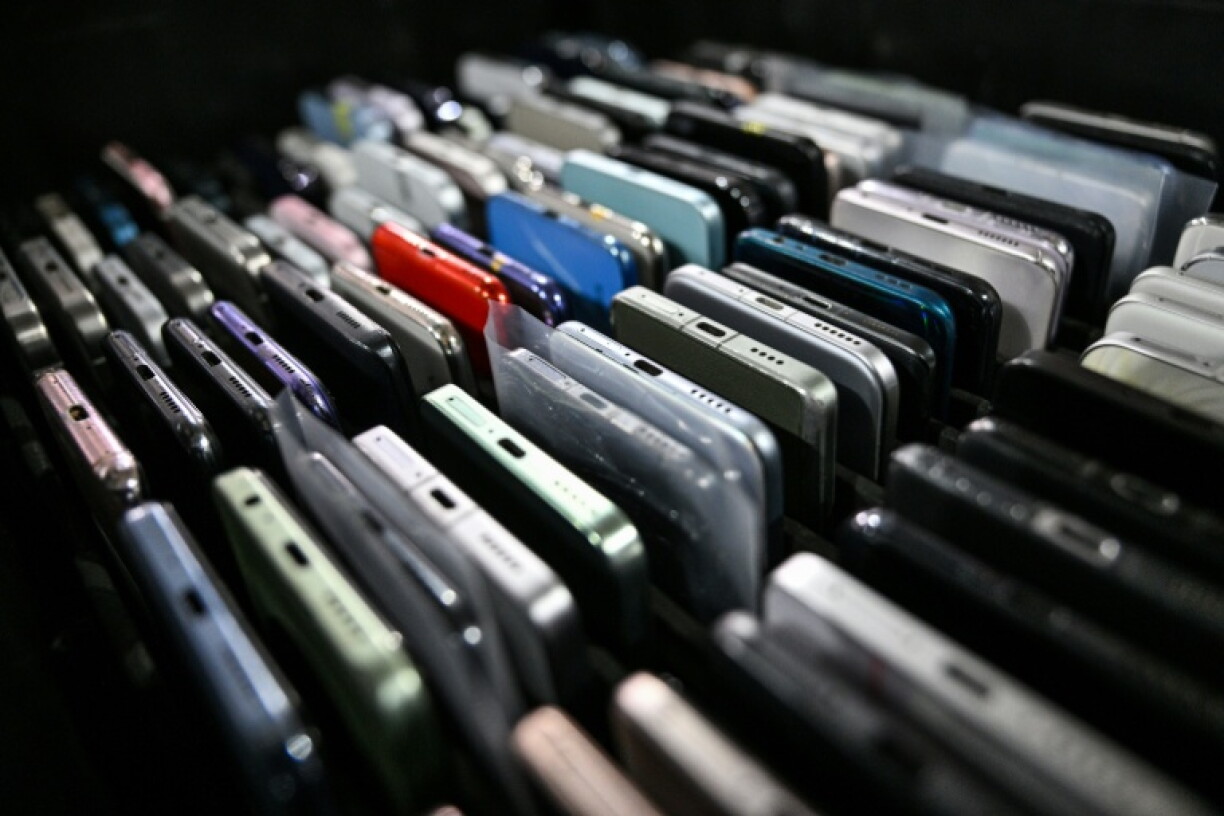
Inside, rows of over 20,000 used phones are on display. Buyers scan QR codes for instant inspection reports and pricing, test the units and purchase in bulk.
The shop draws up to 1,000 visitors daily, with international traders making up about a third, said store manager Zhang Xiaoming.
Abdul Rahim, a 20-year-old shopkeeper who flies to China up to three times a month to stock his phone and accessory store in Algeria, capitalises on a price gap of 100 to 120 euros ($110 to $132) per device.
"It's very easy for Algerians to get the visa to China. You put in your papers and in two or three days you have the visa in your passport," he told AFP.
"For Europe, there just aren't visas... So we come here."
Apple devices account for 70 to 80 percent of sales, with the rest split among Chinese brands such as Huawei, Xiaomi, Oppo and Vivo, Zhang noted.
Older models like the iPhone 11, 12 and 13 -- losing ground to cheap Androids in China -- retain strong brand power overseas, where they find a second life, explained Jeremy Ji, ATRenew's head of corporate strategy and overseas business.
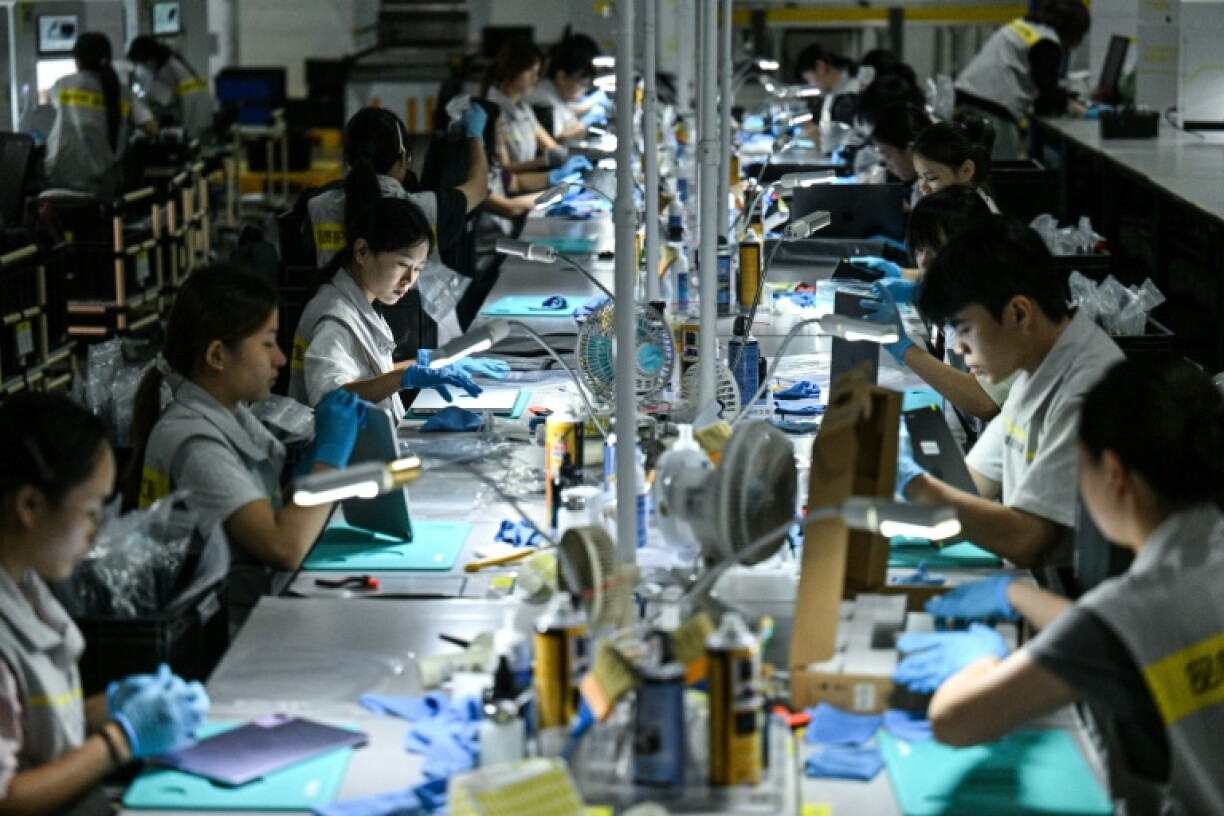
At ATRenew's massive processing hub in Dongguan, north of Shenzhen, roughly 30,000 second-hand gadgets arrive daily and are inspected and packed by over 300 technicians.
Rising prices are also changing buying habits in China itself with consumers opting increasingly for pre-owned models, particularly nearly new premium models, said Arthur Guo, an analyst at IDC China.
Most phones discarded in China are still sold domestically, and bulk exports via official channels have not increased significantly, Lam, of Counterpoint, told AFP.
For Mama, sourcing phones is still a hands-on process.
"If I come, I spend a month checking (phones). I buy, buy, buy," he said. "After I have finished, I go back to my country."
em/stu/mjw


