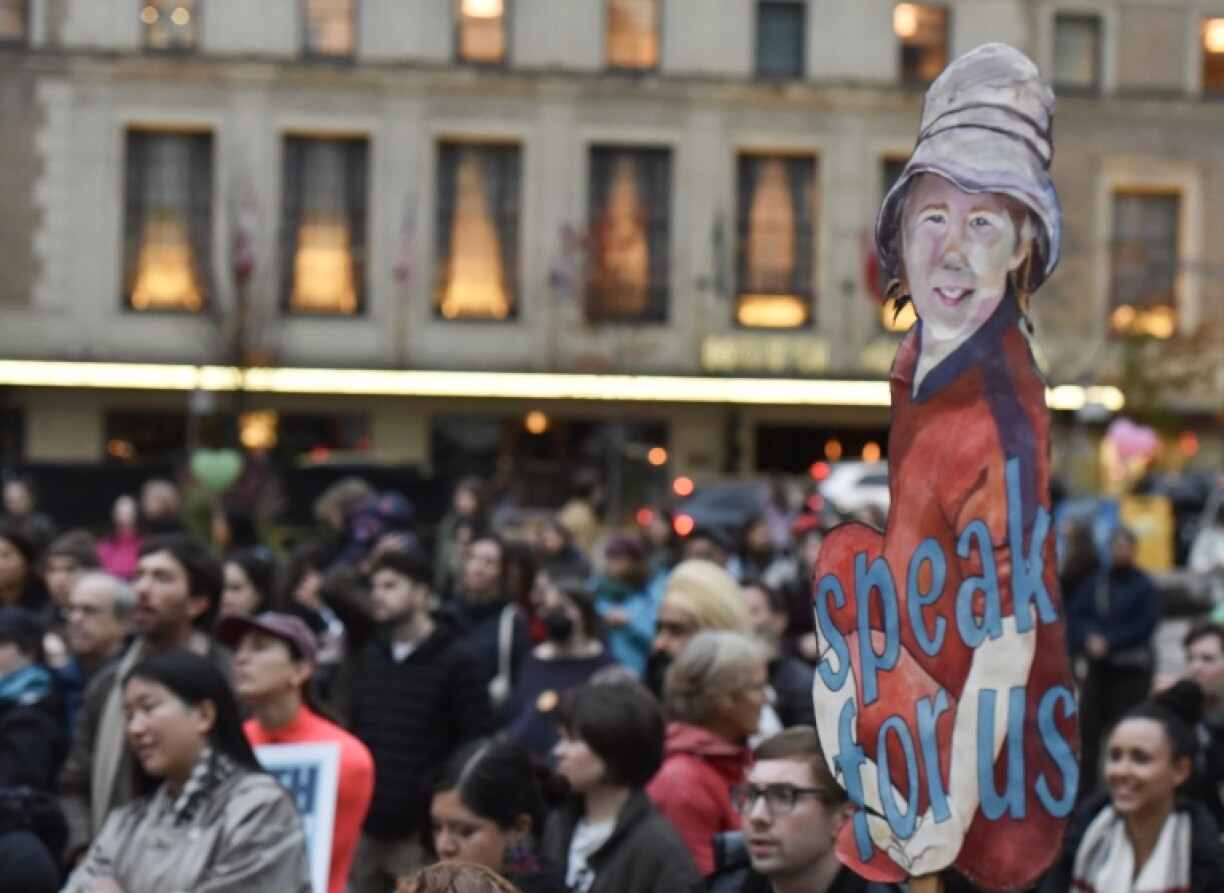
At a landmark trial where Canada is being sued over its alleged failure to address climate change, government lawyers argued individual states cannot be held responsible for the consequences of a global problem.
Environmental lawyers dismiss the strategy as a tired legal tactic designed to ensure official impunity for climate-related devastation.
But Ottawa is banking on the strategy working in the closely watched case in which 15 young Canadians are suing Canada for allegedly violating their right to a safe and secure life.
After extensive expert testimony, government lawyers wrapped up their defense Friday, and the case is now on hiatus until February.
The first government witness was University of California, Berkeley environmental economist David Anthoff, who testified Canada's capacity to "impact global climate change by changing its own domestic emissions is relatively small."
The plaintiffs want the court to impose binding emissions targets on Canada, but Anthoff argued that would have limited impact.
"Most of the climate change that Canada will experience will be determined by the choices of other countries," he testified, noting the country is responsible for only about 1.4 percent of global emissions.
Lead government lawyer BJ Wray told the trial in Vancouver during opening argument that "climate change is a global problem that can only be remedied with a global solution."
The young plaintiffs have testified about terrifying escapes from raging wildfires and summer days when they were unable to go outdoors because of dangerous air quality, arguing proactive government action could have helped.
But Wray argued the evidence makes clear these "harms are not inflicted by the government."
The Canadian Constitution, which enshrines the rights to life, liberty and security, "was never intended to solve an existential crisis" like climate change, Wray said.
Sebastien Duyck of the Center for International Environmental Law told AFP Canada was using "the same worn-out argument used by other major polluters."
It's "an argument that courts around the world have repeatedly rejected," Duyck said, citing, among other rulings, a groundbreaking 2025 International Court of Justice decision that found states are responsible for protecting the environment "for present and future generations."
"Canada's contribution (to global emissions) is far from negligible, especially when you factor in emissions from the fossil fuels it exports," he added.
Canada also called University of Reading climate law professor Benoit Mayer, who testified that international treaties setting out emissions targets were designed to establish obligations between states toward "collective action."
Such treaties, including the Paris climate accord, were "never framed as a matter of protecting human rights through reducing greenhouse gas emissions."
Maria Antonia Tigre, director of global climate change litigation at Columbia University's Sabin Center, said the arguments underpinning Canada's defense are "common" but flawed, arguing there is extensive legal literature linking climate change to individual human rights.
The case is unfolding as Canadian Prime Minister Mark Carney faces increased pressure over his environmental policies.
The prime minister says US President Donald Trump's trade war has forced Canada to reorient its economy away from dependence on the United States.
Part of his strategy includes boosting oil production in the western province of Alberta, including through a proposed new pipeline to the Pacific coast.
That project, along with other moves such as scrapping the carbon tax on individual households, prompted the resignation of cabinet minister Steven Guilbeault, the architect of many of the climate protections pursued by Carney's predecessor, Justin Trudeau.
Addressing the COP31 climate meeting in Turkey, Guilbeault took another shot at Carney.
"To be honest, Canada has almost abandoned the fight against climate change," he said.
fa/bs/msp


