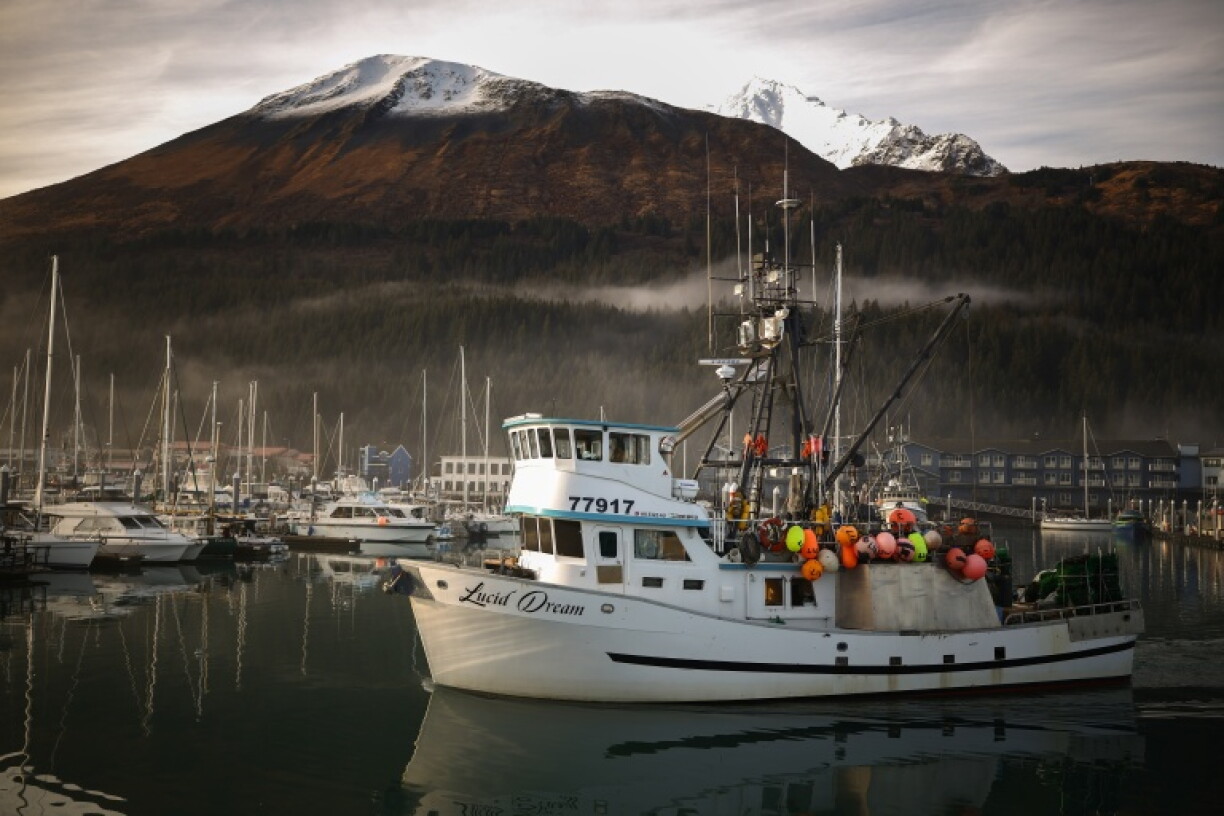
In his Alaskan community, fisherman Bob Candopoulos has long welcomed tourists to his business that's showcased by a sign featuring a king salmon.
But this local fish emblematic of the region is growing increasingly rare.
"Ten years ago, we could go out every single day" and hit catch limits, the sports fisherman and charter boat operator told AFP. "Now sometimes we're lucky if we even find any salmon when we're out there fishing."
"It's terrible," Candopoulos said with a sigh, standing on the docks of the small port of Seward, a municipality surrounded by snow-capped mountains along the shores of the North Pacific.
Like many residents of this vast, frigid state, the 64-year-old blames massive trawlers that scour the Gulf of Alaska and the Bering Sea for impacting the king salmon runs.
Industrial vessels target pollock, which is used in products like breaded fish sticks and imitation crab products worldwide.
Their nets are as wide as four commercial airliners, and routinely scoop up thousands of tons of fish other than pollock each year.
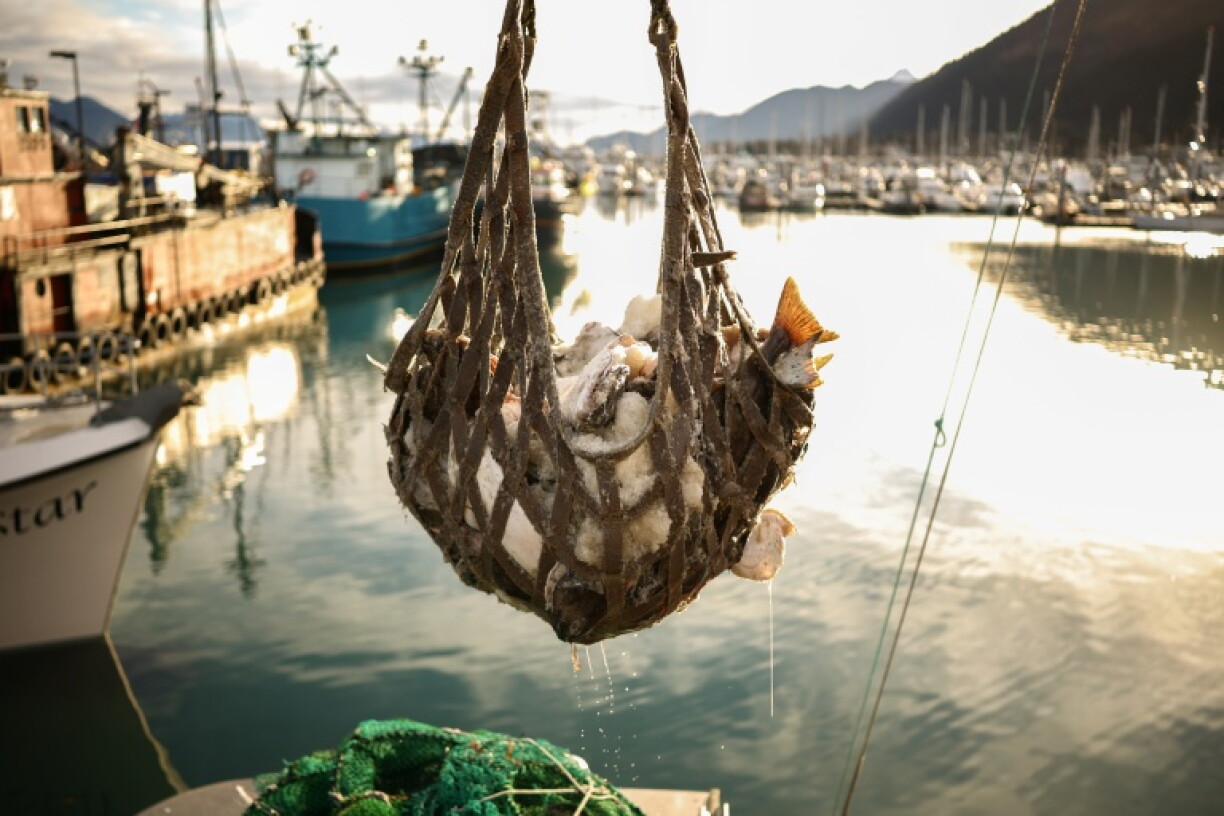
This bycatch includes salmon, which then die in the ocean instead of returning to spawn in their native rivers.
The waste is particularly difficult to bear because salmon fishing has been severely restricted -- and even outright banned -- for years among the Indigenous communities along the Yukon and Kuskokwim rivers.
"Our rivers are running dry of fish, but the trawl industry isn't regulated to stop killing them," says Candopoulos.
Most of the trawlers are based in Seattle, Washington state -- and roughly two-thirds of the economic output generated by the pollock fishing industry ends up outside Alaska.
"Alaska is definitely being preyed on by a billion-dollar industry," fumes Candopoulos.
This inequity fuels distrust in a region that's long witnessed the arrival of opportunists eager to exploit its rich resources, including beaver pelts, gold and oil.
Polling has indicated the majority of Alaskans are angry enough they'd like to see trawling banned.
In Seward, fishermen are not necessarily calling for that extreme.
"I'm not necessarily on the 'kill all trawlers' wagon," Chance Miller, 42, told AFP.
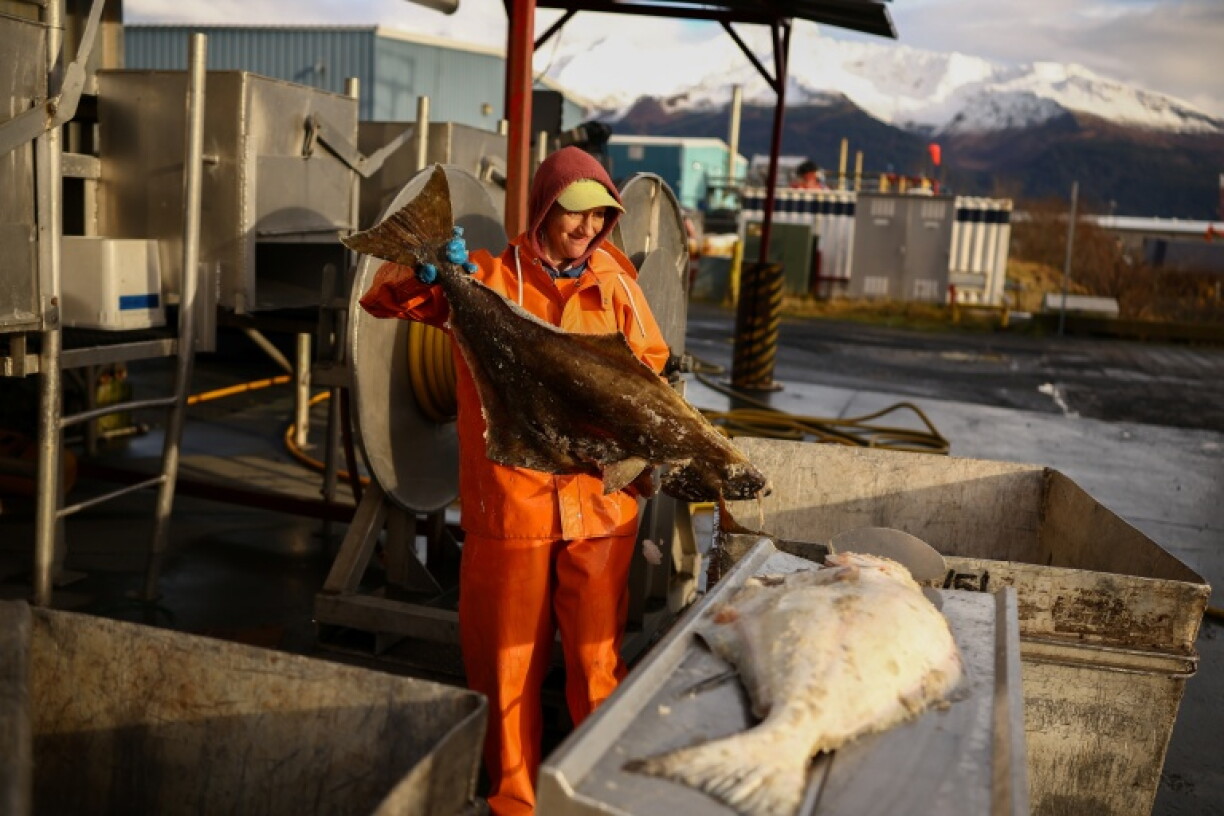
The sports fisherman noted that Alaska has a significant fleet of local trawlers, some of which operate on behalf of coastal Indigenous communities.
He also voiced concern over the economic implications.
"Towns are built around processors," Miller said.
"If those guys weren't bringing fish in, those processors might not be able to afford to stay open."
The thorny issue even found its way into Alaska's recent Senate election.
But science points to another culprit: climate change.
Research from the National Oceanic and Atmospheric Administration (NOAA) shows the decline in Chinook (king) salmon primarily stems from marine heatwaves in the Bering Sea, which renders the waters uninhabitable for the fish's prey.
Brett Watson, a natural resource economist at the University of Alaska Anchorage, said a trawling ban would have "unclear" impacts on salmon runs.
"Climate change has been identified as probably a larger contributor to the declines of salmon runs in on the Yukon and Kuskokwim rivers," he told AFP.
"That's a much more difficult issue to deal with."
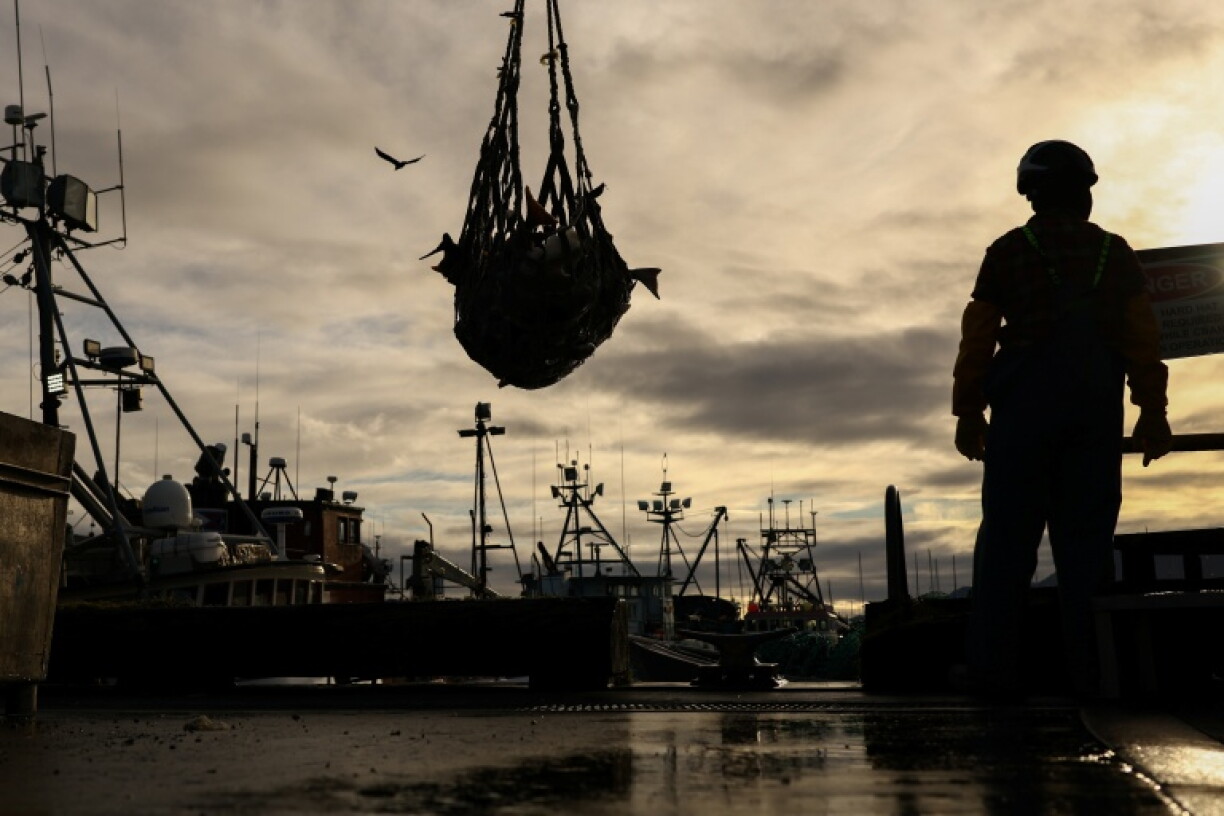
In a state where residents receive an annual dividend from oil production, commercial fisherman Ian Raab laments that politicians squabble over trawlers while failing to mention the impacts of climate change.
"One would think Americans would talk more about it," he said. "I would love if we did, if we were more concerned about it."
Raab pivoted from salmon years ago, and instead prioritizes catching halibut and sablefish.
At 58, he is concerned about the Trump administration's dramatic budget cuts to NOAA.
He said the agency's marine weather forecasts have grown less reliable, and he fears reduced research will undermine policies for managing fish stocks.
"We should let them do their job," Raab said, "so I can do mine."
rfo/mdo/msp


