Hungary's nationalist Prime Minister Viktor Orbán, who has maintained close ties to the Kremlin since Russia invaded its pro-Western neighbour, vetoed a four-year, 50 billion euro ($54 billion) EU aid package for Kyiv back in December.
Orbán's stance has left the European Union scrambling to secure a financial lifeline for Ukraine, made even more crucial with the US Congress deadlocked over future funds for the war effort, which is about to enter its third year.
In Brussels, officials have all but run out of patience with Orbán and his brinksmanship over issues ranging from Ukraine and NATO to EU-mandated reforms at home.
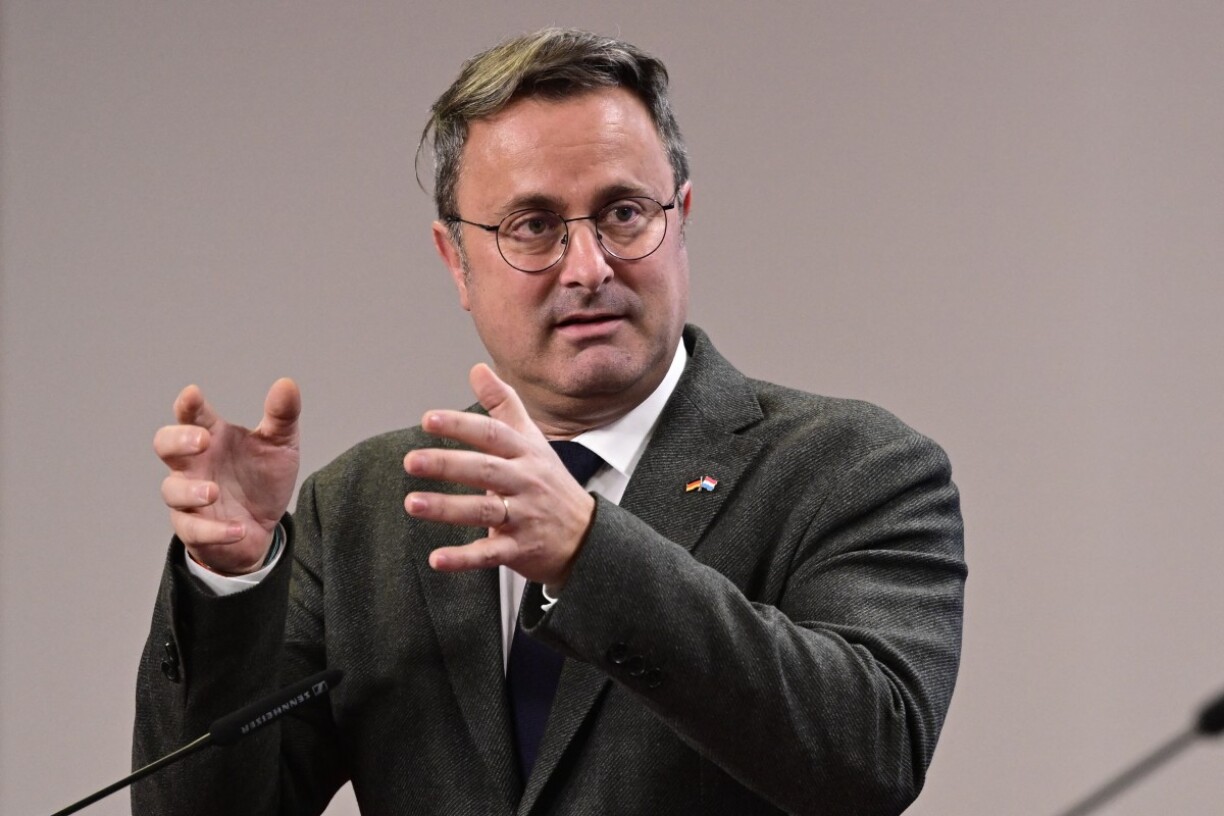
As far as Xavier Bettel is concerned, the upcoming meeting must not fall into a further escalation of threats, after Orbán previously walked out of the room in December to allow the 26 other member states to reach unanimity over allowing Ukraine to start EU membership talks.
"I think it's a shame if the response to blackmail... is more blackmail," he told reporters.
"I am certain there will be more talks in coming days, including with Viktor Orban. I hope that Hungarians will understand it's to choose on which side of the history they want to be."
Luxembourg's foreign minister said it was important for the assembled heads of state and government to speak plainly on Thursday.
On Monday, Bettel indirectly addressed Orbán at a Foreign Affairs Council meeting in Brussels.
The Financial Times reported Monday that a confidential proposal circulating in Brussels called for shutting off all EU funding to Budapest, with the aim of spooking investors and sabotaging Hungary's fragile economy, should it refuse to play ball.
The report drew a furious response from Budapest.
"Hungary does not give in to blackmail!" Hungary's EU minister Janos Boka wrote on X, insisting that Budapest sought to "participate constructively" in discussions.
Budapest said Monday that it had submitted a new "compromise" proposal in preparation for the summit.
The Commission last month approved the release of 10 billion euros for Hungary, but more than twice that amount remains frozen pending progress on issues including academic freedom, LGBTQ rights and protection for asylum seekers.
Orban is demanding the full amount be released without delay.
Members of the foreign affairs parliamentary committee were joined by Luc Frieden on Monday, where they were informed of the prime minister's intended position to take in Brussels.
The proposed aid package for Ukraine, made up of 17 billion in direct aid and a loan of 33 billion, is still pending, although it was approved by 26 EU leaders in December. Frieden said: "The Hungarian Prime Minister is blocking it and, according to my sources, no progress has been made on the Hungarian side over the last few weeks. The question is therefore, what do we do? Luxembourg wants a solution for all 27 members. The money for Ukraine needs to come from the European budget, and if that is not the case, we need alternatives. But it isn't easy."
Assembling the money from national budgets would cost time and would rely heavily on individual parliaments communicating with others, Frieden said. In the meantime, the EU would potentially have to put Hungary under financial or institutional pressure amid accusations of blackmail on both sides.
The LSAP's Franz Fayot said: "Pressure is ramping up, and there are discussions of carrying out Article 7 ([of the EU treaty that can strip members of voting rights in the European Council] which could remove Hungary's votes. That is a difficult procedure. We must hope that the current pressure will be sufficient."
Fayot's sentiments were echoed by committee president Gusty Graas of the DP: "We must hope for a breakthrough here. Ukraine needs massive support, and Luxembourg has established a clear position."
At the summit, Luxembourg will join those who have not yet abandoned hope in Orbán. The Greens' Sam Tanson commented: "The Prime Minister has warned against isolating Hungary too much. Any measure that isolates their head of government will have repercussions at home. This could be counterproductive in the sense of fuelling a solid right-wing movement in Hungary, as well as across Europe."
However, EU leaders cannot let themselves be blackmailed either. Whether Thursday's summit will succeed in finding balance remains to be seen.





