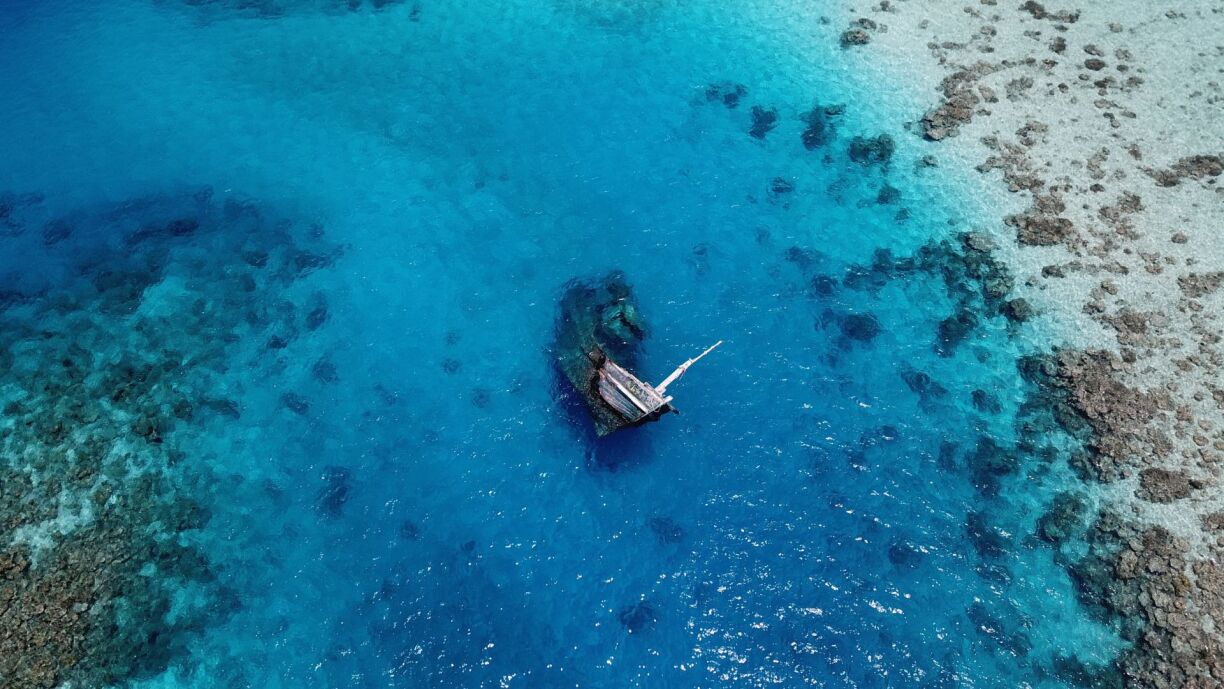
Each of these individuals, like Shaddock, was pushed to the limits of human endurance. Their stories serve as stark reminders of the power of the human spirit, the will to survive, and the strength people can summon when faced with seemingly insurmountable challenges.
An American author and experienced sailor, Steven Callahan survived 76 days adrift in the Atlantic Ocean in a life raft after his boat capsized. Surviving on rainwater, fish, and birds, Callahan was eventually rescued by a passing fishing boat off the coast of Guadeloupe.
Callahan's survival story started when his boat, the Napoleon Solo, capsized after hitting something during a night storm. He was sailing alone on his way to Antigua as part of the Mini Transat single-handed sailing race.
Following the ordeal, he subsisted on the food he could spear, while he patched his punctured life raft multiple times. His experience gave him insight into survival psychology, which he applied in his consultations for numerous survival equipment manufacturers, authors, and filmmakers.
His memoir "Adrift: 76 Days Lost At Sea" recounts his harrowing experience.
This German biologist survived an unbelievable ordeal after the plane she was travelling in was struck by lightning and crashed in the Peruvian rainforest. She was the sole survivor among the 92 passengers and crew, and despite sustaining injuries, she managed to trek through the rainforest for ten days until she was rescued by a group of local lumbermen.
Koepcke's miraculous survival started with a 2-mile fall from the sky after LANSA Flight 508 broke apart mid-air. As the sole survivor, she was left to navigate through the Amazon rainforest with a broken collarbone and an infected arm.
Koepcke utilized the knowledge she gained from her parents, both prominent zoologists, to find safe sources of food and water. She eventually found a group of lumbermen who were able to contact authorities and ensure her safe return.
Koepcke's story is retold in the film "Miracles Still Happen" (1974).
An experienced mountaineer, Ralston was canyoneering alone in Utah when a boulder fell and trapped his right hand. After five days without rescue, Ralston amputated his own hand with a dull pocketknife and rappelled down a cliff face to safety.
Ralston, an experienced outdoorsman, made the difficult decision to amputate his trapped hand after realizing that rescue was unlikely. He recorded video diaries on his camera during his ordeal, intending them as final messages to his family. After his rescue, he continued his adventuring life, now with a prosthetic arm.
He authored the book "Between a Rock and a Hard Place," recounting his experience, and became a motivational speaker. His story was also adapted into the film "127 Hours" in 2010, starring James Franco.
A Salvadoran fisherman, Alvarenga survived 14 months adrift in the Pacific Ocean, living off raw fish, birds, and turtles. Initially lost with a fellow fisherman who did not survive, Alvarenga was eventually found in the Marshall Islands, over 5,500 miles from his original location in Mexico.
Alvarenga and his fishing partner, Ezequiel Córdoba, were initially believed to have perished at sea after they were declared lost at sea by their boss. When a bird landed on his boat, Alvarenga got the idea to catch birds and fish with his bare hands. Unfortunately, Córdoba could not adjust to the diet and died after four months.
After his rescue, Alvarenga's story of survival was received with skepticism until verified by experts. His story was captured in the book "438 Days: An Extraordinary True Story of Survival at Sea."
This New Zealand bushcraft and survival enthusiast voluntarily lived as a hermit for 16 years in three periods on the isolated Cook Islands in the Pacific. He survived on fish, birds, and fruits, living in a hut he built himself.
Neale had been fascinated by the story of the uninhabited Suwarrow atoll since he first heard about it in 1945 and decided to live there alone for extended periods. He packed several provisions, including canned food, two cats for pest control, and basic tools. He grew vegetables, gathered seafood, and hunted for food. He even built an airstrip hoping for an occasional drop of supplies. He was forced to leave when he was diagnosed with cancer and spent his final years in Rarotonga until his death in 1977.
His book, "An Island to Oneself," documents his adventures and experiences, offering a fascinating chronicle of his solitary existence and survival.





