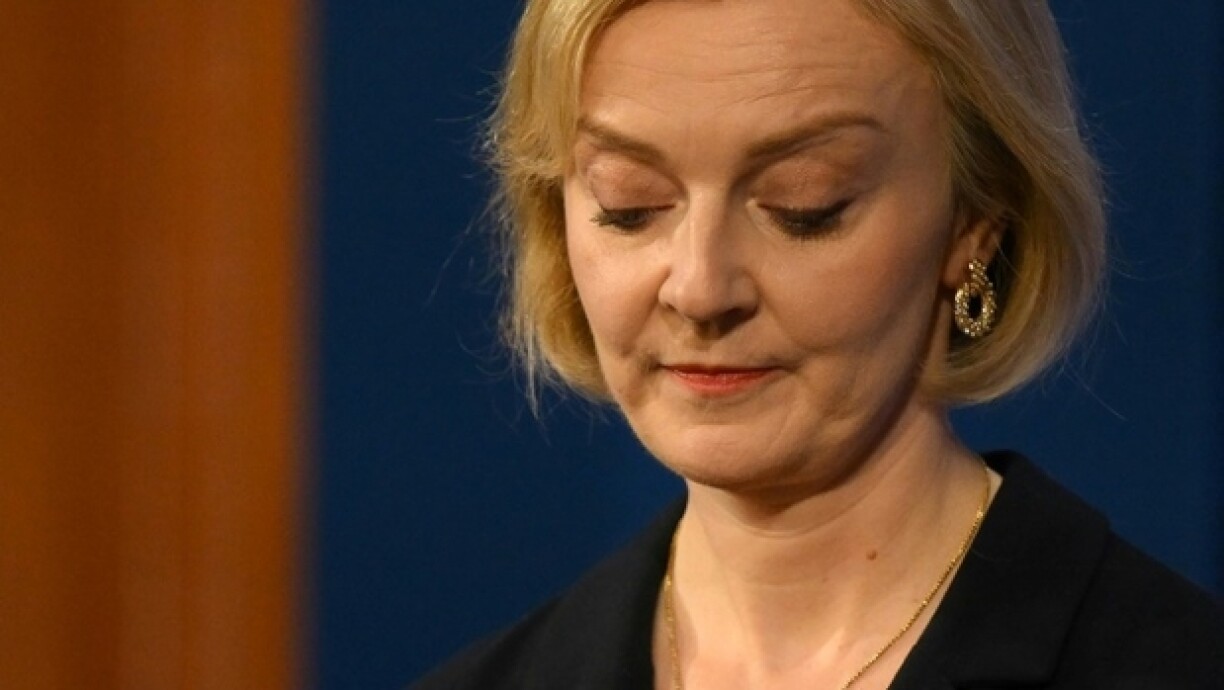
Her Conservative party detailed a rapid process to elect a new leader on October 28, setting a high bar of 100 nominations among its MPs for candidates -- which might block any comeback by former premier Boris Johnson.
The race will be effectively limited to three candidates at the start, before the 357 Tory MPs vote on their preferred candidate on Monday.
Party members will then get an online vote, in an accelerated timetable that avoids the drawn-out contest in which Truss defeated Rishi Sunak over the summer following Johnson's own resignation.
This will lead to the third British Prime Minister within the span of this year alone - Truss came to power on 6 September of this year, when she took over from Boris Johnson.
In front of a group of reporters, Truss admitted she "cannot deliver the mandate" on which she was elected by the members, after her right-wing platform of tax cuts disintegrated and as many Conservative MPs revolted.
Opposition leader Keir Starmer, Labour, has stated that the Tories "lack the patriotic duty" to continue leadership and that a new general election is needed. "After 12 years of Tory [Conservative] failure, the British people deserve so much better than this revolving door of chaos." Starmer told the BBC.
Jeremy Hunt has said he will not stand to be the next Prime Minister, Nick Eardley, chief political correspondent at the BBC has confirmed, calling this moment an "unprecedented crisis in British politics".
Truss said she could not deliver the mandate she was elected to deliver and that she had notified the King that she was resigning as Tory leader. Her stepping down today follows dramatic scenes in the UK House of Commons last night and calls for her to go that succeeded it.
Trouble had began on 23 September when her first Chancellor, Kwasi Kwarteng, upset financial markets with their mini-budget.
5 September - She was elected leader of the Conservative Party, beating Rishi Sunak.
8 September - Only days after being appointed PM, her first monarch, Queen Elizabeth II passed away.
23 September - Her first chancellor, Kwasi Kwarteng, announces a mini-budget, that includes tax-cuts, and upsets markets.
26 September - The British Pound hit an all-time low against the US Dollar.
3 October - Truss and Kwarteng reverse on cutting the highest rate of income tax.
14 October - Jeremy Hunt replaced Kwarteng as Chancellor, and immediately reverses most of the planned tax cuts.
20 October - Today - The Prime Minister resigned, triggering a Conservative Leadership election for the fourth time in four years.
Emmanuel Macron of France declined to comment on "British domestic politics" but said "It is important that Great Britain regains political stability very quickly, and that is all I wish."
Russia's foreign ministry spokeswoman Maria Zakharova said on Telegram that Britain "has never known such a disgrace of a PM".
From Truss to Brown: Britain's shortest-serving PMs
International reactions to Truss' resignation





