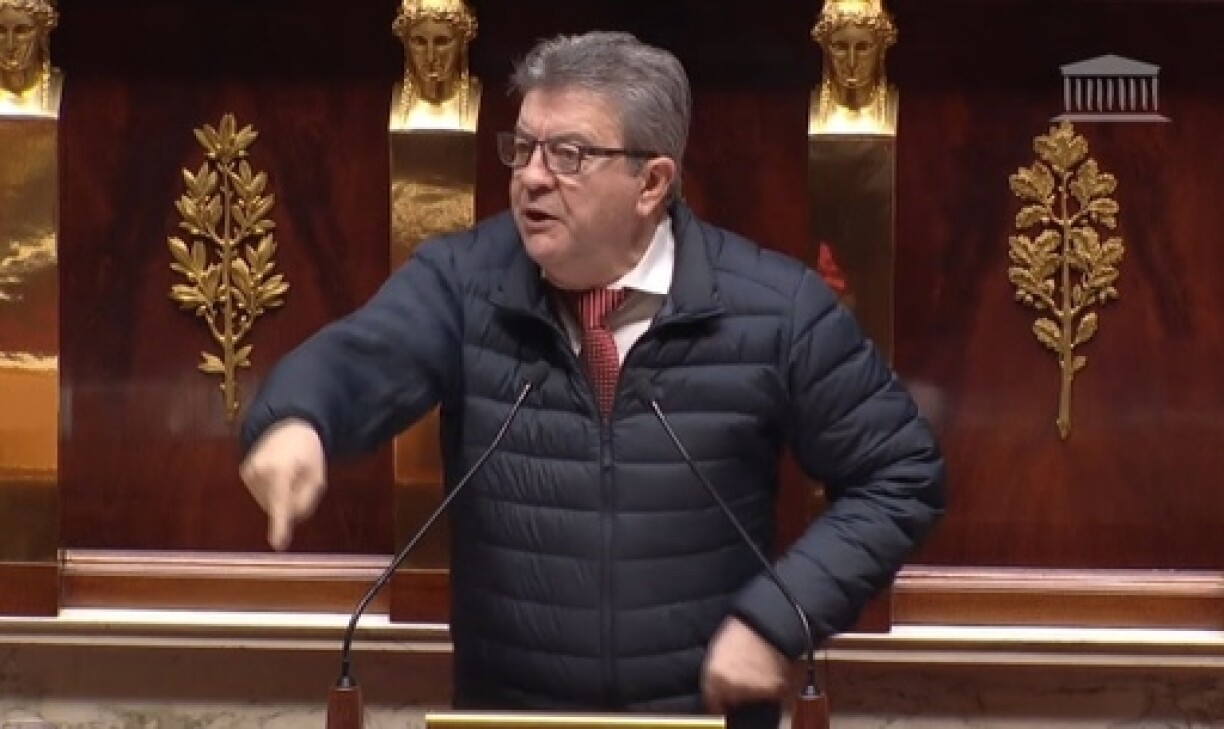
From fiscal fraud to shameful space ambitions and Jean-Claude Juncker's secretive tax agreements, French politician Jean-Luc Mélenchon did not hold back on his thoughts of the Grand Duchy.
Mélenchon shattered all expectations during last week's National Assembly when he shared his thoughts on the new Franco-Luxembourg tax treaty. Luxembourg's economic policies became the focus of the Frenchman's long and unambiguous critique.
After beginning his impassioned condemnation with the disclaimer that he did not hold any resentment for Luxembourg's citizens, Mélenchon went on to lambast those who profit from Luxembourg's economic system, targeting large foreign companies in particular.
He argued that tax fraud and tax optimization were costing France €80 billion a year and violently criticised French companies that settled in the Grand Duchy. In his own words, "this micro-state is home to 143 head offices of banks and 900 subsidiaries of French companies. They are all down there. To do what? To cheat!"
A few minutes later, he added: "As I said, 900 French companies have a registered seat [in Luxembourg]. I'm not saying that all of them are mere mailboxes but I suspect this is the case for some of them. Otherwise, why would they be down there? [...] Those are traitors!"
Mélenchon then launched into a long diatribe against Jean Claude Juncker's "tax arrangements and tax breaks" as well as the infamous tax rulings that Luxleaks had brought to light. Juncker secretly signed "not one, not two, not ten, not twenty, but 300 special tax agreements with 300 different multinational companies to pay less corporate tax!," he argued.
Mélenchon's criticism also extended to Luxembourg's space mining projects, which he called shameful. Luxembourg is only second to the US to bypass the international Outer Space Treaty of 1967, he explained. This treaty forms the basis of international space law and technically prevents individual players from exploiting space resources.
Mélenchon concluded that Luxembourg has built its entire national vision of both state and finance on tax advantages. "We cannot approve this, and when we examine this fiscal convention, we have the opportunity to say that we do not share this vision of the world."
French MPs ultimately voted in favour of introducing the new tax convention. It is now up to Luxembourg to validate it.





