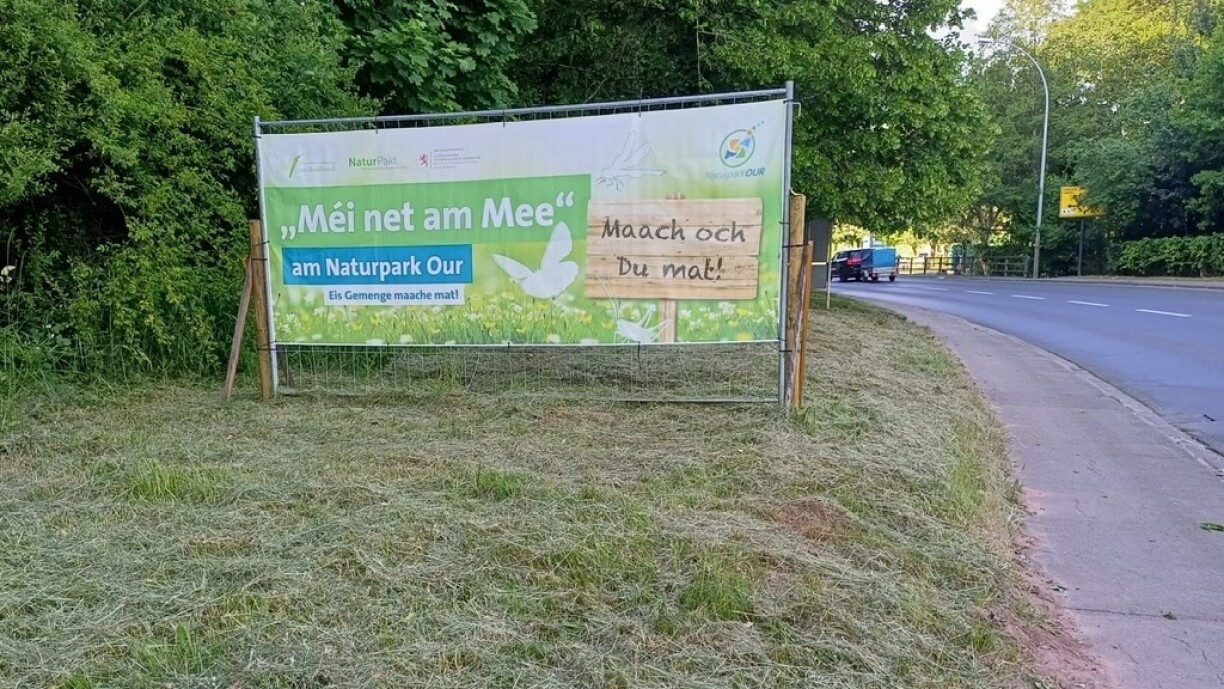
At first glance, the sign promoting the "No Mowing in May" campaign seems clear and simple. But the message becomes puzzling when the sign stands in a meadow that has just been freshly cut.
The photo in question was taken mid-May, prompting some to wonder whether a local authority might be ignoring its own environmental advice.
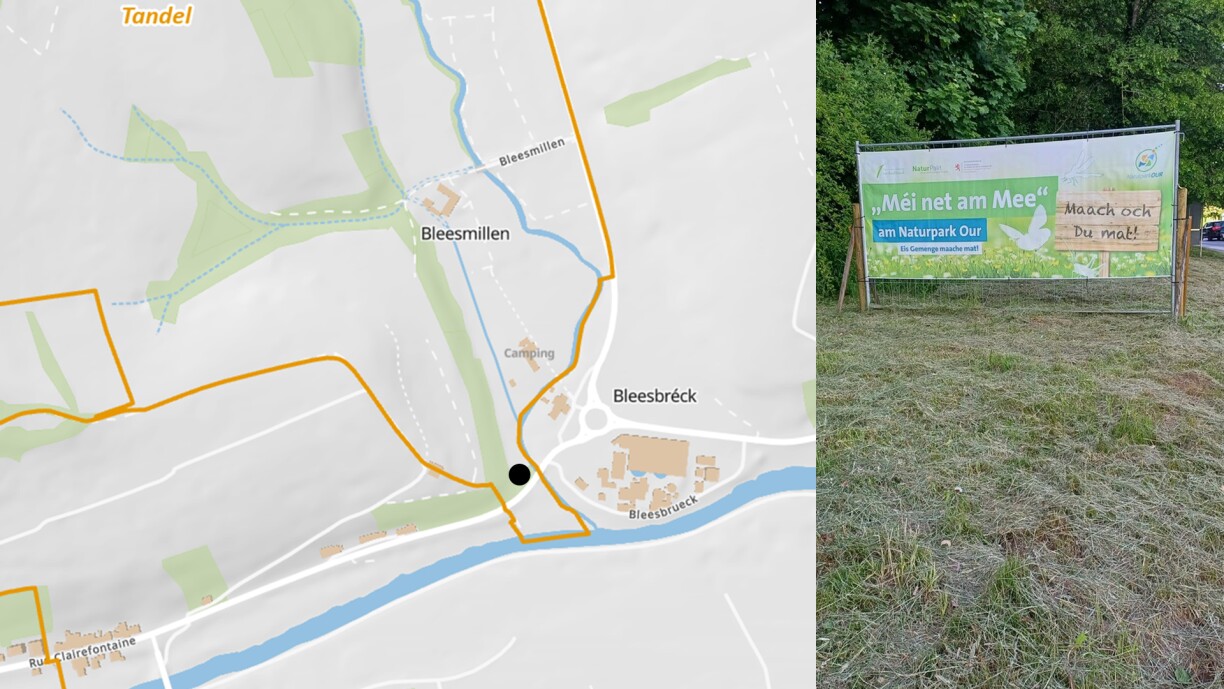
The sign explains that this is an initiative supported by municipalities involved in the "Naturpakt", a national programme encouraging biodiversity-friendly land management. However, the sign is located at the Bleesbruck roundabout, which appears to fall within the municipality of Bettendorf, a commune that is not currently part of the Naturpakt.
Upon enquiry, the Bettendorf municipality confirmed that they are not participating in the "No Mowing in May" campaign this year, though they did not rule out joining in the future.
Interestingly, it turns out that the small strip of land where the sign stands is technically still part of the neighbouring Tandel municipality, which is actively involved in the Naturpakt. However, the maintenance of that area, known locally as "Kléck", has long been handled by Bettendorf.
When contacted, Tandel’s first alderman, Marc Roeder, clarified that the land in question actually belongs to the state and is not maintained by the municipality of Tandel. He highlighted that Tandel ranks among the top-performing municipalities in the Naturpakt, with a strong commitment to protecting biodiversity – a fact that can be verified at naturpakt.lu.
Tandel has been part of the Naturpakt since 2021 and currently holds third place in the national ranking, suggesting they’re doing more than most when it comes to sustainable land management.
It’s also worth noting that in recent weeks, many roadsides across Luxembourg have been mown for safety reasons, to ensure clear visibility at junctions, roundabouts, and side streets.
The "No Mowing in May" initiative encourages residents and municipalities to avoid mowing green spaces throughout May. The goal is to promote nature-friendly practices that help maintain wildflower-rich meadows, which are vital habitats and food sources for local wildlife.
When mowing habits are changed, it allows native wildflowers and grasses to grow and bloom, which is especially important for bees. Grass seeds also serve as a valuable food source for birds, and even hedgehogs thrive in such natural meadows.
However, avoiding mowing in May is just the first step toward more ecologically managed meadows. When mowing does take place, it's recommended to remove the grass clippings to prevent excess nutrients from disturbing the growth of wildflowers. Leftover clippings can create a layer of thatch, which inhibits growth and encourages moss and weeds.
Ideally, the first mow of the year should be done after 15 June, allowing wildflowers to bloom and insect larvae to develop.
Meadows should also never be mown all at once, so that insects and other small animals still have areas to retreat to for shelter.
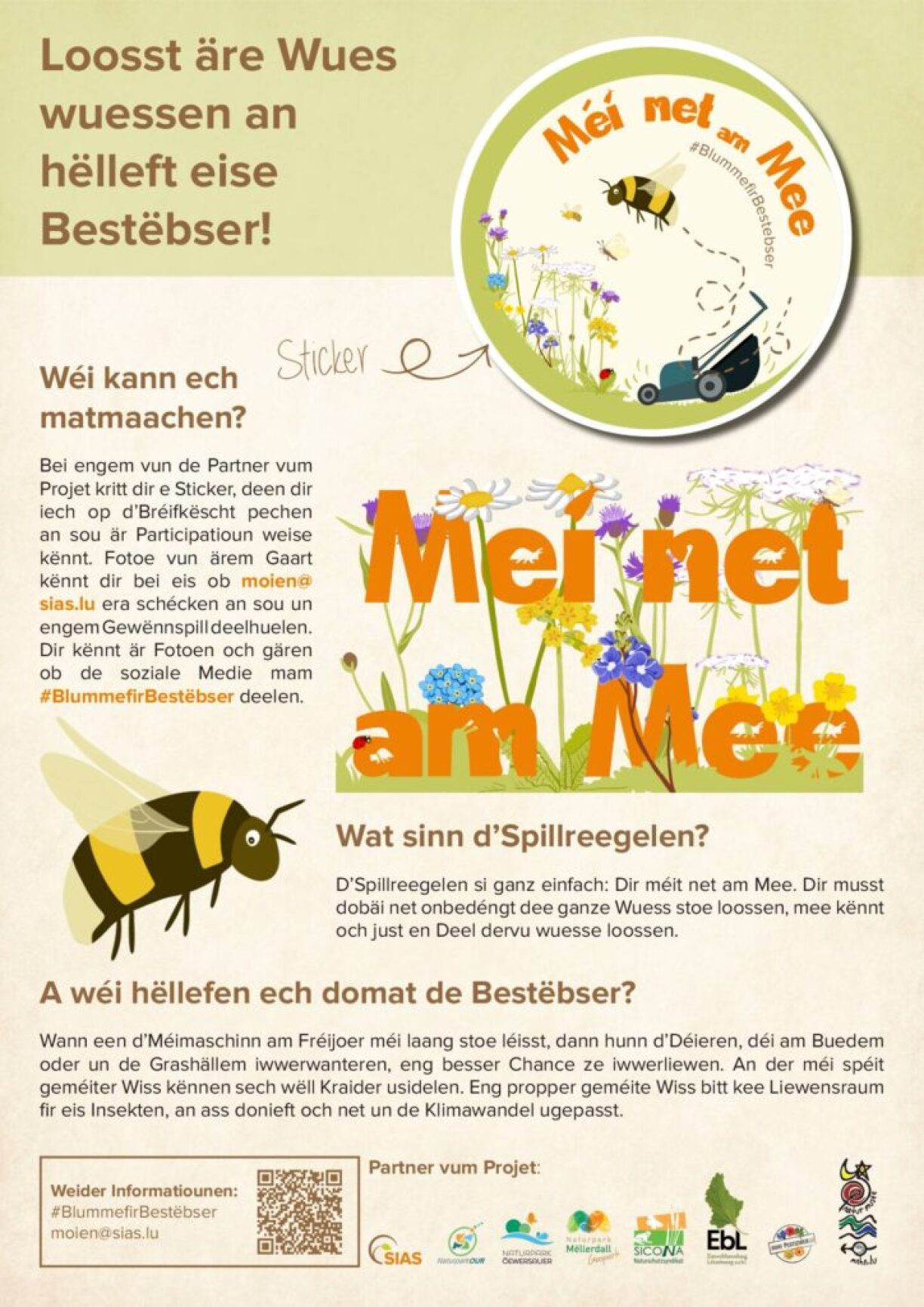
Citizens are encouraged to join the effort. For example, the intermunicipal syndicate SIAS has invited people to display a sticker on their letterbox showing they’re supporting pollinators. Residents can send photos of their garden to moien@sias.lu to take part in a prize draw.
You can also share photos of your garden on social media using the hashtag #BlummefirBestëbser.