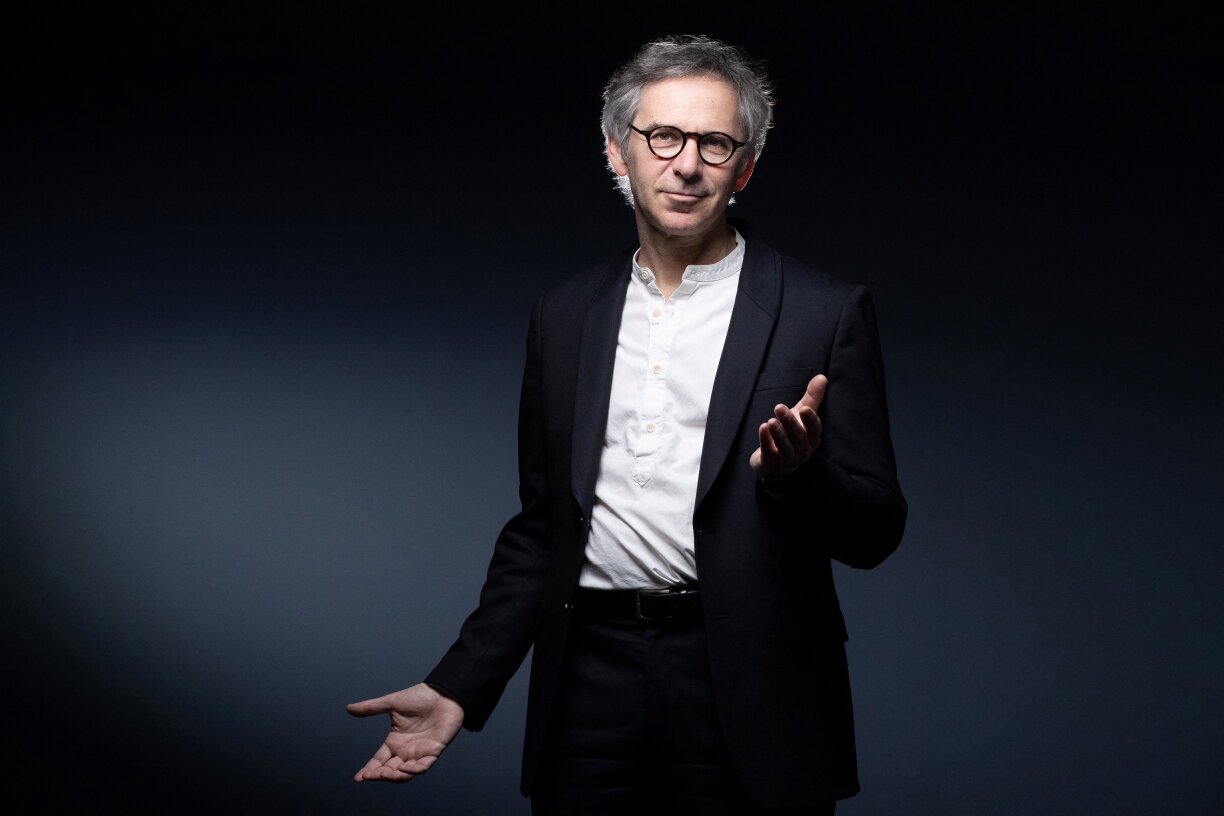
On Wednesday, the Chamber of Commerce held its post-summer economic forum around the question: "Is it still possible to reform?" Carlo Thelen, director of the Chamber of Commerce, pointed to Luxembourg's pension reform as a case in point, saying it had, in his view, fallen short of its stated ambitions.
According to guest speaker Gilles Finchelstein, secretary general of the think tank Jean-Jaurès Foundation, how to successfully carry reforms through ranks as one of the great challenges facing Western democracies today. Reforms, he argued, have to be accepted by the wider public if they are to work.
If the public came to see the word "reform" as a mere synonym for regression, Finchelstein said, then reform itself would become very difficult. Thinking through the conditions for the acceptability of reforms was, in his view, a major task for all democracies.
Acceptability meant that the burden of effort had to be shared fairly, in line with individual means. It also meant that the benefits could not all be pushed off into the future, and that people needed to be supported through the transitions already under way.
He pointed to the example of the transition to electric mobility. Many people, he said, would be prepared to switch to electric cars if they received the right kind of support along the way.
That, he explained, would come down to whether electric vehicles cost less, whether purchase subsidies were on offer that eventually paid for themselves, whether there were enough charging stations, and whether the driving range was up to the job. It was that kind of support for the reform process, he added, that ultimately made reforms possible, and that support was indispensable.
Finchelstein compared the evolution of democracies since the Second World War to the states of matter in physics. What had once been solid, he said, had first liquefied before turning into a gas. Where once politics had known essentially one major divide, between right and left, with loyal voter bases on either side, other fault lines had opened up, in particular around European issues, which had divided and fragmented both camps.
Polls in France, meanwhile, show that up to 60% of voters change their minds during the final 100 days before an election, on whether they will vote at all, or on which candidate or party to support. That, too, made implementing reforms more difficult.
"Nothing", he insisted, "was inevitable, and nothing was irreversible. Democracy, in the end, depended on what citizens themselves did."
Asked what citizens should do for their democracy, Finchelstein pointed first to taking an interest in public debate and to voting. Beyond that, he said, there were countless ways to get involved. One could get involved by staying informed. One could join associations or intermediary bodies. One could champion specific causes. There were, in short, plenty of ways to get involved for anyone who cared about democracy.
When asked by the Chamber of Commerce audience whether social media was contributing to further weakening democracies, Finchelstein replied that the far right should not be allowed to dominate that space. In his view, more moderate parties had struggled to adapt to those newer media for two reasons.
Too often, he said, these parties had looked on the new media with a touch of condescension, seeing them as a challenge to the sort of monopoly on legitimate discourse they had once enjoyed, a monopoly now upended in an environment where anyone could have their say. The reality, however, was that we were in a new world and had to deal with it.
There was probably a second reason as well. Those platforms, we now knew, tended to amplify emotion, and negative emotions in particular, which arguably gave populist and far-right parties an advantage. Yet politics was never purely a matter of rational argument. There were positive emotions too, and defenders of democracy had to learn to navigate social media effectively if they wanted their message to land.
He also took the view that social media platforms had to be held accountable, just like other media outlets, in particular when it came to hate speech.





