Every year, families are confronted with the expense of new schoolbags, folders, notebooks, and textbooks.
However, not everything discarded at the end of a school year is destined for the bin. Items such as schoolbags that are now too small, pencil cases in good condition, or unused notebooks can all find new owners rather than ending up as waste.
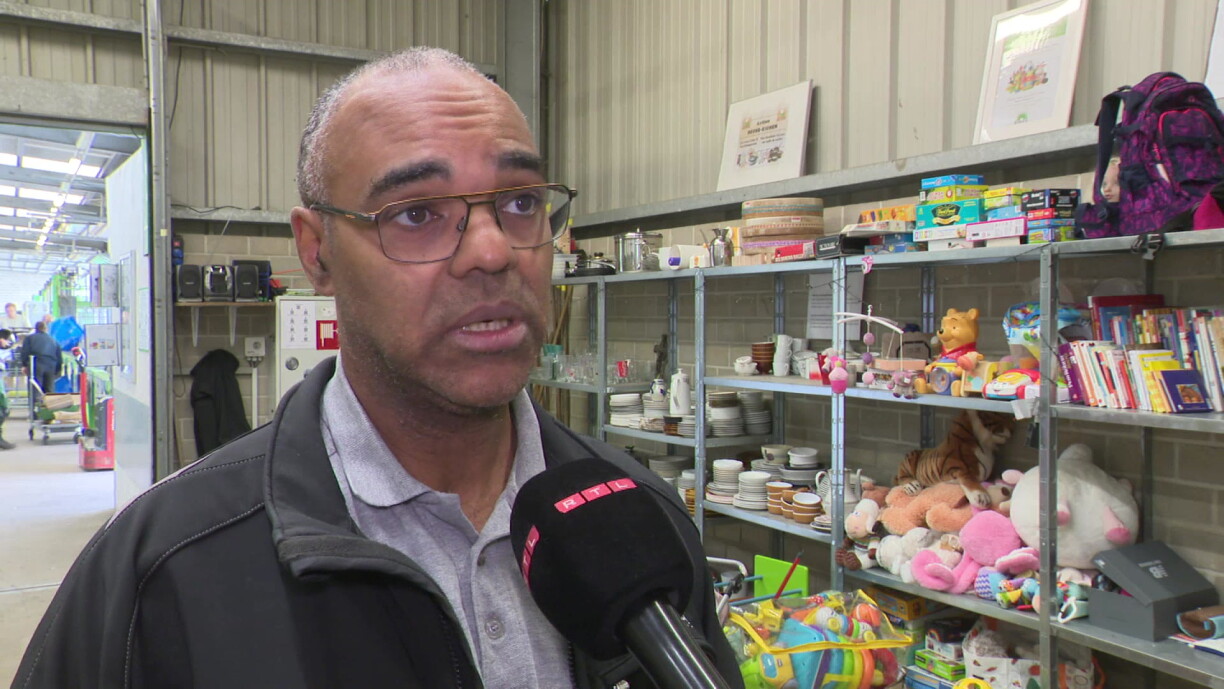
Since 2023, the SIDEC waste management syndicate has run a special "ReUse" campaign around the start of the school year. Individuals can drop off used school supplies at any SIDEC resource centre, where staff check the condition of each item.
Supplies that are still usable are placed on shelves for others to pick up free of charge. This initiative is available at all SIDEC resource centres across the region.
The amount of material collected is significant, often more than people might expect. Carlos Neves, Head of Technical Services at SIDEC, explains that around 2,000 kilos, or two tonnes of school supplies, are collected during the short period the campaign is running.
Virtually anything belonging in or around a schoolbag is accepted: rucksacks, pencil cases, pens, empty notebooks, folders, and even textbooks, as long as they are still in good condition.
Motivations for donating vary. For some people, the environmental impact is most important, but others see it more as a way to save money at the start of term, says Neves.
There is, however, a limitation. Any materials that do not find a new owner by the end of the campaign cannot be stored by SIDEC for the following year due to space constraints.
Neves hopes that, in the future, other structures might emerge that can take over unsold items to extend their use even further.
The Ministry of Education has also embraced the concept of reuse. Since 2023, it has run the "Upbooking" campaign, which primarily targets secondary school students.
Now in its fourth edition, the initiative allows students to advertise unwanted textbooks on an online platform and connect directly with peers who may need them.
According to Sandra da Silva from the didactic materials division, approximately 1,600 adverts are currently listed.
It is difficult to estimate exactly how many books change hands, as the exchanges are arranged directly between students via the platform.
To make reuse more financially attractive, there is an added incentive: students who take over a compulsory textbook from another student can claim a voucher worth 50 percent of the book’s new value via the MyBooks system.
Compulsory textbooks for secondary students are provided free of charge, but their production is not.
The total value of a complete set averages between €400 and €500, depending on the course of study, according to the Ministry of Education. Some specialised textbooks can cost over €100 each.
The Upbooking campaign aims to save resources and also to change attitudes towards school materials. "Just because something is free doesn’t mean it has no value", stresses Sandra da Silva.
She points out that books not only cost money but also require resources to produce and, above all, are essential tools for learning.
The goal is to reduce the number of textbooks thrown away after only a year of use, when many still look almost new.
By extending their lifespan, the initiative helps save paper, plastic, and ink that would otherwise be used to produce new books.
As da Silva concludes: "Even if only one or two books per year are given a second chance instead of being thrown out, that’s already a step in the right direction."





