Alan Johnston’s connection to Luxembourg began with aircraft, but it is the country’s birds and landscapes that truly captured his attention.
Internationally recognised for the scientific precision and artistic sensitivity of his work, Johnston has become one of the leading naturalist illustrators of his generation, with around twenty books published by renowned houses such as Gallimard and Actes Sud.
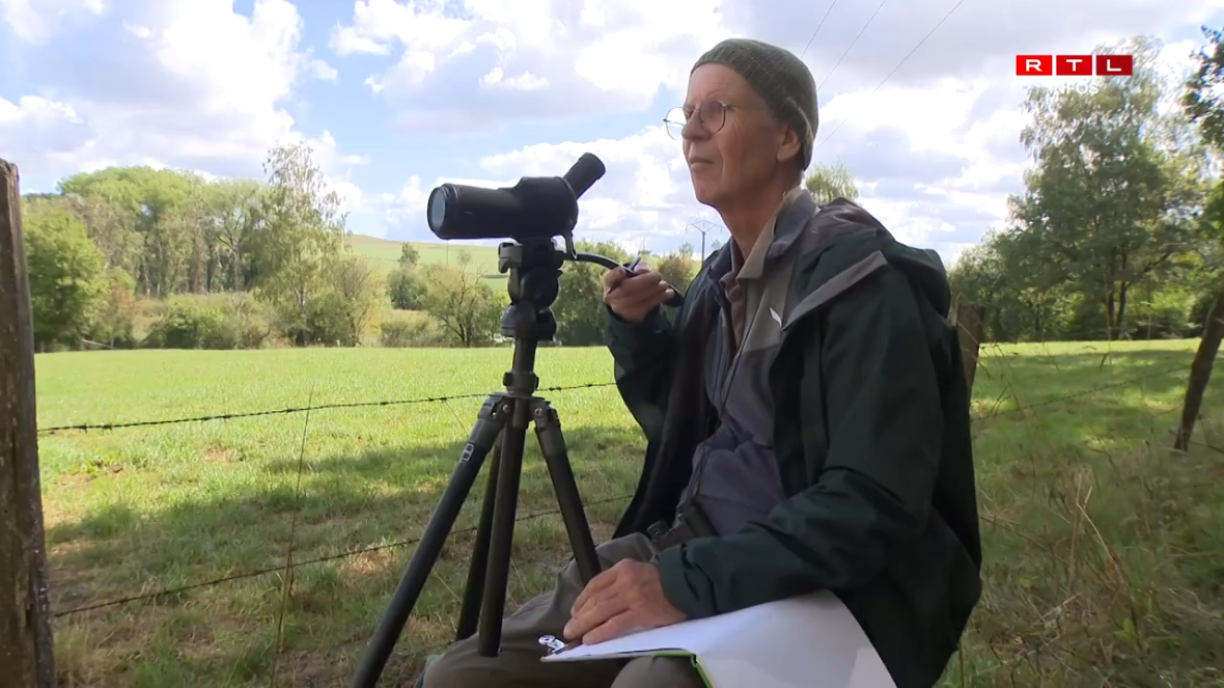
Johnston describes his approach as that of a field naturalist artist, emphasising that he prefers to work outdoors rather than rely on photographs, as is common among wildlife artists.
He creates his pieces either directly on site or later in his studio, using his own photos and memories as reference. This method, he notes, is rare in Europe and takes years to master.
Asked how he came to settle in Luxembourg, Johnston points to his family background, highlighting his mixed Scottish and Luxembourgish heritage.
Some of his earliest memories are of Luxembourg, which he associates with smoked sausages, cranes overhead, and the distinctive smell of tar.
Going back even further, he recalls that his story began at Findel at the end of the 1950s, which at the time was a small, almost rural airstrip.
His father worked as a DC-3 co-pilot for Seaboard, the company that would become Cargolux, and his mother was among the first flight attendants for Luxembourg Airlines, which later became Luxair.
His parents’ careers took the family from Luxembourg to Switzerland and then England, where Johnston continued his education.
He began working as a taxidermist and wildlife reserve warden in Glasgow, his father’s hometown, before enrolling at art school in Wales.
Even as he forged his own path, the thought of returning to Luxembourg stayed with him.
During a visit to his grandmother in Luxembourg, Johnston’s mother arranged a meeting for him with the curator of natural history at the Fëschmaart museum, located in the old Fish Market in Luxembourg City.
Showing his sketches at the age of 15 or 16, Johnston attracted the curator’s interest and was encouraged to stay in touch.
In 1986, after earning his degree in graphic and natural illustration, he contacted Norbert Stomp, who was the then museum’s director, about an internship.
Intended to last just a few months, the opportunity was extended several times, and Johnston ultimately stayed for four years.
Following the publication of his first book on Luxembourg’s nature with Saint-Paul publishers, Johnston realised that the Grand Duchy offered an ideal environment for his work.
He found both the landscape and the country’s fauna and flora inspiring, making him feel immediately "at home".
Luxembourg provided the perfect setting to refine his skills, blending artistic creativity with scientific precision.
Johnston’s illustrations now appear in nature guides and on signage for wildlife reserves throughout the country.
In 2008, Johnston exhibited his work in the Wiltz gardens, following an origami exhibition. The Japanese ambassador, who attended the event, was so impressed by Johnston’s art that he invited him for an artistic residency in Japan.
This invitation led Johnston to spend several extended periods there between 2010 and 2013, eventually resulting in the acclaimed book Asparagus green, published by Apeiron.
Now the author of around twenty books, Alan Johnston is a respected name in naturalist circles, particularly in France. His decision to settle in Luxembourg has also helped raise the country’s profile among nature artists.
Johnston notes that, as a Luxembourgish artist, he has always been valued abroad and continues to be.
In Britain, Johnston explained, competition between naturalist artists was fierce, but forty years ago, in Luxembourg, Johnston was pretty much on his own.
Today, some of his students have become naturalist artists themselves, with a new generation taking up the profession.
In Luxembourg:
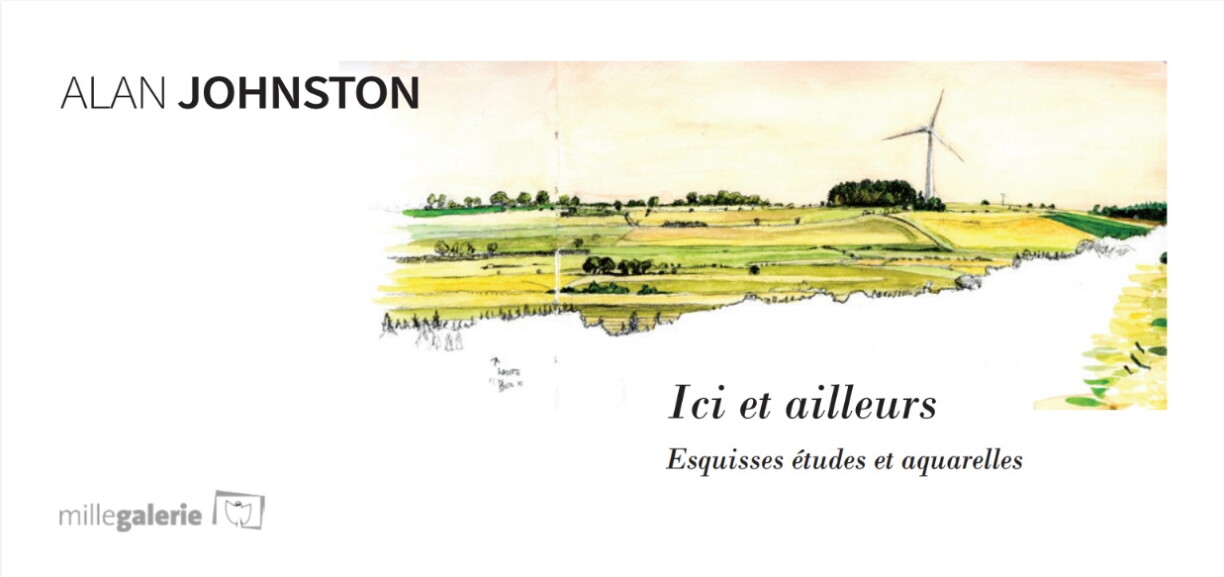
ICI ET AILLEURS exhibition (Millegalerie)
Sketches, studies, and watercolours
From 15 November to 6 December 2026.
Vernissage on Saturday, 14 November at 6pm.
Open Thursday to Sunday, 2pm–6pm,
Moulin de Beckerich,
103 Huewelstrooss, L-8521 Beckerich.
In France:
Exhibition at the CIT of Mont Saint-Michel until 18 November 2026.





