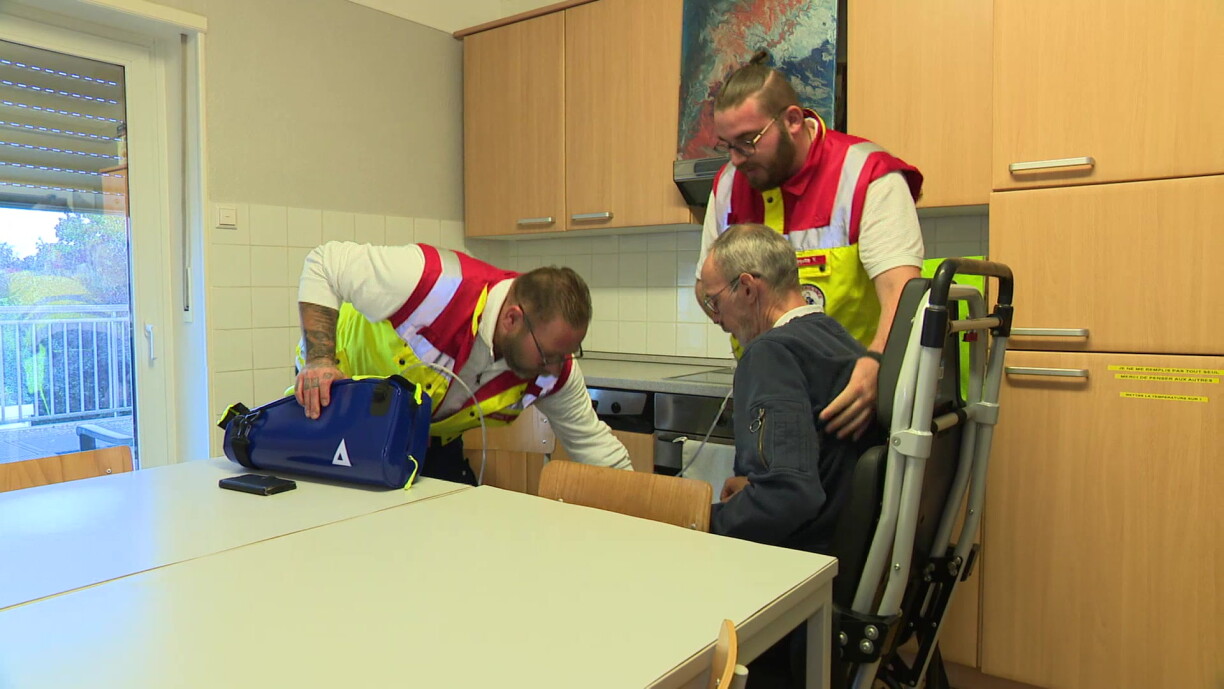
Patients who rely on private ambulance services in Luxembourg often face confusion regarding which costs are covered by the National Health Fund (CNS), according to the National Federation of Patient Transporters.
Industry representatives lament that there has been no progress on these issues in years.
People requiring transport for medical appointments, such as visits to rehabilitation centres, radiotherapy, or dialysis, frequently depend on ambulance services.
However, reimbursement by the CNS is not guaranteed in every situation, and in some cases, coverage is only partial.
As a result, patients can be faced with unexpected bills. The National Federation of Patient Transporters highlights that CNS tariffs have not been updated or indexed for eight years, and many patients remain unaware of this fact.
According to the federation, people often contact them with questions about their bills and express confusion over what is and is not reimbursed.
The sector aims to draw public attention to these ongoing problems with the CNS system.
Additional concerns raised by the federation include waiting times, costs related to vehicle disinfection after journeys, and expenses incurred when an ambulance must travel empty to collect a patient.
According to Annick Waaijenberg, who is both the federation's spokesperson and director of Luxambulance, these operational factors are not considered by the CNS.
Representatives argue that tariffs should be adjusted to reflect the sector's actual working conditions, but this is not their sole demand.
A further key issue for private ambulance providers is the absence of a formal profession for ambulance workers in Luxembourg.
Joao de Cavalho, responsible for taxis and ambulances at Pascoal and manager of Eurolux, highlights that creating an official job profile would help guarantee quality of care for patients.
Currently, employees within private ambulance companies are simply hired as drivers, given that there is no recognised "ambulance worker" role.
This lack of a formal profession is seen as a gap by sector representatives such as Tun Georg from Luxambulance, who argue that once an official job description is established, relevant professional training could be developed in collaboration with appropriate partners and training centres in Luxembourg.
These calls for reform are not new in the sector. The last meeting with the CNS took place three years ago, and since then, there have only been two exchanges with the Ministry of Health, without any reported progress.


