One of the main goals is to raise young children’s awareness of road safety. The puppet theatre stage, originally launched in 1962 by the Ministry of Education, the Gendarmerie, and the Road Safety association, was created to do just that. Back then, children in pre-school and the first two years of primary school were invited to attend the performances.
Following the 1999 merger of the Police and the Gendarmerie, the Grand Ducal Police have been in charge of the project since 1 January 2000. Today, four officers from the Traffic Police Unit are involved in running the puppet theatre stage.
Each year, between January and May, children from the early years foundation stage, and key stage one (typically ages 3 to 60), are invited to attend one of around 80 shows, reaching between 6,000 and 7,000 children annually.
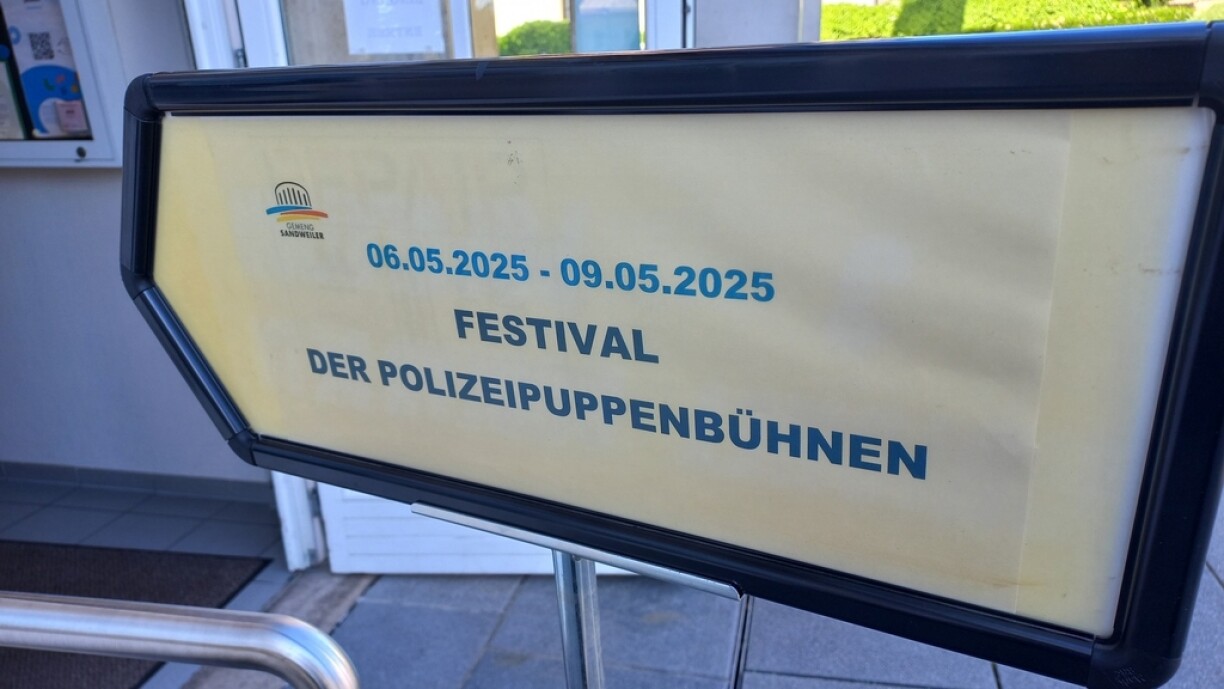
This week, two officers from the police in Ludwigshafen, Germany, visited Luxembourg with their own puppet stage. On Wednesday, they performed for children in Sandweiler. Laurent Lentz, Director of the Traffic Police Unit, explained that their stage is regularly invited to festivals in Germany, including one in Nuremberg. He added that Luxembourg hosted its first international festival of police puppet theatre stages back in 2010 – and felt it was time for a second edition.
Paul Hammelmann, President of the Road Safety association, emphasised the importance of exposing children to real-life traffic scenarios at a young age so they learn how to behave safely as pedestrians, especially since they are the most vulnerable group.
Susanne Lantz and Miroslav Stoparic, from the Ludwigshafen Police, brought their own puppet theatre stage to Luxembourg. Their version has existed in Ludwigshafen since 1976.
The story presented to the children in Sandweiler taught a vital safety lesson: never go anywhere with a stranger – or even with someone they know – without first asking permission from their parents. In the show, a character named Gudrun von Kastenhaus tries to lure children to her home. With help from the police dog Wuschel and the children in the audience, the character is eventually caught and brought to justice.
As Lantz explained, even if children haven’t fully mastered the language, the visual storytelling is powerful enough to communicate the lessons clearly. The images and actions on stage help convey the message, even with limited dialogue.
The second edition of the international police puppet theatre festival continues with further performances on Wednesday, 7 May and Thursday, 8 May in Junglinster, Mamer, Mondorf-les-Bains, Sandweiler, and Luxembourg City.






