First and foremost, wild camping, especially along roadsides, as well as barbecuing in nature, are strictly prohibited. As setting up camp near a road poses an unnecessary safety risk, police officers will be present along the route from Wednesday afternoon to guide visitors, if needed, towards official campsites in the Wiltz region.
Environmental protection laws must also be respected, particularly when it comes to preserving nature and waste management around parking areas. As always, littering is strictly forbidden.
Road closures, parking bans, and traffic restrictions must be observed. The police will ensure that all road users comply with these regulations, with no exceptions.
Authorities are there also encouraging attendees to make use of public transport, park & ride facilities, and shuttle buses. Police patrols will be present on both 28 and 29 May to help ensure the event runs smoothly and safely.


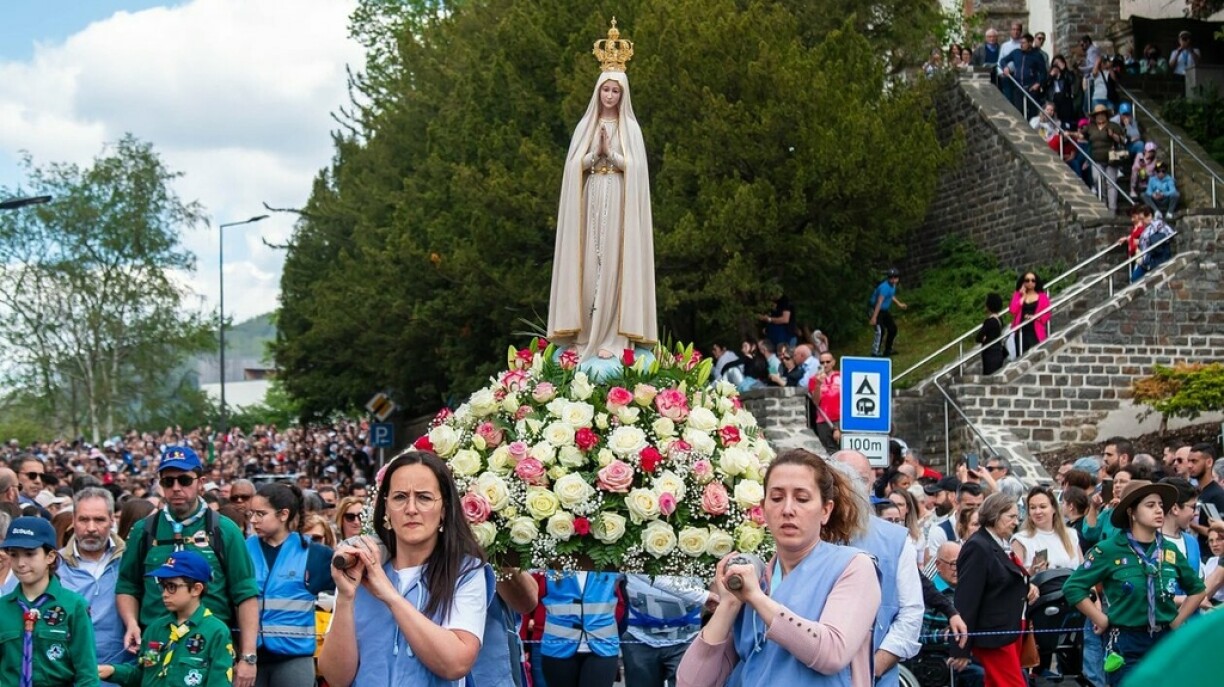
Each year on Ascension Thursday, close to 20,000 people – the majority from Luxembourg's Portuguese community – take part in the pilgrimage to the Our Lady of Fatima shrine overlooking Wiltz. While the event is now deeply associated with Portuguese tradition, the shrine's roots are tied to a much earlier moment in the country's history.
The origins of the sanctuary date back to the harsh winter of 1944–1945, at the height of the Battle of the Ardennes, when northern Luxembourg became a battleground during the final German offensive of World War II. As fighting raged nearby, a group of local parishioners took refuge in a basement in Wiltz.
There, they vowed to dedicate a shrine to the Virgin Mary if they made it through the conflict unharmed.
They survived, and by 1951, the promised sanctuary had been built. It was dedicated to Our Lady of Fatima, whose statue had become a symbol of hope as it travelled across Europe in the years following the war.
The shrine was officially inaugurated on 13 July 1952.
The transformation of this quiet sanctuary into a major annual pilgrimage came with the arrival of Portuguese migrants in the 1960s. In 1968, a group of about a hundred members of the Portuguese community launched the first pilgrimage to the site.
For them, it was not only a spiritual gesture but also a way to stay connected with their cultural roots.





