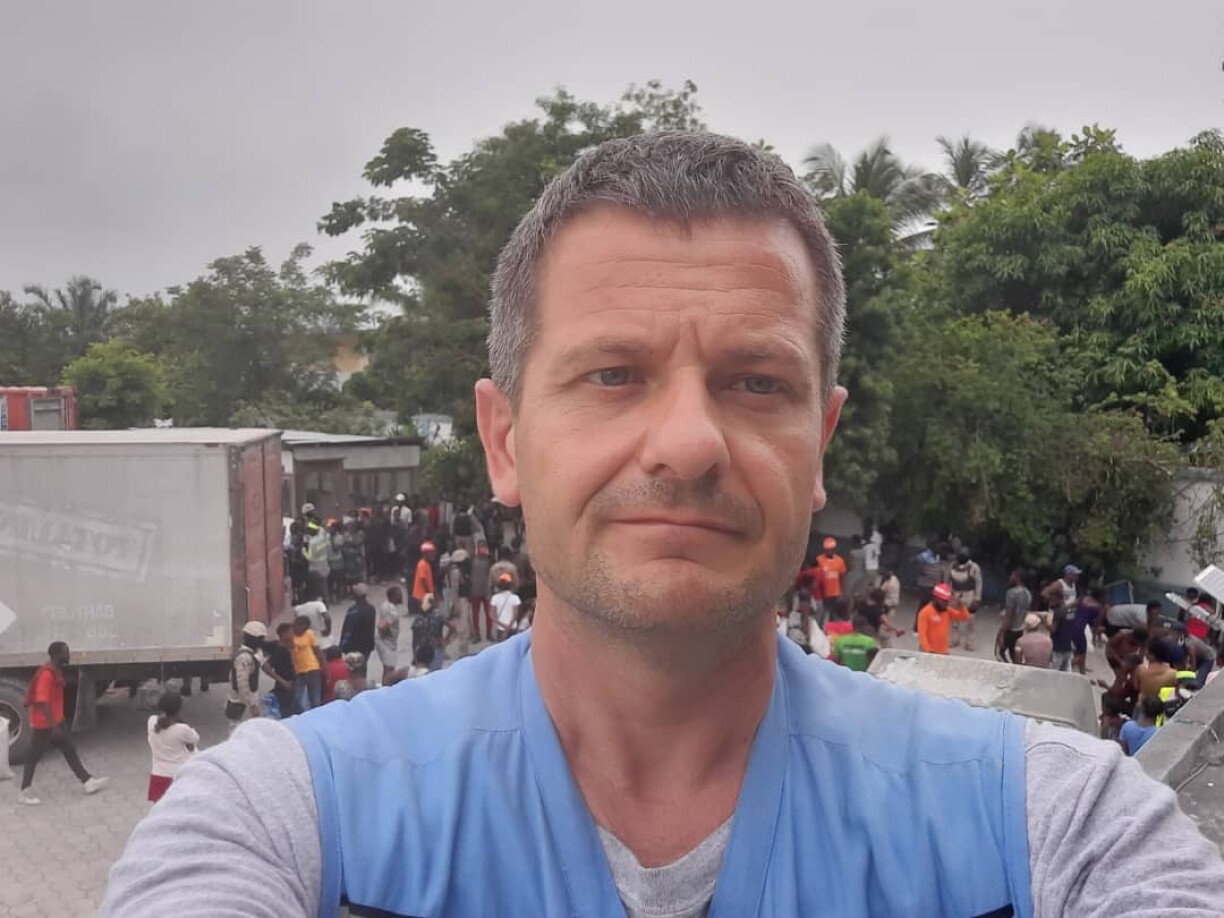
Being the first volunteer deployed to Haiti after the earthquake, the Luxembourgish expert describes his UN mission, set in a tense security environment and with a spartan daily life.
Tensions are growing in Haiti. There are always outbursts during food distributions that do not go well - people are fighting to get food, according to Yves Legil, 43, from Les Cailles.
The district was hit hard on 14 August, when a 7.2 magnitude earthquake devastated the southwestern peninsula, killing more than 2,200 people and destroying tens of thousands of buildings.
His testimony echoes the fears of a potential famine threat expressed very recently by Marie-Josée Jacobs, President of Caritas Luxembourg, on RTL Radio.
To help the affected population, Luxembourg sent nine emergency humanitarian aid professionals to the area. The CGDIS firefighter, who left four days after the disaster at the request of the government, is the first Luxembourgish volunteer to arrive in the chaos of Haiti.
Given the recent events, the start of the school year, initially scheduled for Monday 6 September, has just been postponed to 4 October in the three southern departments ravaged by the earthquake.
Already facing high political tension before the assassination of its president, Jovenel Moïse, Haiti has now plunged further into uncertainty. Yves Legil speaks of looting of convoys and gang activity. For more than a fortnight, he has been a direct witness to palpable insecurity, due in particular to clashes between gangs and the very precarious living conditions of Haitians.
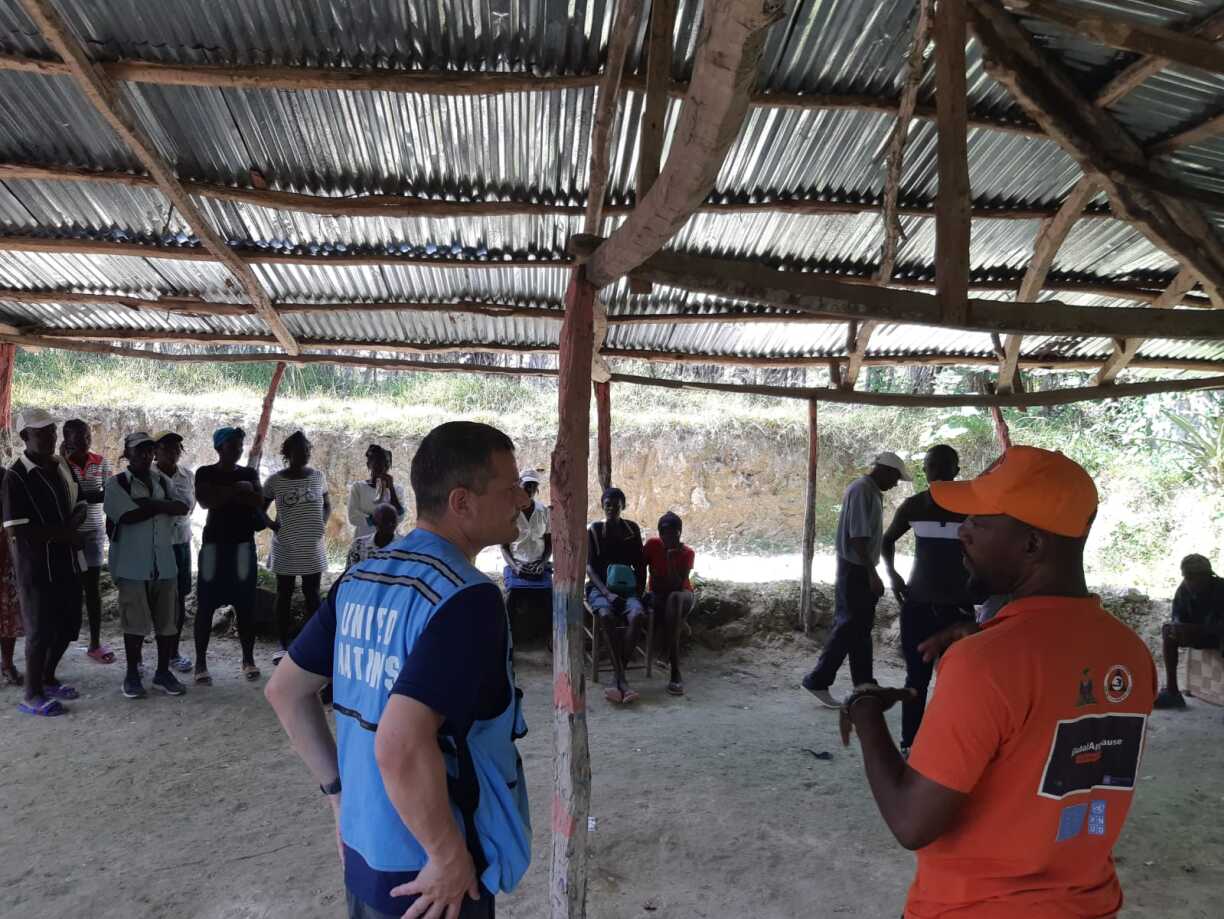
Hired by the United Nations Office for the Coordination of Humanitarian Affairs (OCHA), the Luxembourgish firefighter is part of a team of nine experts.
Travelling with trustworthy local drivers, they visit the scenes to establish what has happened, then process the data with which proposals are made to the Haitian state to manage the situation as well as possible. The team helps the government to get an overview and to coordinate the international relief teams, explains Yves Legil.


Almost three weeks after the earthquake, all the injured have been treated, but there are still medical needs. There were medical needs even before the earthquake, because much infrastructure was not working anymore. But what the victims lack most is food, water and tarpaulins, since the hurricane season has started and they absolutely need to have a roof over their heads.
The UNDAC team members are still sleeping in tents because there are still tremors, continues Yves Legil. He has some experience of this kind of situation, having already experienced this type of extreme mission after the tsunami in Thailand in 2004 and the earthquake in Nepal in 2015.
As head of the Basic Training Department at the National Institute for Rescue Training (INFS), he warns that one has to be prepared for this type of mission. It's something that not everyone can do. One has to like camping, arrange for buckets of water to take a shower and adapt to a cultural environment that is very different from one's own.





