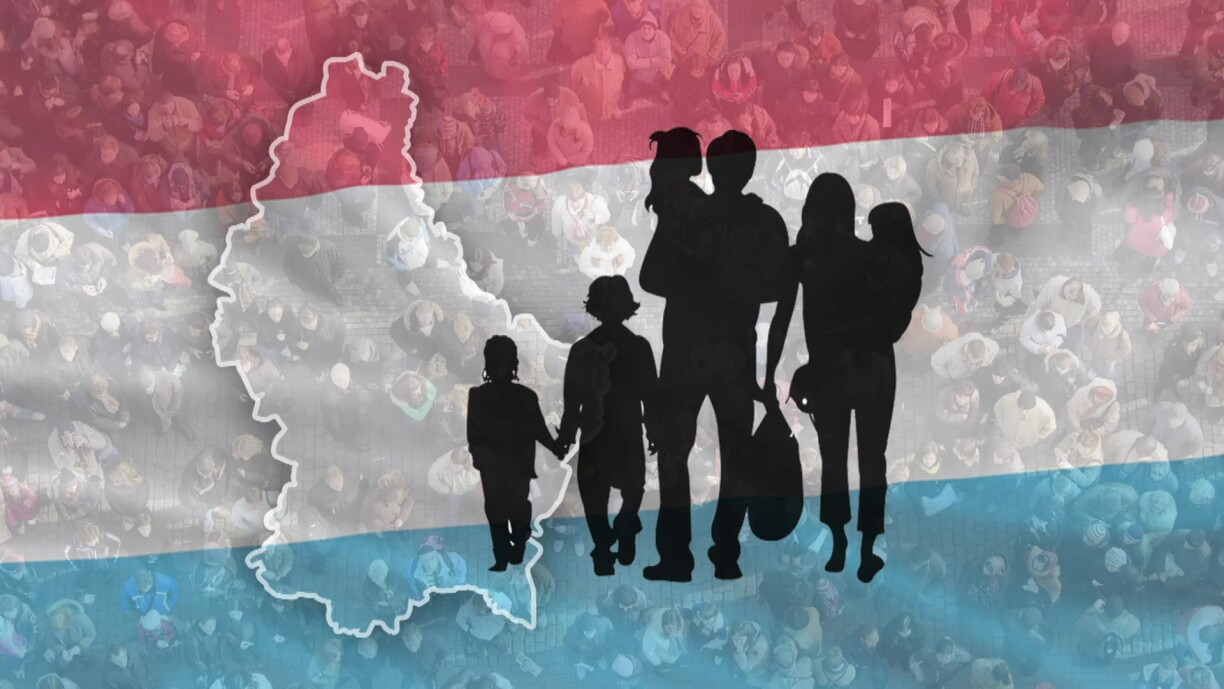
On Tuesday, 17 November 2026, several associations and affected individuals demonstrated outside the Directorate General for Immigration in Luxembourg, drawing attention to the serious difficulties facing family reunification procedures. Protesters demanded that the legally mandated deadline of nine months for processing applications be respected.
That same day, the Ministry of the Interior published data on average waiting times, currently 15 months, despite the law stipulating nine months, and attempted to justify restrictions introduced in 2022. In addition to the delays, the Ministry reported that 2,040 people are still awaiting a decision. However, associations argue that the figures do not reflect the length of time individual families have been waiting for answers.
Anke Vandereet, Director of Passerell, is calling for clarity regarding the root causes of these lengthy waiting times, suggesting it remains unclear whether the delays stem from a shortage of staff or from other factors. Furthermore, it is not known whether the 2,040 people waiting for decisions are individual applicants, persons with protected status, or family members still abroad hoping to be reunited
The Ministry continues to justify the restrictions introduced in 2022 by citing the overburdened state of the Office national de l'accueil (ONA) reception structures. Passerell, however, counters that shortcomings in reception capacity should not be resolved at the expense of family reunification rights. They stress there is a clear distinction between the reception of people in need of protection and the right to family life.
The right to be accompanied by one's family applies not only to persons with international protection status, but is also legally protected for other third-country nationals and European Union citizens. In Passerell's view, organisational difficulties cannot justify permanent restrictions on such a fundamental right.
Passerell is particularly concerned about the human consequences of these drawn-out waiting periods. The organisation highlights that prolonged uncertainty, a lack of clear information, and anxiety over separated relatives place a significant psychological burden on those affected.
According to Director Vandereet, many people are suffering greatly under these conditions, with some cases involving individuals contemplating suicide. Behind every application, she notes, are people, children, parents, and family members, who are often separated for extended periods and remain uncertain about when they will next be together.
Passerell also points to the political direction set by Minister of the Interior Léon Gloden. Draft law 8586 proposes even stricter conditions for family reunification. Furthermore, on 13 November, Minister Gloden, together with eight other European ministers, signed a letter to the European Commission calling for a reform of the European directive on family reunification that could lead to additional restrictions. Passerell criticises these moves, stressing that family reunification is a fundamental right, not a matter of administrative discretion.
Passerell is requesting a meeting with the Ministry of the Interior and the Directorate General for Immigration to obtain more detailed information about processing times, the current waiting list of 2,040 people, and the reasons behind both national and European restrictions. The group seeks clarity on how many families are affected, how long they have been waiting, and the specific impact that forthcoming restrictions will have on their rights. They argue that families cannot remain in indefinite uncertainty, especially when prolonged separation and ambiguity cause mounting psychological distress.
Passerell calls on the government to respect the nine-month legal processing deadline and to reconsider restrictive policies at both the national and European levels.
A meeting with Minister Gloden is scheduled for 7 December.