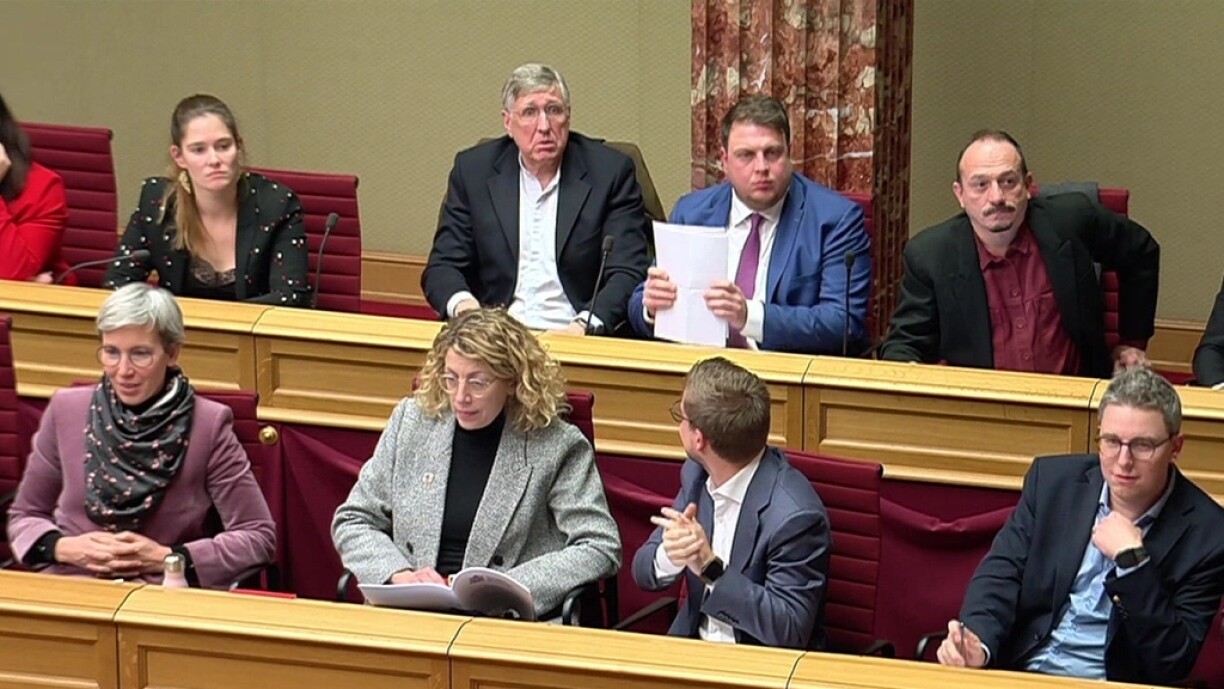
The Left Party (déi Lénk) characterised the actions of the governing coalition — comprising the Christian Social People's Party (CSV) and the Democratic Party (DP) — as "an attitude of blindly charging forward."
The Luxembourg Socialist Workers' Party (LSAP) acknowledged that while 100 days signify a milestone, it falls short of an entire legislative period. Concerns linger over the clarity of implementation for key agenda items such as housing, pensions, and taxes, according to the LSAP.


Taina Bofferding, in her assessment, critiqued that the government acted hastily rather than familiarising itself with pertinent issues during the initial 100 days. The LSAP parliamentary group president highlighted a discernible shift in tone and approach within recent months: "Fundamentally, I observe a change in tone and style. The new Minister of Home Affairs and Internal Security has swiftly pursued initiatives, notably the contentious begging ban, which has dominated political discourse for weeks. However, this has also led us into a legal impasse — an outcome that could have been averted."
Bofferding expressed regret over the increasingly abrasive atmosphere within the Chamber of Deputies, citing a lack of collegiality as a prevalent issue.
Echoing similar sentiments, the Left Party voiced criticism regarding the escalating harshness, employing pointed language to underscore their concerns. MP David Wagner, addressing the press, asserted:
"It's a very authoritarian approach for a government that in reality secured just under 48% of the votes in the elections, i.e., failed to secure a majority. They want to implement an authoritarian and neoliberal agenda while failing to secure any sort of consensus within the government. Mr Frieden thinks he's the CEO or the patriarch, but I don't think it'll work out. We're no longer in the 60s or 70s, we're in 2024. People can think for themselves, and people expect a government to take action for the people and not to act like the government is doing now, all under the banner of: We are the bosses, and we also work for the bosses."
The Left Party emphasised that governance should prioritise the welfare of the populace, asserting that Prime Minister Luc Frieden is accountable to the people, not the inverse.
In contrast, the Alternative Democratic Reform Party (adr) criticised the new government for its perceived indecisiveness and lack of substantial progress during its initial 100 days. Fred Keup, president of the party's Parliamentary Group, outlined their expectations moving forward:
"It remains to be seen whether the government will continue its hesitant approach or demonstrate bold leadership, particularly concerning impending issues such as tax reform. Thus far, they've largely followed the path of their predecessors, albeit with minor alterations, which is not what people expected them to do."
The Pirate Party criticised the new government's policies as lacking coherence, characterising its initial actions as a misstep. Sven Clement, highlighting what he perceived as a troubled start, remarked:
"As far as policy issues are concerned, the government is off to a bad start, there's no other way to put it. They pledged to fight poverty only to end up fighting the poor. They announced large-scale infrastructure initiatives, but in the end, the Prime Minister acted more like the Minister of Public Works than his own Minister of Public Works, who's still busy dealing with his own little scandals. None of this points to a coherent government policy, at least for the first 100 days."
Initially hopeful about the emphasis on poverty alleviation during coalition negotiations, the Green Party (déi Gréng) quickly grew disillusioned. Sam Tanson elaborated on their concerns:
"The government's inaugural actions, particularly targeting the most vulnerable members of society, such as beggars, raised red flags. Of particular concern was the nonchalant approach to institutional integrity and the rule of law, resulting in a mixed perception of the first 100 days. While it's premature to draw definitive conclusions, several missteps and contentious discussions have cast a shadow over political discourse."
Tanson warns that such missteps risk eroding public trust in the political process.





