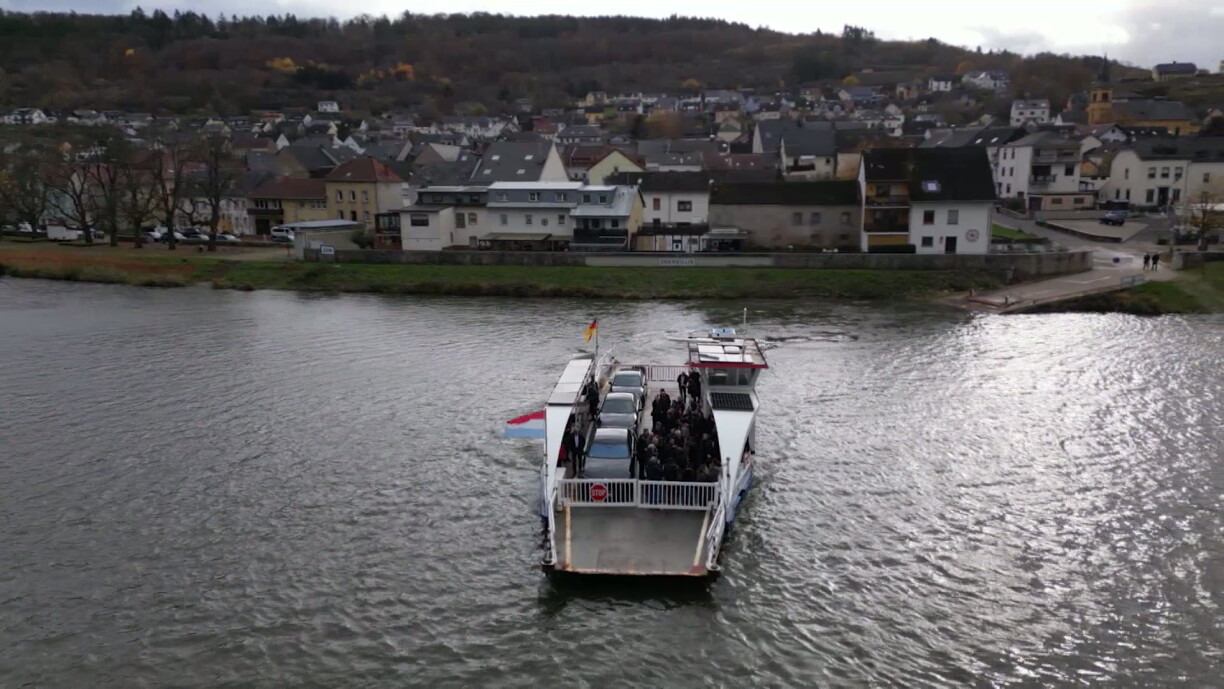
The automation initiative forms part of the broader European "Interreg Greater Region" programme, which encourages cooperation and innovation across borders in the region.
For more than 60 years, the ferry has operated as a joint venture between Luxembourg and Germany. This longstanding partnership is now moving into a new era.
According to Jérôme Laurent, Mayor of Mertert, automation is envisioned to reduce reliance on staff who may be absent due to illness or other reasons.
Reliability is a particular concern for cyclists, who make up an estimated 15,000 crossings per year. When the ferry is not running, cyclists face a detour of at least six kilometres – a situation described by local authorities as lacking in dependability. Addressing these concerns is central to the AquaPilot project's goals.
Any operating shortfall for the ferry is shared jointly by the German municipality of Oberbillig and the Luxembourg municipality of Wasserbillig-Mertert.
Last year, this support was not required. Due to route closures elsewhere, the ferry saw a significant increase in use, which meant there was no deficit to cover.
However, the move towards automation is also met with criticism. Andrea Greif, who operates the ferry, fears that automation could erode the personal, human interaction that many regular commuters have come to value.
She notes that being familiar with daily passengers is part of what makes the job meaningful and enhances the commuting experience.
According to Greif, a shift to machine operation and artificial intelligence could make ferry journeys less enjoyable for passengers.
Greif is also worried about the practical implications of new technology. She highlights the importance of tactile controls; for instance, being able to feel the buttons without having to look at them is essential for safety and maintaining awareness of the surroundings. If touchscreens are introduced, this crucial aspect may be lost.
While the automation aims to improve reliability for commuters and cyclists, for those working on the ferry, the changes are about more than efficiency, as they also concern job security and the valued relationships with passengers.