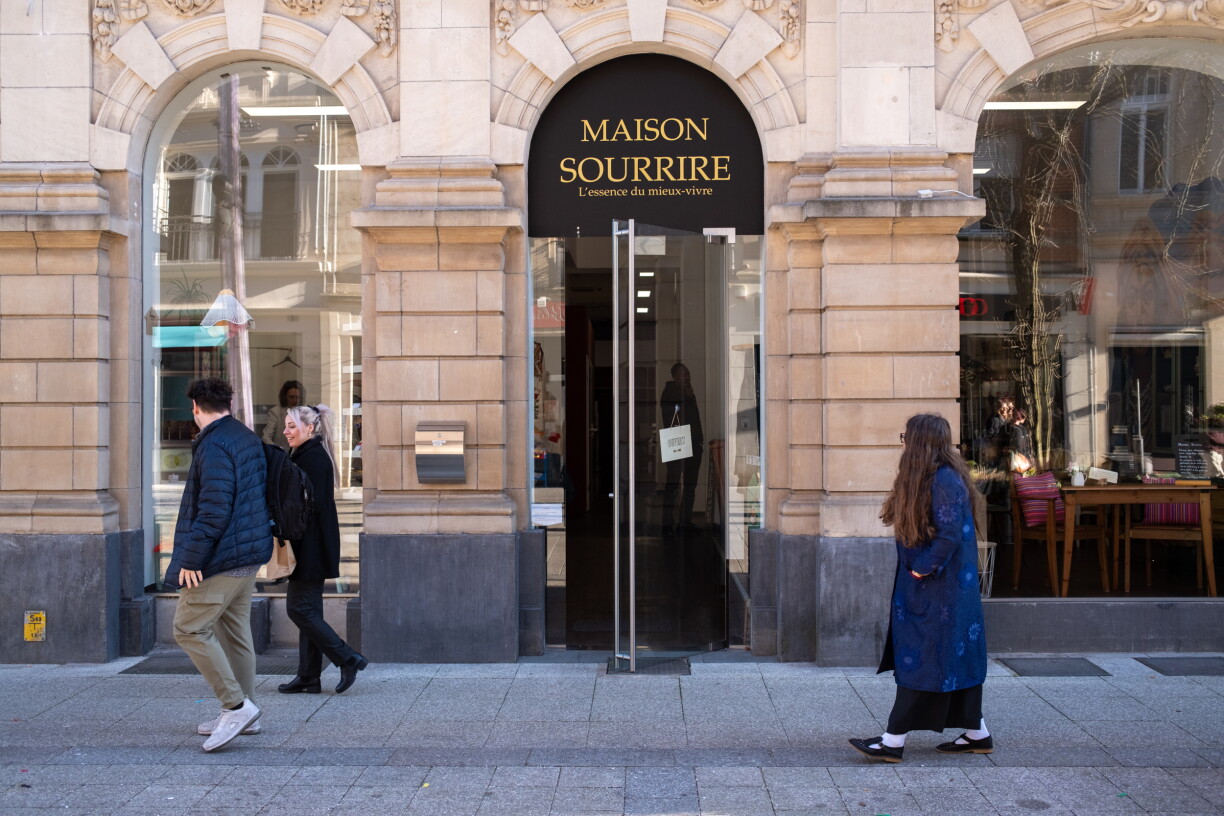
Leaving an abusive relationship does not mean escaping its aftermath. Fear, shame, financial dependence, and psychological trauma can continue long after the abuser is gone.
Marie Laurini, a psychologist specialising in trauma and founder of Maison Sourrire, explains what rebuilding a life requires after leaving an abusive relationship.
Long before Maison Sourrire opened, I used to give French lessons to people who needed to find their place in society. In 2019, we started distributing food to people living in precarious conditions.
Through my work as a trauma psychologist, I realised there was a gap between psychological support and the practical realities of rebuilding a life. In February 2026, we opened our doors in Esch-sur-Alzette to bridge that gap.
I did not want to create a house for vulnerable people, but a house where vulnerability does not define someone's place. A woman who has experienced violence, a refugee, and someone who has experienced homelessness can share a coffee and discover that what connects them is their humanity, not their suffering.
Although the abuser may be physically gone, their control can continue to live inside the person. Some women continue to hear the humiliating words they endured in their minds. They feel guilt, shame, and worthlessness.
There is also a reality we rarely talk about: Some victims may feel nostalgic for their abuser. This can be difficult for those around them to understand.
But in abusive relationships, fear and emotional dependence can become deeply intertwined. This does not mean the violence was wanted; it means the trauma has profoundly disrupted a person's sense of attachment and safety.
Leaving an abusive situation is a crucial step, but it does not mean the trauma is over. Years of fear can leave a woman in a permanent state of hypervigilance, even after she is safe. Add housing insecurity, financial difficulties, children, and loneliness, and rebuilding becomes incredibly difficult.
We cannot expect someone to rebuild psychologically when all their energy is consumed by daily survival. Leaving the abuser is not simply about no longer being afraid of someone; it is about being able to imagine a future again.
The body is often one of the places where trauma leaves its deepest scars even after the physical ones have healed. Some women can no longer tolerate being touched, they may experience shame, or feel disconnected from their own bodies.
Even intimacy with a loving partner can trigger feelings of danger. But a woman who has experienced abuse or violence is not broken. She may feel broken, and that suffering deserves to be heard but it does not define her identity or her future.
Recovery is not necessarily about becoming the person you were before the abuse. It can mean discovering a new way to inhabit your body, establish boundaries, and regain the power to choose.
Above all, this process must never be rushed. What matters is that they gradually regain a fundamental freedom: the right to their own bodies, without fear, shame, or obligation.
I believe one of the greatest taboos surrounding motherhood is the idea that a mother should be able to endure everything, protect everyone, and continue loving without ever reaching breaking point. Anger, exhaustion, and even resentment towards the demands of motherhood can coexist with profound love for their children.
These feelings are often followed by devastating guilt.
We expect mothers to protect their children but what happens to mothers who no longer have the strength to protect themselves?
When an abuser controls the finances, prevents a woman from working or monitors every expense, they gradually take away her ability to make choices. Some women return to abusive relationships because they cannot afford to survive independently.
Women who have experienced economic abuse need more than occasional financial assistance. They need to regain the ability to work and build a future that no longer depends on someone else. We cannot talk about freedom if a woman still has to choose between her safety and feeding her children.
I believe one of the biggest misconceptions in our society is that leaving an abusive relationship is simply a matter of choice. We should stop asking, “Why doesn’t she leave?” and start asking, “What is preventing her from leaving safely and how can we support her?”
Fear, children, financial dependence and psychological control can make leaving incredibly difficult. Repeated trauma can also profoundly impact how someone perceives danger.
In Luxembourg, professional, family, and social networks are closely interconnected. Women may fear colleagues finding out, neighbours gossiping or their children being judged at school. This fear can be even greater when the abuser holds a respected professional or social position. A victim may fear she will not be believed due to the abuser’s public image.
At Maison Sourrire, we offer a space where women can simply have a coffee without being labelled as victims. Shame should never belong to the person experiencing violence, but to the person inflicting it.
This year, we welcomed approximately 130 women, nearly 90 from immigrant backgrounds and around 40 Luxembourgish residents, into our programmes.
These figures represent the diversity of the women we support. But it is important not to associate a woman’s suffering with her origins.
What often differs is the circumstances in which women experience abuse and the resources available to save them. Women from immigrant backgrounds may face additional language, financial and administrative barriers, but domestic violence crosses every nationality and social class.
It would be wrong to assume that women who grew up in Luxembourg are better protected. A woman may have a career, home, and seemingly stable family life while experiencing severe abuse behind closed doors.
Abuse knows no borders.
I think our society underestimates the time, energy and strength it takes to rebuild a life after losing almost everything.
Recovery is not linear. Sometimes, the first victory is not about finding a job but simply leaving the house after months of isolation. Before asking someone to become productive again, sometimes we simply need to allow them to feel alive again.
Institutions often work on deadlines and measurable outcomes, but psychological recovery does not follow a timetable.
A woman experiencing psychological abuse without visible injuries, or financial control without obvious poverty, may struggle to qualify for support. There are women who fall between different support systems, fitting none of their categories perfectly.
That is where people risk becoming invisible. Nobody should have to prove they are suffering enough to deserve help.
The real challenge for institutions is not to create more categories but to build bridges between existing services to ensure nobody falls through the gaps.
Human dignity should never depend on administrative status. However, institutional funding comes with eligibility criteria that do not always reflect the complexity of human suffering.
This is where our partners play an important role. Private sponsorship and solidarity-based activities give us the flexibility to address needs that conventional systems cannot always address.
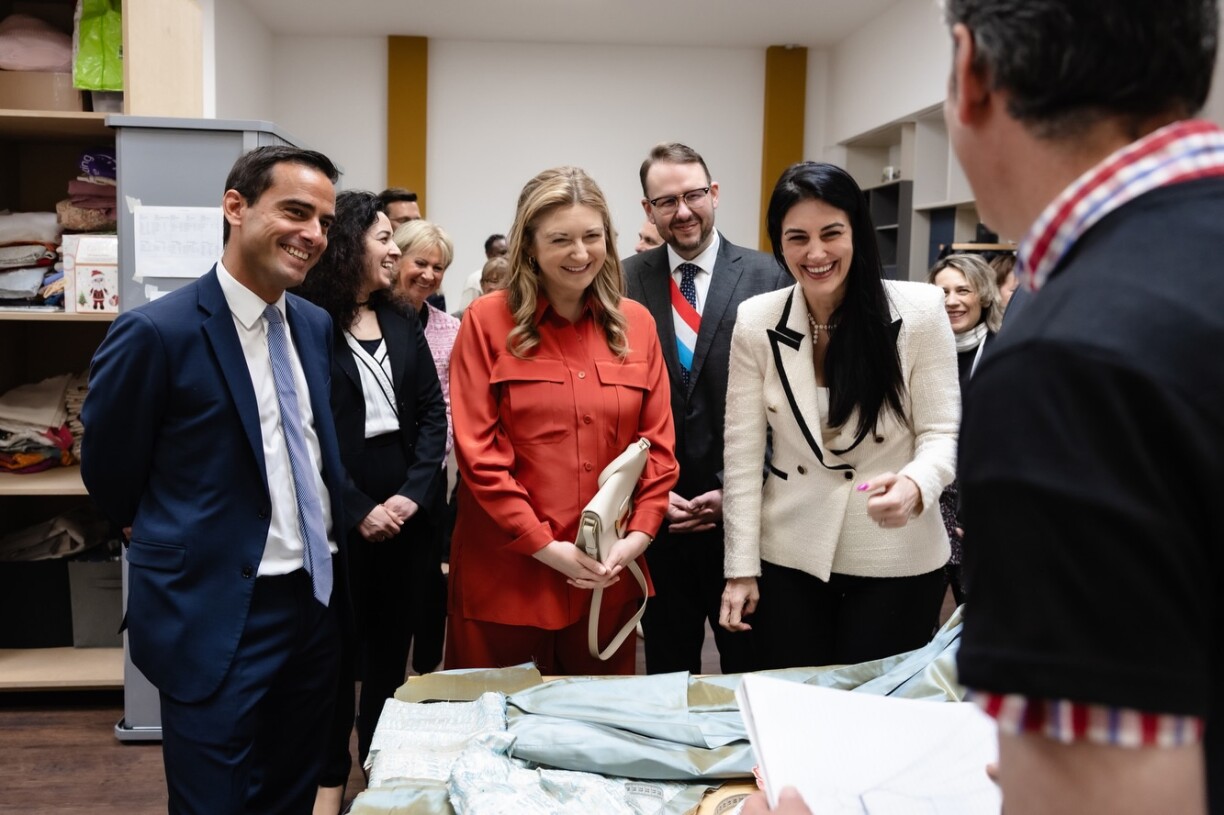
This has been a particularly important year for us. We were honoured to welcome Grand Duchess Stéphanie in April and Grand Duchess Maria Teresa in October.
These visits meant a great deal to our team but above all to the people we support. When someone who has experienced exclusion and abuse is given the opportunity to be heard, the impact is immense.
However, I do not want Maison Sourrire to simply become a heartwarming story told during official visits. I want this visibility and recognition to change perceptions, remove stigmas, create opportunities, and help build lasting solutions.