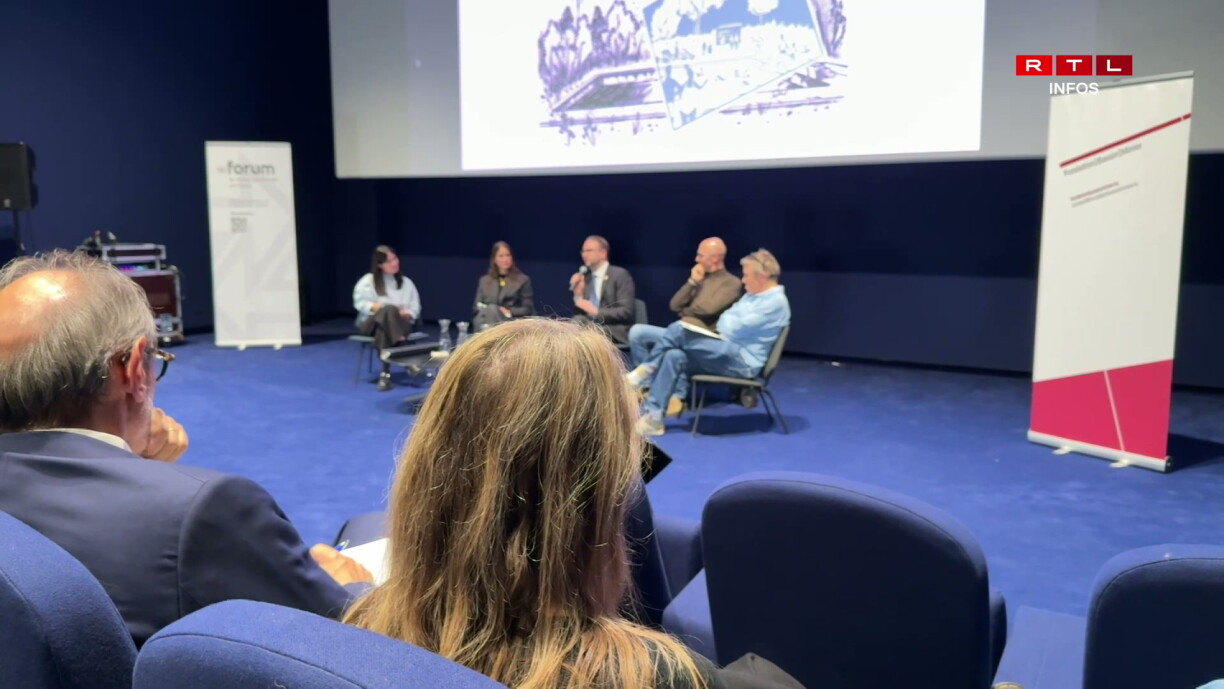
"In order to move forward, we need shared projects and shared infrastructure in education, healthcare, and sport," said Stephan Brusco, mayor of Thil in Meurthe-et-Moselle, at the first of the three-part series launched by the Fondation Bassin Minier,
at L’Arche in Villerupt.
Sociologist Jessica Lopes moderated the first conference, which addressed the idea of a shared living area along the border. Later sessions will cover the labour market, mobility, housing and, crucially, how to finance joint projects, including the sensitive question of fiscal compensation.
Jürgen Stoldt of Forum magazine, co-organiser of the event, said: "A few decades ago, during the heyday of the steel industry, there was a certain balance between the territories on both sides of the border. Today, disparities have become enormous, and we need to find tools, mechanisms, and structuring projects to develop this region together."
Christian Weis, mayor of Esch-sur-Alzette and president of the ProSud syndicate, said it is now impossible to plan southern Luxembourg's future without considering cross-border effects. "It is clear that we cannot discuss the development and planning of a city like Esch without taking into account the entire cross-border region."
Despite obstacles such as differences in legislation and tax systems, Caroline Huberty, president of the Transboundary Natural Territory of the Chiers and Alzette (TNT), stressed the value of small, concrete actions. "Through local initiatives, we can bring about change and improve the environment for both territories", she said.
Some institutions already work across the border. René Penning, director of Kulturfabrik in Esch-sur-Alzette, said: "For us as a cultural institution in Esch, the border is almost meaningless. We have extensive collaborations with French partners, half of our team works across the border, as do many artists. Locally, regionally, and nationally, the border is not a real barrier for our activities. We also host numerous companies from the wider cross-border area."
The Chamber of Employees, the IDEA Foundation, and the University of Luxembourg are also involved in the series. The remaining sessions are on Tuesday, 27 October, and Tuesday, 10 November, both at 6.30pm at L’Arche in Villerupt.