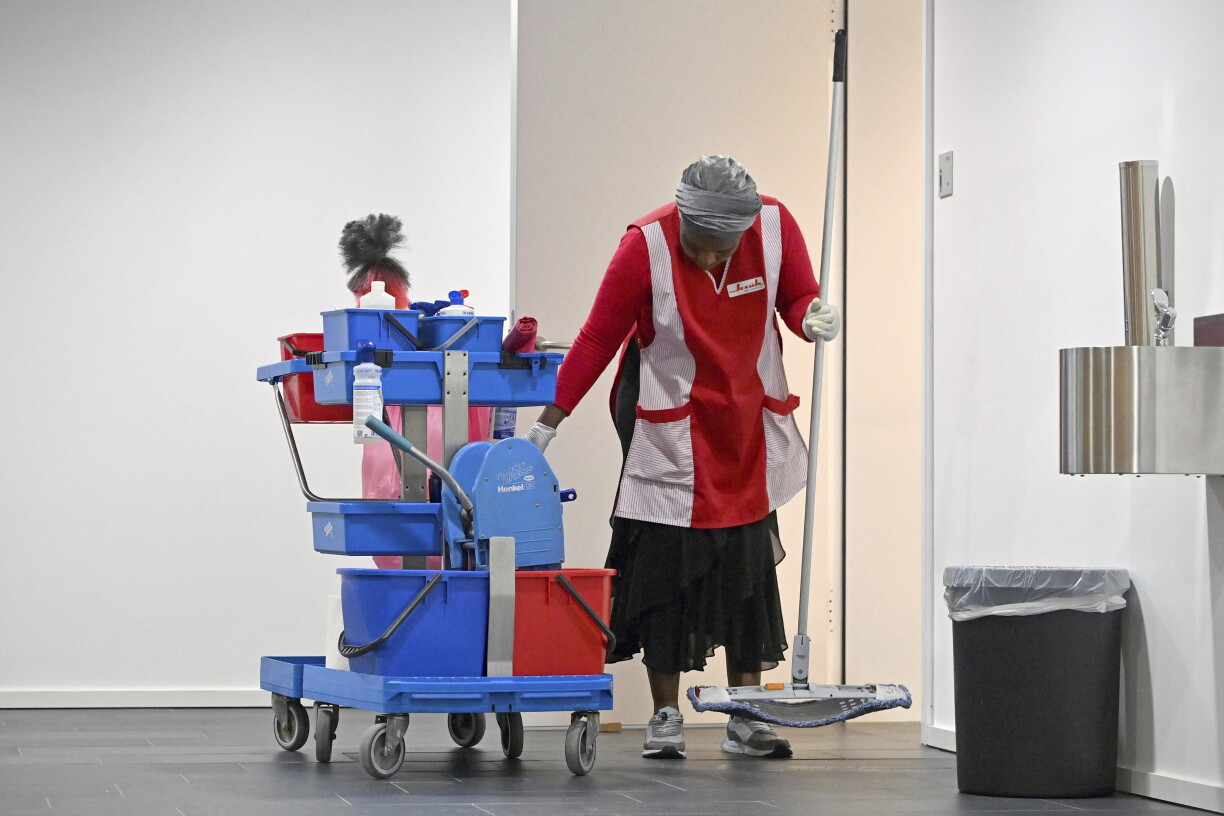
"We've been exploited for more than 20 years. We are shown no respect. They always treat us like workers at the bottom of the ladder", says Dores Azeredo. Emphasising her point, she added: "It is time our profession was recognised."
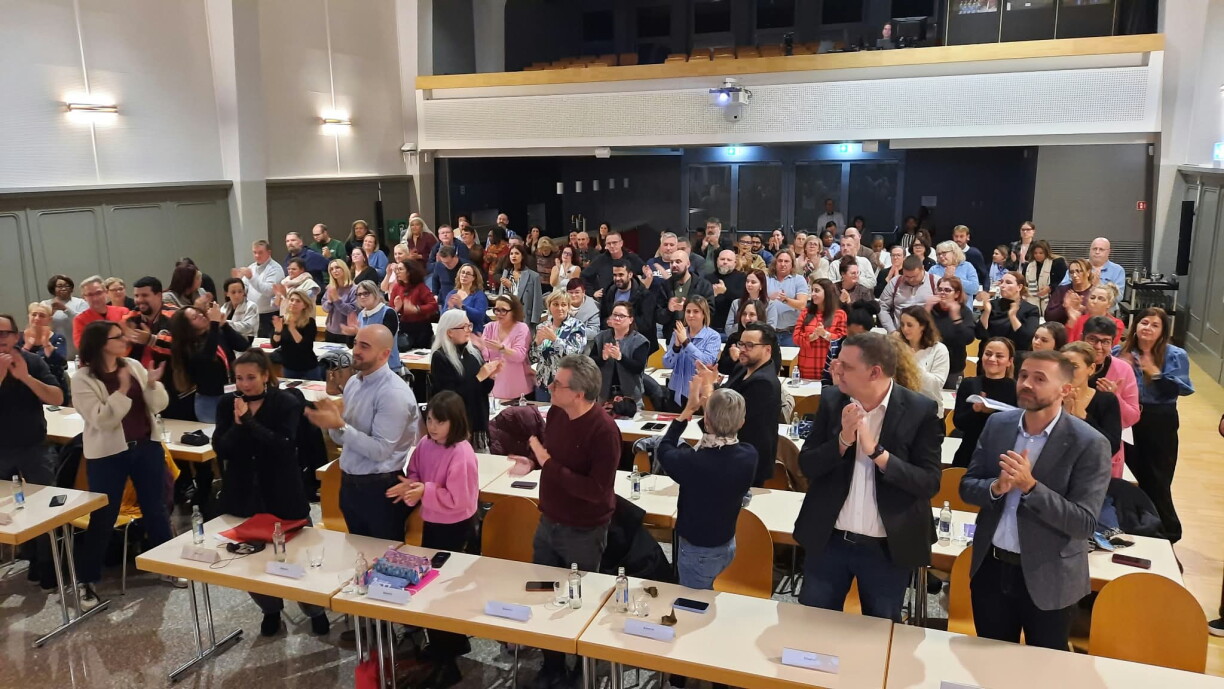
Recognition was the primary focus for Azeredo and the nearly 150 cleaners who attended a round-table discussion organised by the Chamber of Employees in Bonnevoie on Wednesday evening.
"We want people to say that cleaning is a profession. We want to tell everyone that we have a profession, so we no longer hear: 'Oh, she's just a cleaner'", she said.
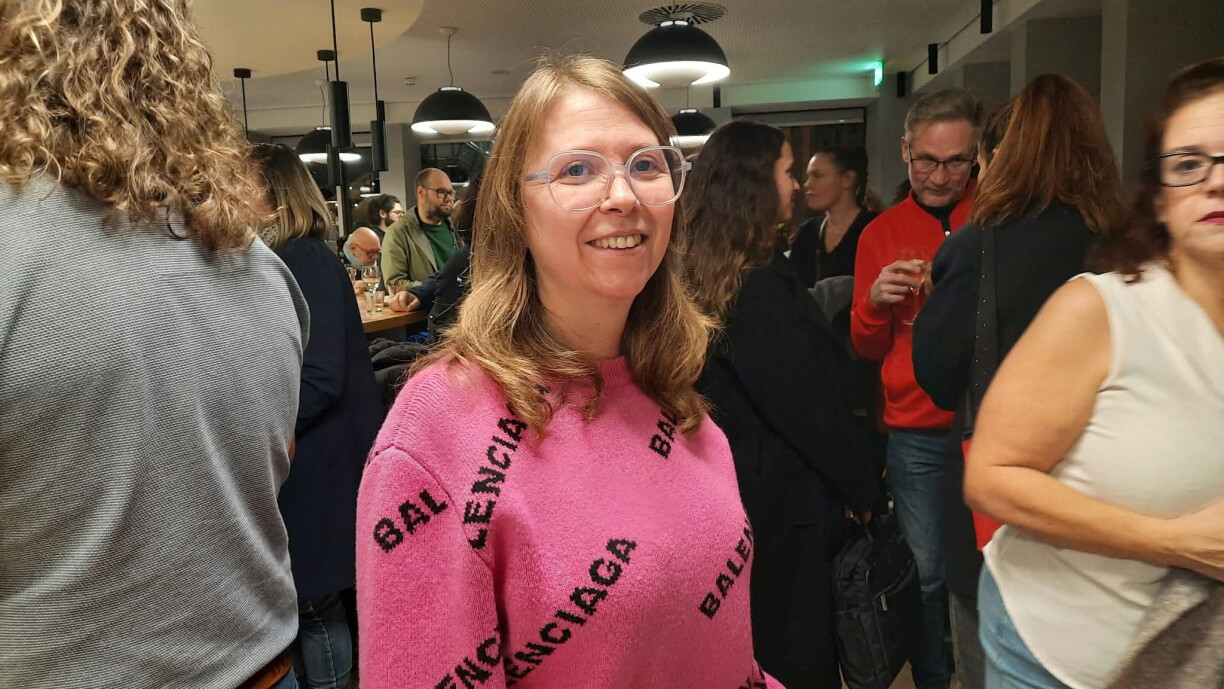
Azeredo, who is of Portuguese origin and has worked as a cleaner in Luxembourg for over two decades, emphasised that the job requires specialised technical knowledge and not just an ability to complete basic tasks.
"It is a profession that calls for a great deal of knowledge, whether of equipment or products. It takes real expertise", she noted, detailing skills such as floor stripping, carpet crystallisation, and operating industrial machinery.
She now serves as president of the cleaning union within the Independent Luxembourg Trade Union Confederation (OGBL), advocating for what she calls "the invisible people".
Luxembourg's cleaning sector employs nearly 14,000 workers, over 80% of whom are women, including many cross-border commuters. Because their shifts often begin before or end after standard business hours, they frequently remain unseen by the public and the professionals who rely on their services.
Despite this, their work remains essential to the functioning of offices, banks, ministries, hospitals, and supermarkets across the country.
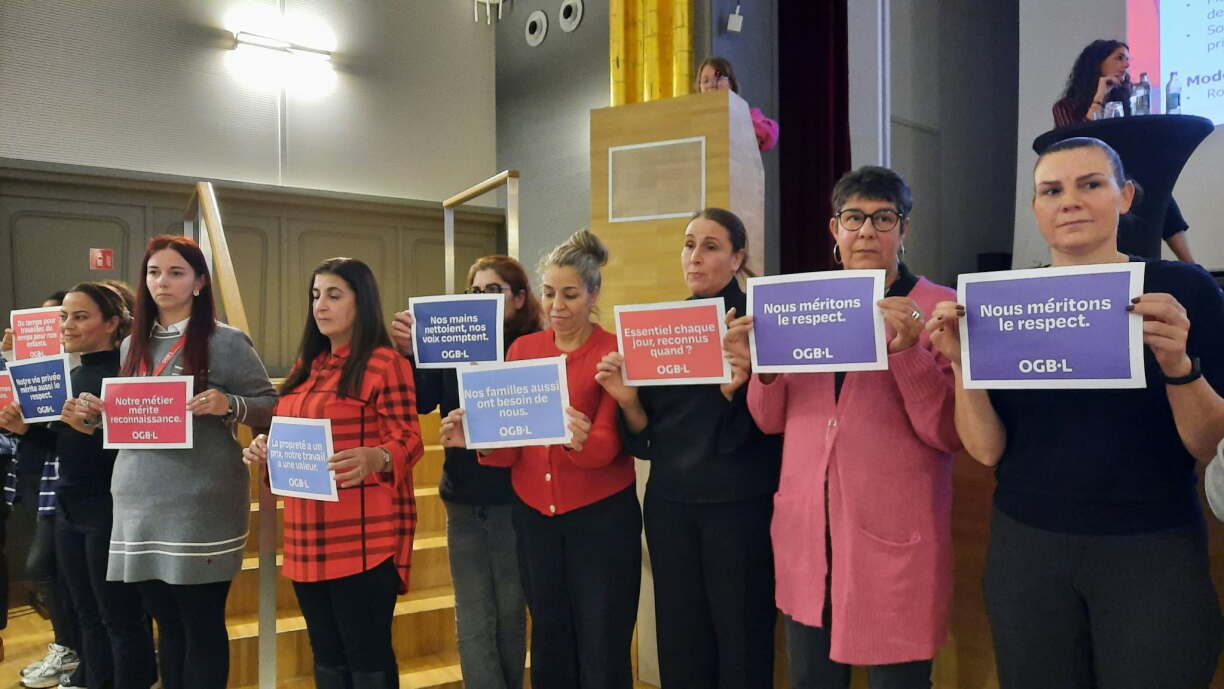
Despite the sector's continued growth – notably with Dussmann Luxembourg becoming the country's largest employer in July – many workers feel marginalised in the labour market.
Sonia Neves, central secretary of the OGBL's Private Cleaning Services union, highlighted that many cleaners fall below the poverty line.
According to the National Institute of Statistics and Economic Studies (STATEC), the at-risk-of-poverty threshold is €2,502 per month for a single-person household.
"They do not earn enough, their employment is precarious, and many are single parents; that has to be taken into account", Neves stated.
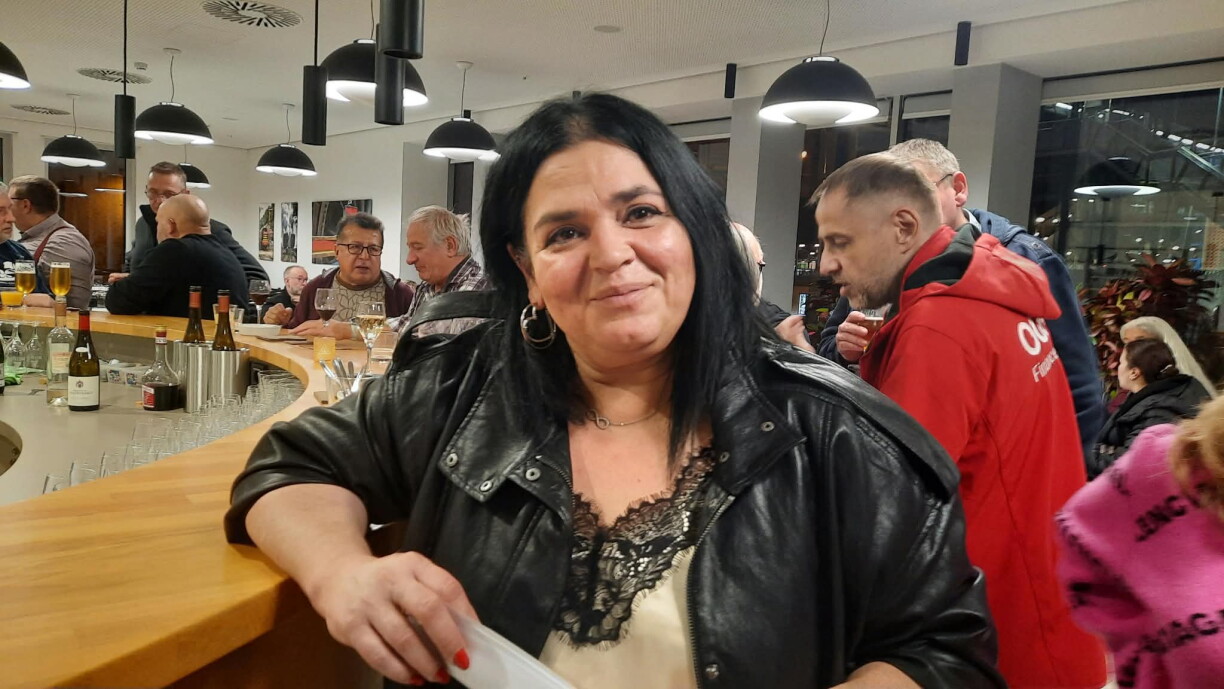
The high attendance at Wednesday's event at the Bonnevoie Trade Union Casino underscored the urgency of the workers' demands. The OGBL has intensified its advocacy efforts this autumn, holding meetings with the Chamber of Employees and several political parties, including The Greens (Déi Gréng), the Pirate Party, and The Left (Déi Lénk).
The objective of the campaign is to remind policymakers that cleaners have fundamental rights regarding pay and working conditions. "They have rights, and employers know that. But I think that at some point, enough is enough", Neves said.
A central demand is access to the skilled social minimum wage (€3,325.59 gross per month) after 10 years of experience in the sector. Currently, despite being covered by the collective agreement for the building-cleaning sector, long-term cleaners do not reach this wage threshold.
To address this, the Chamber of Employees is drafting legislation to allow workers without formal diplomas, but with extensive on-the-job experience, to qualify for the skilled social minimum wage.
"We cannot have people who have been working for years and then say of them: they are never qualified", explained Martine Mirkes, vice-president of the Chamber of Employees.
Under the current Labour Code, a secondary route exists for workers without a diploma to gain qualified status after six years of experience.
However, this requires the profession to demonstrate a "progressively increasing level of technical skill".
While judges have previously ruled that this does not apply to cleaning, the Chamber argues that skill acquisition is inherent to all professions, citing contrasting legal precedents in the baking and pastry sectors. Mirkes is calling for this restrictive requirement to be removed from the Labour Code.
Working conditions also present significant challenges. Full-time 40-hour contracts are uncommon in the sector.
Instead, cleaners often piece together multiple part-time contracts with different employers. This fragmentation severely penalises workers if they lose a contract of fewer than 16 hours a week, as only contracts meeting or exceeding that threshold grant entitlement to unemployment benefits.
"It obviously causes stress. So most of them put up with it and are afraid", Neves noted.
To resolve this, the OGBL is advocating for unemployment benefit entitlement from the first hour worked each week.
Beyond fragmented hours and inadequate wages, workers face issues related to subcontracting and a lack of formal skills recognition.
Ultimately, the union identifies the lack of formal recognition as the root of many of these issues.
To address this, the OGBL proposes creating a vocational training course leading to a Vocational Capacity Certificate (CCP). This qualification would provide standardised training in technical skills, including the safe use of cleaning products, hazardous substance management, hygiene protocols, and the operation of modern machinery and robotics.


