The winners of the Luxembourg Book Prize were announced on Thursday during the official opening of the Walferdange Book Days at the Centre Prince Henri. A jury selected the winning titles from a shortlist across three main categories: children's literature, literary fiction, and non-fiction.
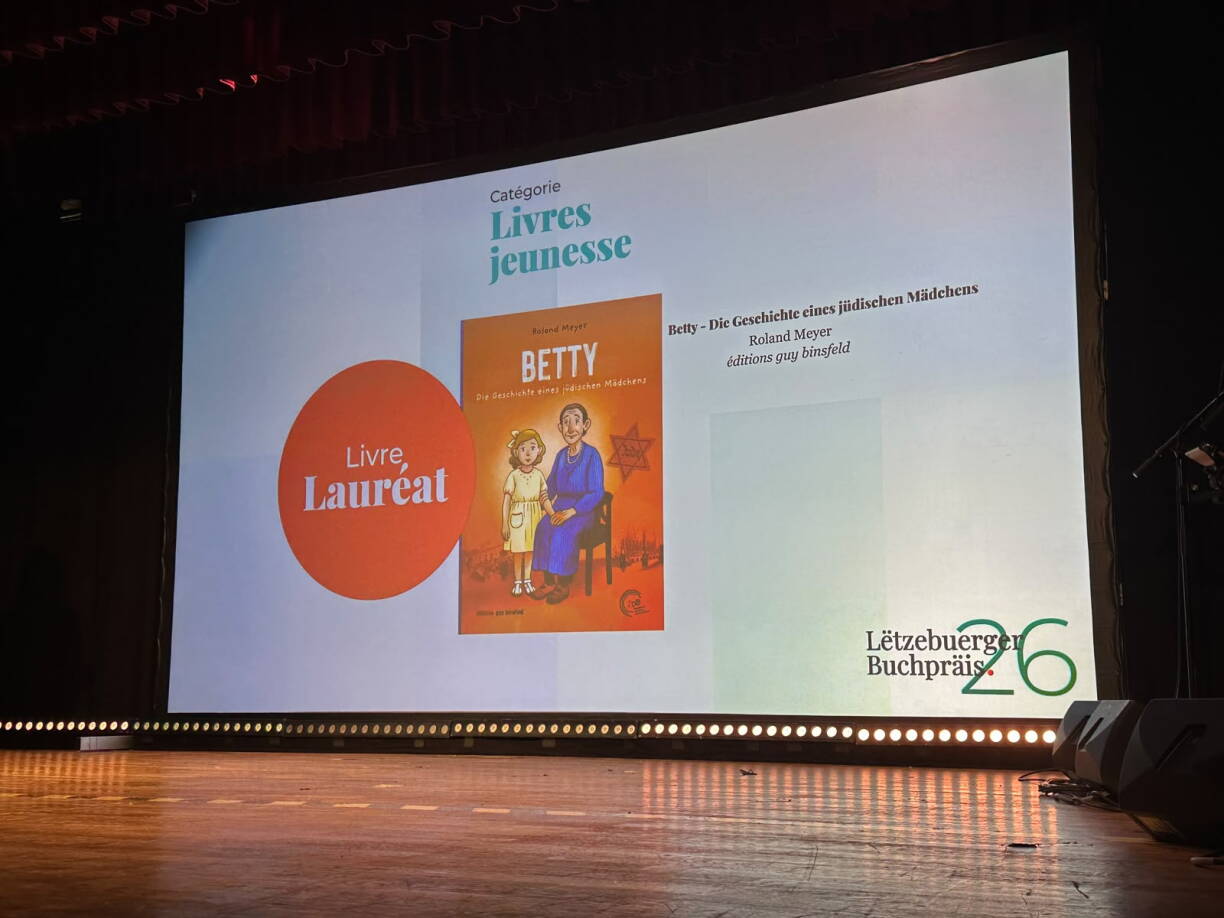
In the children's book category, the jury awarded the prize to Betty, die Geschichte eines jüdischen Mädchens by Roland Meyer (éditions Guy Binsfeld).
Based on true events, the book recounts the story of Betty Hirschbein, who was born in Luxembourg on 10 May 1940, the day the German occupation began. Orphaned at age two, she was later deported to Theresienstadt with her grandmother and survived to become one of the last living witnesses of that era.
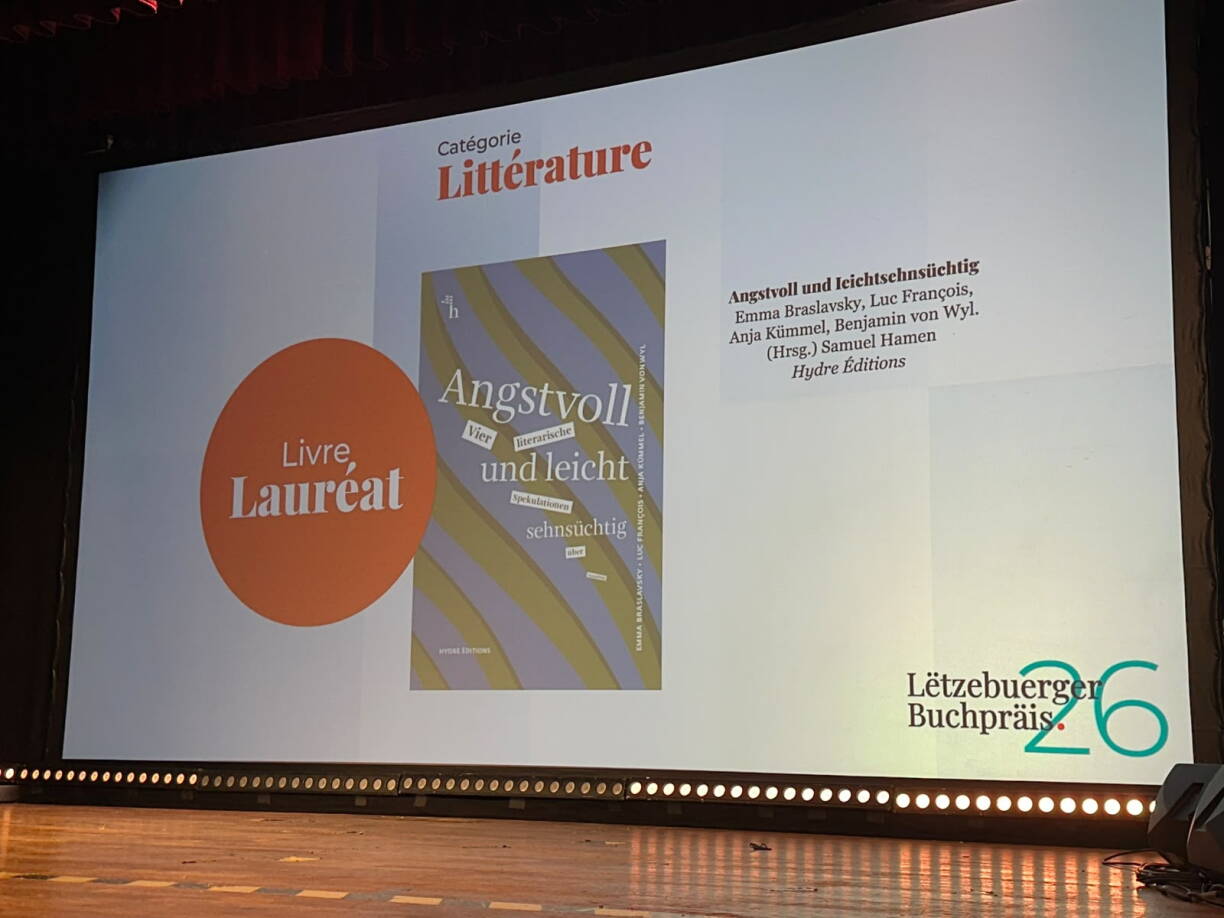
The literary fiction prize was awarded to Angstvoll und leicht sehnsüchtig, a collaborative work by Emma Braslavsky, Luc François, Anja Kümmel, and Benjamin von Wyl (Hydre éditions). The book presents four distinct speculative visions of Luxembourg's future, authored by writers from Luxembourg, Germany, and Switzerland.
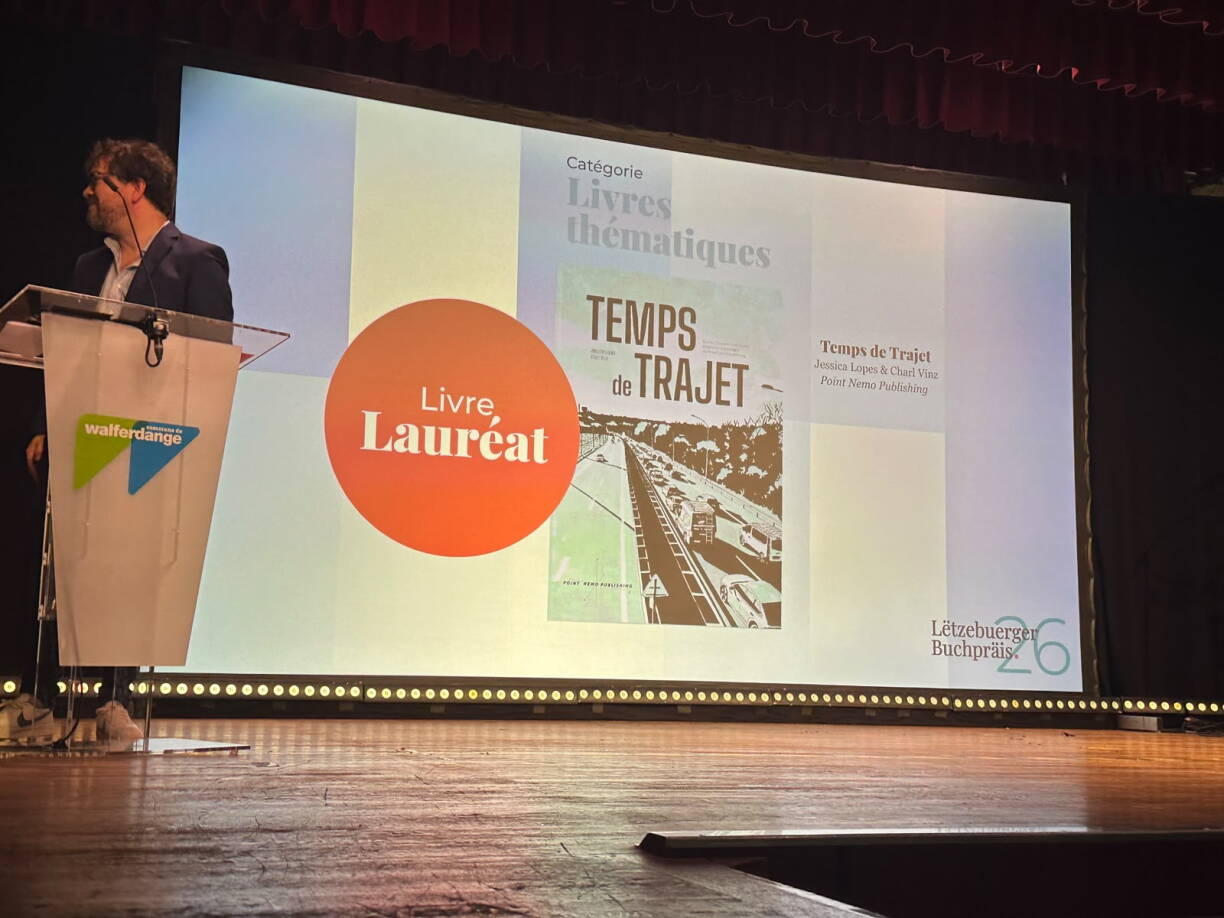
In the non-fiction category, the prize went to Temps de Trajet by Jessica Lopes and Charl Vinz (Point Nemo Publishing), which explores the varied experiences of commuting, remote work, and public transport.
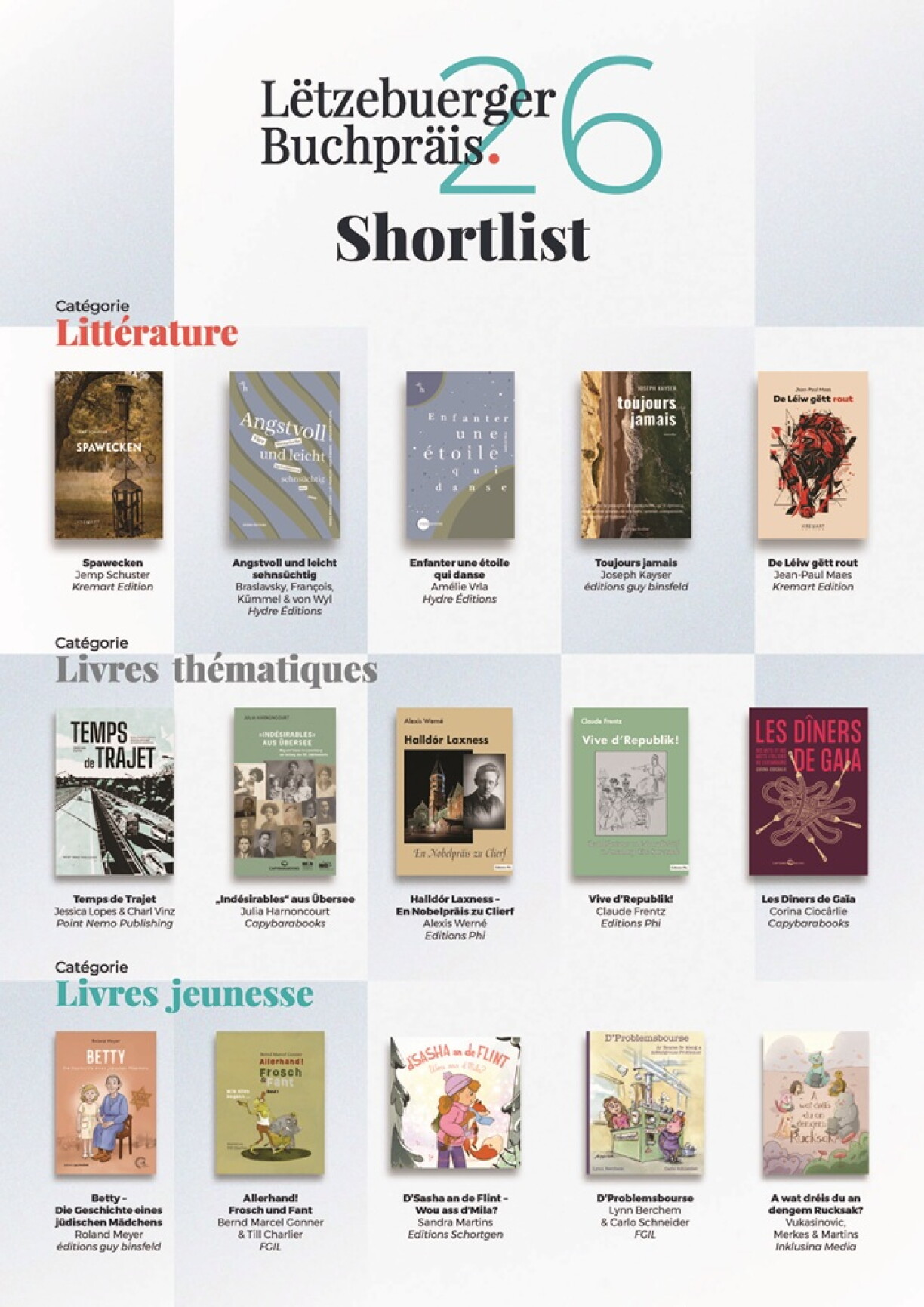
The shortlist for the children's book category also included:
Other shortlisted titles in literary fiction were:
The non-fiction shortlist featured:
Temps de Trajet also secured the Design Prize, recognised by the jury for its visual presentation.
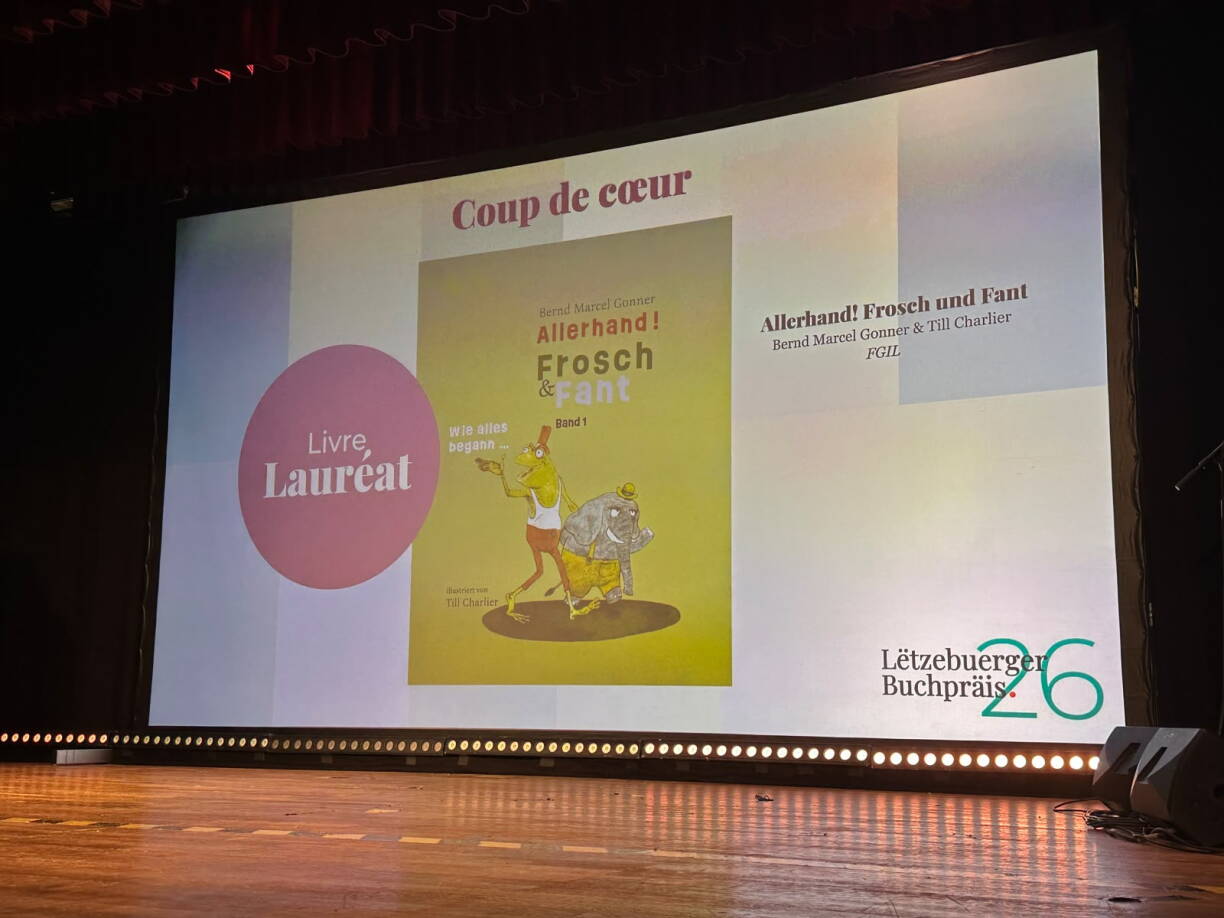
Additionally, the jury awarded its Special Prize to Allerhand! Frosch und Fant, by Bernd Marcel Gonner and Charlier Thill (FGIL), noting its imaginative storytelling and illustrations.
Alongside the jury's selections, the public voted for their preferred titles in the three main categories.
The Audience Awards were granted to A wat dréis du an dengem Rucksak? (Children's Book), Spawecken (Literary Fiction), and Temps de Trajet (Non-Fiction).
This year's jury was composed of Jeff Schinker, Andrée Wietor, Alexa Mores, Isabelle Mattern, and Béatrice Kneip.


