As data becomes ever more integral to daily life and business, the demand for secure "data hotels", as LuxConnect CEO Paul Konsbrück describes data centres, is expected to rise exponentially in the coming years.
Konsbrück explains that an operator's role is to provide clients with a secure space to house their servers, data, and computers. He emphasises that they access neither data nor hardware, as their job consists in providing robust infrastructure, ensuring security, maintaining optimal cooling, and protecting the facility from external threats.
The digitalisation of society and the economy is generating massive quantities of data that need to be processed and stored securely. Konsbrück points out that in the United States, a quarter of corporate investment is now funnelled into data centres, their technologies, and construction. This global demand is driving electricity consumption to unprecedented levels, with data centres now using as much energy as an entire country, such as Germany for example.
Luxembourg is no exception. According to LuxConnect's director, continued investment in local data centres is inevitable, especially as technology continues to advance rapidly.
Efficiency is improving, but so too is the demand for computing power, often at an exponential rate. Luxembourg proved to be a pioneer in this field with the MeluXina supercomputer, the only one in Europe housed in a fully secured data centre; and future projects are already in the pipeline.
Minister for the Economy Lex Delles, who recently visited LuxConnect’s Bissen facility, emphasises that there is a significant need among companies for access to AI supercomputing resources. Delles explains that the ministry is also preparing for MeluXina Q, which will bring quantum technology to Luxembourg to ensure that it remains at the forefront of innovation and continues supporting businesses.


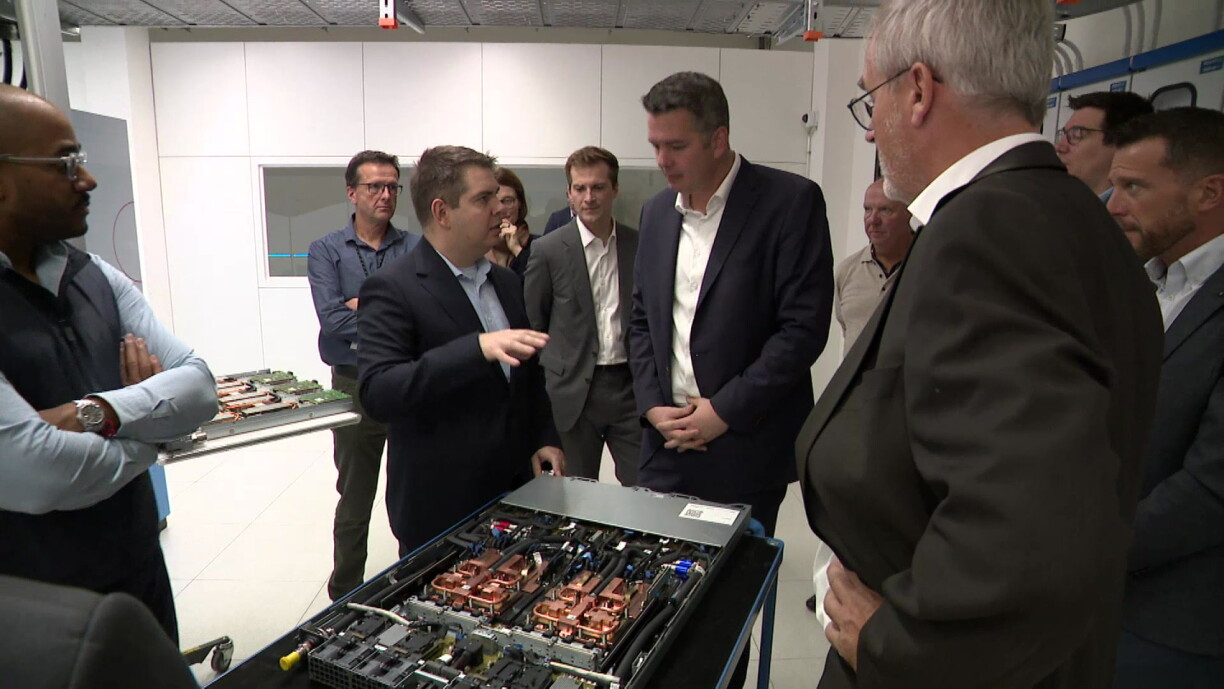
The cooling requirements for these giant computer systems are significant. During his visit, Minister Delles was shown the latest generation of graphics cards, destined for the AI supercomputer, which utilise advanced water-cooling technology with the water literally flowing over the components to dissipate heat.
Konsbrück clarifies that the environmental impact is carefully managed. The cooling process is similar to how a refrigerator works, with water used for cooling being recovered, cooled down again, and recirculated within the same system, minimising waste.
LuxConnect’s strategy is to combine technological progress with maximum operational security, ensuring optimal protection for clients’ data. It is this formula that has driven 20 years of sustained success and will guide the company into the future.





